Blog Archives
Killer Raccoons 2: Dark Christmas in the Dark (2020)
 Dear reader, I already know what your first question is regarding the title of this low-budget, schlocky comedy, and yes, there actually was a first Killer Raccoons movie. Back in 2005, writer/director Travis Irvine and his pals made Coons! Night of the Bandits of the Night for only $5,000 and their slasher killer was a team of trash-eating, nocturnal mammals with a bad rap. It got a small DVD release from Troma Studios and would be considered a success by any modest standards of genre filmmaking. For whatever reason, Irvine decided he had more raccoon-related mayhem to indulge and got his friends back together to make a sequel 15 years later. Filmed throughout Ohio in 2018, the end result is Killer Raccoons 2: Dark Christmas in the Dark (it seems in the ensuring decade, somebody wised up about not having “coons” as a title). As with other Ohio-based indies, I do happen to know several people involved in this local production but I will be doing my best to write an objective, bias-free review of… a killer raccoons movie. That might be one of the most absurd sentences I’ve ever written in my years as a film critic.
Ty Smallwood (Yang Miller) has just gotten out of prison after the events of the first film. He’s looking to start a new life, prefers to go by Casey, and has plenty of people unable to recognize him (it’s a different actor from the first film). Casey is meeting Darlene (Evelyn Troutman), the little sister of one of the women killed at that fateful campsite 15 years ago. They’ll better get to know one another over one long train ride home for the holidays. Ranger Rick Danger (Mitch Rose, also a different actor) has other plans. He and the other surviving members of the summer camp have hijacked the train with help from raccoons wielding automatic weapons. Ranger Danger plans on holding the nation’s government hostage (the mayor of their small town is now the Secretary of Defense) with a super phallic death laser satellite operated in space by trained raccoons (why? Who cares?). Casey teams up with a steward, Double A (Ervin Ross), and they go car-to-car trying to rescue passengers, evade armed raccoons, and thwart Danger’s evil catastrophic plans.
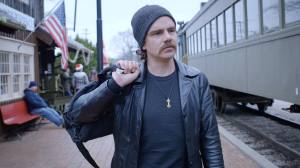 Somebody actually went and made a schlocky beat-for-beat parody of 1995’s Under Siege 2: Dark Territory, and I have yet to process whether this is a commendable act of unusual comedy obsession or simply a folly with no real appeal but to the smallest of fringe audiences. The Under Siege sequel was another Die–Hard-in-a-place setup happening miraculously again (this time on a train!) with Steven Seagal as its leaden lead, so devoting the plot structure to reminding people about the existence of this movie and its many low-points seems, in some sense, like the kind of hyper-specific meta ironic comedy you’d find in an Adult Swim special. In my own comedy writing, I rekindled an old TV series from the 90s that was unceremoniously cancelled after eight episodes (The 100 Lives of Captain Black Jack Savage), leaving its 100-countdown mission unfinished and dangling in my mind until I wrote my own conclusion. Re-examining some forgotten relic of personal pop-culture, especially something built around silly and stupid, is a fine starting point for a comedy riff. However, the expectation is that more will be done than serving as a reminder of that inspiration. If you’re simply re-creating the beats of the source to completion then what exactly is the point? Nobody needs a crummier version of an already crummy movie. That’s where Killer Raccoons 2 goes awry. It’s so committed to recreating Under Siege 2, including exact character roles, names, and many dialogue repetitions, that you could have removed the killer raccoons completely. I even started watching Under Siege 2 again for this review simply to determine if the pixelated spy camera nudity used in the opening to demonstrate the satellite’s telephoto prowess was exactly the same stock footage used in the actual movie (they are separate people; you’re welcome, world). Killer Raccoons 2 is more an inexplicably fixated parody than a goofy killer animal comedy, and that is a major letdown of imagination.
Let me give you an example of the disappointing complacency of too much of the comedy. The hijackers (all sporting an eye-patch, a stylish motif I did enjoy) are trying to find Darlene among the passengers since they now know she has value with her relationship to Casey. Darlene says she’ll adopt a disguise and she literally arranges a strand of hair to lay across her face like a fake mustache. Now this is a silly, obviously transparent disguise but it shouldn’t be the end of the joke. A better extension would be since we expect it to be so flimsy that it somehow works and the hijackers cannot tell the difference. Then the hair strand could drop and the hijacker would express immediate confusion and alarm, only for Darlene to place it back in place, and the hijacker’s worry replaced yet again (“There was another woman just here.”). It’s one idea but it’s an idea, building off subverting expectations and then developing the setup to build into something more. The problem with Killer Raccoons 2 is that there aren’t any real comic set pieces, no really well-structured scenarios that can make you smile from their very inception about what will transpire. The closest is an improvised fight with whatever household kitchen items are available, at one point pitting waffle maker against waffle maker. Much of the humor is so obvious that the obvious nature is itself the joke, like the chintzy special effects, bad wigs, and copious amount of penis jokes (the deadly satellite is named the “PEN-15”). However, there’s a fine line between an obvious joke being funny and the filmmakers pointing it out. There are too many times where characters literally explain jokes or point out the absurdities.
 This is a 96-minute comedy when, in all honesty, it could have even been pared down to 80 minutes. The pacing can feel slack and many confrontations can stretch on, circling the same obvious joke. Even moments that work, like the improvised fight, go on too long and without sustained energy. There are way too many plot beats from Under Siege 2 distilled here (the Seagal movie is only a couple minutes longer). There are too many characters involved in the action too. I’m shocked how much effort Irvine has gone to in order to bring characters and story points from the original into this unexpected sequel. It’s been 15 years so I can’t imagine there was much demand for fidelity to not just Killer Raccoons 1 but also Under Siege 2. The most useless character is a painfully protracted cameo by the likes of aging porn star Ron Jeremy. I understand the appeal from a marketing standpoint of having a celebrity “name,” but the movie would have been better served with Jeremy making his contractual appearance and then hastily departing. The movie’s humor dies a tragic death every strained second he is regrettably onscreen.
As a hit-or-miss comedy, there are moments that had me genuinely laughing, mostly because of the exuberance of its go-for-broke cast. There were repetitions that would occasionally make me giggle, like referring to Darlene’s “dead sister he lost his virginity to,” or the emphasis on “for real dead for real” with characters always surviving insane mishaps through two movies. There are the occasional moments were a sudden escalation in violence against the raccoons got me to laugh. When the film is being silly, it has a charm where the goofiness and cheap budget enhance the entertainment value (“While this spoon appears to be harmless, it’s actually really super-hot”). Take for instance Ranger Danger furiously typing in the air but with no keyboard present. The sight itself is good enough to earn a quick goofy smile, but if the movie were to comment upon it, then the joke would just seem ruined. It’s that character that, by far, brought me the most laughter. The character of Ranger Danger is a twangy hoot chiefly because of the comic timing and impressive gusto of debut actor Mitch Rose. He takes okay jokes and adds such professional polish that got me to laugh out loud (“A gazillion dollars?” “I just… look, I made up a number”). Several of his line deliveries are pure wonders (everything about the golden VHS tape he so reveres), and he’s the kind of capable comic actor that could be the anchor of a bigger vehicle. Somebody get this man more work in the funny industry, pronto. Yang Miller (Huckleberry) is also deserving of praise by playing his self-serious loner hero so serious that he’s oblivious to his own ineptitude.
 I don’t have to over-complicate this. By its overly verbose title alone, you’ll know if you have any interest in Killer Raccoons 2: Dark Christmas in the Dark. It’s a goofy comedy that’s proudly low-budget, lowbrow, and low on ambition. It’s a sequel to a movie nobody likely saw, religiously parodying an action movie that hardly anyone remembers, and it’s filled with little raccoon puppets that could have easily been ditched for what they add to the overall comedy. I’m a little shocked there aren’t more tasteless exploitation elements present, like gratuitous nudity, over-the-top gore, and more envelope-pushing crude humor. Killers Raccoons 2 feels decidedly juvenile but not quite transgressive. It’s not going to be a great experience but the hits might outnumber the misses, especially if your sense of humor is attuned to the likes of schlocky Troma movies, Conan O’Brien, and late-night Adult Swim. It’s that combination of trash and irony that can prove blithely appealing, though I wish Irvine had put more effort into his comedy compositions. It feels weird to lament what could have been with a title like Killer Raccoons 2, but this just could have been funnier. A strange side note is that Irvine ran as the libertarian candidate for governor in Ohio in 2018. There’s a lazy joke to be had about him running the government the way he makes his movies, but I’m not going to stoop to that level. That’s for Killer Raccoons 3.
Nate’s Grade: C
Share this:

Palm Springs (2020)

I am a sucker for a clever time travel tale, or parallel universes, a sci-fi story where the creative ingenuity is front and center, and Palm Springs is a delightful new rom-com bursting with imagination. By this rate, most audiences should be familiar with the time loop formula, from comedy classic Groundhog Day to Source Code to Edge of Tomorrow to Netflix’s audacious series, Russian Doll. It’s a creative conceit that rests on building patterns and subverting expectations, allowing a writer an unparalleled opportunity to retell a story, pulling at the edges and getting to answer an assembly of “But what if?” questions. It builds out its world and makes it feel richer and more intricate, all the little stories and characters that might have been missed had there only been a single avenue. It requires a creative storyteller with a big imagination for details, but when done correctly, the time loop movie can be a wealth of satisfying payoffs and intriguing detours. Palm Springs deserves to be added to that list of hallowed time loop movies.
It’s the day of the wedding for Sarah’s (Cristin Milioti) sister. There’s one wedding guest that seems to stand out. Nyles (Andy Samberg) seems prescient on the dance floor, has a prepared speech that earns tears, and strolls through the reception like he owns it. Sarah becomes smitten with him and, against her better judgment, follows him into a mysterious glowing cave. She wakes up in her bed and relives the wedding day again, learning she too is now trapped in that 24-hour loop with Nyles. He laments that she followed him, having once encouraged another person to join him in the world of no tomorrows (a rueful Roy, played by J.K. Simmons). But with a partner, the many days have a new relevance, and Nyles and Sarah depend on each other, but is there a chance that they can escape or are they doomed to perform the Electric Slide forever?

Right away, you can tell that writer Andy Siara (TV’s Lodge 49) has given his story tremendous thought, and the fun of it is watching our main characters go through the process of discovery while learning more about each. The rules of the universe are straightforward; whether death or sleep, they will wake up back that fateful wedding morning. Nyles has felt trapped for so long and the prospect of another companion going through his same purgatory fills him with guilt, but he cannot help feeling a new purpose when he finds a partner for this weird world. Initially she’s looking for an escape, but then she opens up to the possibility to a life permanently on pause, without consequences, and how freeing this can be. Then the appeal dampens as we come to understand why this day is a personally painful one for Sarah and why she would be desperate to live another day, any other day. When she drops out for a solid stretch in the second half, you miss her just as much as Nyles and better realize what a great team they made. Palm Springs has plenty of fun with the possibilities (Nyles requests a quick death over a long drive to “beat the traffic”) but it doesn’t lose sight over why we should care about these people. It doesn’t really matter how the time loop began or whatever theory will end the loop. It’s the central relationship that will ultimately provide the emotional anchor, and it’s because of that attention that by the conclusion of Palm Springs I felt uplifted, buoyant, and happy (a mid-credits scene thankfully answers the one lose thread, providing an even more welcomed conclusion).
Make no mistake, this is a funny movie and I laughed often. Samberg (TV’s Brooklyn 99) and Milioti (Black Mirror) are terrific together and genuinely seem to enjoy one another. They have a combustible spark to them that reminded me of older screwball comedies. Having a willing partner allows Nyles to cater to different impulses but also pushes him to re-examine his perspective when he has someone new who sees the excitement in their unique position. However, except for Roy and his long drive from Irvine, they are hopelessly alone, unable to move forward, and the question arises can there be anything of significance without consequences? The screenplay has a natural dark streak with its humor, so even when things get heavy with existential quandaries, it doesn’t stop the movie from being smart and enjoyable. There are so many wonderful little payoffs, little running gags, and larger payoffs to be had with the time loop formula. It also hooks an audience by watching a character fail, and fail, and fail, only to succeed. Palm Springs is a romantic comedy that can be funny, romantic, and make me care.

Debut director Max Barbakow keeps the pacing swift and has fun playing with bold primary colors across the desert setting. The tone of the movie is delicate as it can go into silly revelry, like a surprise coordinated dance routine and a wedding outburst involving a bomb, into yearning romance, into heartfelt pathos, and then even the occasional stomach punch. For as rightfully beloved as Groundhog Day is, there’s nothing that comes close to feeling like an emotional gut punch. With Palm Springs, the time loop is given its sci-fi examination, the comedy is given is full exploration, but it’s the characters that matter most, and Barbakow prioritizes the right feelings at the right times. By the end, you feel sweetly fulfilled by these 90 charming minutes.
At first, I wondered why the Roy character was included except as a cautionary tale why Nyles would not want to rope someone else into his purgatory. But then as we visited with the older man, I realized, as he does, that he’s meant to symbolize the change in perspective (mild spoilers to follow). The family that he couldn’t stand before his loop-life has now become his personal oasis. He’s grown in appreciation and love of his family bonds. He is the example for Nyles about how one can personally grow and change when given dedication and enough time to see it through. It’s a nice moment, and while Simmons (Whiplash) is always wildly entertaining when he’s bulldozing over others, giving Roy a poignant sendoff made me feel like he was a much more integral character and his earned wisdom was its own special reward.
Palm Springs is a great detox of movie, with enough sunny comedy and winning romance to make you smile and enough tortured existential drama to provide substance. Everyone involved, from the writer to the director to the cast, is having a blast and it’s fun to join in the good times. When it comes to time loop cinema, Palm Springs is a respite of entertainment and smartly developed and richly realized execution. Find it on Hulu and kick back.
Nate’s Grade: A
Share this:

Disclosure (2020)
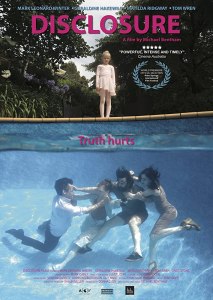 It starts with an accusation from a child during a playdate. Natasha, the four-year-old daughter of Emily (Matilda Ridgway) and Danny (Mark Leonard Winter), has a very serious accusation against the older nine-year-old son of Bek (Geraldine Hakewill) and Joel (Tom Wren). They’re neighbors, friends, and both sides are certain they can work things out like agreeable adults. Danny and Emily feel only right to be upfront about the accusation and ask to send the son to counseling. Joel and Bek are wary of this getting into the news (Joel is a local politician) and want the allegation withdrawn. Natasha says it happened. The boys say it did not. Over the course of one very long day, writer/director Michael Betham will push both couples to the brink.
Disclosure (not to be confused with another 2020 movie by the exact same name) plays out for 80 minutes like a play, locking us in one location with four characters growing increasingly hostile to one another. It’s an uncomfortable movie because it traps you in that squirming discomfort of hard conversations and high-pressure tactics to relent or capitulate on ethics. It’s important that we never really know the full truth of what actually happened between the children. We have what four-year-old Natasha has said happened, we have the denials from the older boys, who are older but still children themselves, and we have two sets of parents trying to make sense of some pretty startling behavior. Bek is convinced her own children could never commit something so heinous, and therefore Natasha must be confused or lying. She argues the children were too young to understand what her account alleges. Emily is convinced because of her daughter’s youth that she must be telling the truth, because why else would she concoct this harmful account? Each gets dug in from their perspective and only becomes more hardline. Bek reveals a startling secret of her own, being a victim of sexual grooming and manipulation in her youth, and this confounds Emily even more, asking why Bek doesn’t then believe the word of the victim here? These discussions begin in a civil manner that begins at surface-level neighborly pleasantries, but once the central conflict emerges and the opposing resolutions are debated, you start to wonder whether you are watching people at their extremes or whether you are watching the characters as they really are at heart.
 This is a patiently paced movie with every scene feeling like its own mini-movie or individual play, often a two-hander, and I was rapt with attention each time to see how the tension escalated. The couples think they can resolve matters, that they can convince the other side to the merits of their perspective and they can be persuaded to come over to their thinking. Naturally, this doesn’t happen. Given the seriousness of the alleged act, it brings out a ferocious defensive side, contemplating how far each member of each couple is willing to go to protect their children. It’s not like they get into a knife fight or anything that breaks the tonal reality of the scenario, but there is a clear moment where we have a divide between heroes and villains. That designation is a little flippant as nobody is portrayed in a strictly villainous manner; however, there are obvious moral missteps late in the movie that rely upon power plays and leverage. Bek and Joel have so much more immediate power between the couples and they’re not afraid to inflict it. They come over unannounced, catching Emily and Danny relaxing naked in their pool, vulnerable, embarrassed, and already discombobulated. Danny is eager to smooth things over and find a middle-ground because he loves his wife, and daughter naturally, but also because he doesn’t want to lose a prime career opportunity of working on a book with Joel. Eventually, the wealthier couple will use their wealth and influence to maximum pressure, even if they lament how much more they have to lose if the details of the allegation became public. For them, they have more at stake and Emily and Danny should be more reasonable and accommodating to their requests.
Eventually, there is a turning point where Disclosure goes from uncomfortably ambiguous to picking a side. A character clearly goes into the wrong, and at first you believe this transgression is to defend their child, but as it continues you begin to wonder whether or not it’s simply to “win” the argument and push aside a larger introspection over what this accusation personally means for this family. It made me loathe the character although it makes them more interesting and complicated. Ultimately, you will never know what happened with the children and the ending is somewhat unsatisfying because we end in a stalemate. I was genuinely hoping the movie would keep going for another 15-20 minutes to advance the plot and tensions further, but I understand the principle of Betham leaving on a point of disagreement and ruin and leaving the characters wanting. There are words and actions that will be highly unlikely to be taken back. They must deal with it all.
 Thankfully, the performances are universally strong to match the intensity of the story. It’s the women that make the biggest impact. Hakewill (The Pretend One) begins with the impression of Bek being an entitled rich wife who is used to getting what she wants, and over the course of those fractious 80 minutes, she proves how much this is merely an act. In fact, her own troubled marriage and past are in conflict with this veneer. Hakewill has several moments of barely-veiled rage that can be chilling but also heartbreaking. Ridgway (Book Week) is the face that many viewers will adopt as their own, meaning her perspective of treating her daughter’s accusation as credible and demanding response. She feels betrayed by her supposed friends, ambushed and wounded, and that she needs to remind her own husband to support their side of the argument. Ridgway is terrific as she tries to process her righteousness and disappointment over how everything spins out of control. The husbands are able in supporting positions, especially Wren (Winners & Losers) who uses a chummy sense of empathy as a shield he’ll drop at a moment’s notice. Winter (Escape from Pretoria) has the least to do simply of the players because his character attempts to be the most active peacemaker in the group.
Disclosure could have serviced as a stage play and the adaption wouldn’t have been too challenging but I’m glad Betham made this for the medium of film. I’m glad I got to see the subtle expressions of great actors trying to keep their cool, trying to stomach their resentment, and trying to force their opposition to retreat. It’s a pugilistic match where each side is convinced that they’re in the right or, in the wake of contrary evidence, that they have enough worth fighting for to be declared the winners. Characters keep saying they just want to think “about the children” and what’s best for them, but nobody seems to be on the same page about what that means. This isn’t an easy film to watch and given the thin line of sexual violence versus sexual exploration, as well as the question of how old a child can recognize their actions, it made me quite uncomfortable throughout, but I was always intrigued with where it would go next. Disclosure is a small Australian film that is available for streaming rentals and while it’s not going to be the most fun 80-some minutes of your day, it will definitely make you think.
Nate’s Grade: B+
Share this:

Union Furnace (2015)
 As an Ohio-based film critic seeking out Ohio-based indies to provide professional reviews for, I had to be asked whether I knew Nicholas Bushman, and the name was completely foreign to me. Bushman was born in Columbus, dropped out of school at 16 to make movies, and has four features and counting to his name. His IMDB bio even declares, “Bushman has announced himself as one of the most promising voices outside of the Hollywood establishment.” Take that, anybody making movies in New York City. I kid but I was excited to discover a new Ohio filmmaker who has found a level of success on his own terms. I watched his 2015 thriller Union Furnace because it was filmed in southern Ohio, and parts of Columbus, and also because my girlfriend’s mother knew some people linked to the movie and had a DVD copy available. It’s a low-budget, scuzzy little thriller that forces the viewer to ask how far they would go for a buck.
Cody (Mike Dwyer, co-writer with Bushman) is a car thief whose life is spiraling out of control. He comes across a mysterious stranger (Seth Hammond as “Lion Mask”) with a tempting proposition that could solve his money woes. Cody agrees to enter into an underground series of betting games. He’s blindfolded, taken to a woodsy location, and finds himself competing with seven other strangers (this includes Keith Freaking David). They’re trapped, staring down a crowd of creepy mask-wearing gamblers, and the implied threat only one will survive.
 There are three clear paths to do a movie like Union Furnace: 1) deliver characters worth rooting for through these trials and tribulations or at least characters with secrets who might not be as they seem, 2) deliver really fiendish and degrading games and tests that a viewer can think alongside and imagine what they would do if given a terrible choice of terrible options, and 3) slowly unravel a mystery of who is responsible for the games and what their motivations are. It’s even further disappointing that Union Furnace doesn’t really do any of these. Let’s go path-by-path and analyze where the film’s storytelling shortcomings hamper its development.
It’s really hard to find any interesting character to emotionally engage with here. Perhaps they’re meant to be kept at a surface-level to adopt the perspective of our lead, Cody, as he too is trying to figure out who these people/competitors are over the course of one hellish night. If that’s the case, which I think is cop-out reasoning, then we need more careful attention given to Cody as our protagonist. He’s the main character of the film and the only person we follow before the fateful games, and it feels like he has material that could be utilized to make him a better formed character. He’s in debt, he’s stealing cars from church parking lots, he’s been in trouble before, and he might have a drug addiction. That’s a fine beginning for a desperate character, but what does it add to the overall narrative once the games actually begin? Sadly, too little. I was waiting for the games to have an ironic personal connection to the struggles of Cody, like maybe something relating to renewing an addiction that would make him question his limits. I suppose you could be overly generous and say Cody wanting the money for himself and then thinking of others is a character arc, but that’s too broad and unearned because of the lackluster supporting characters. Too many of these characters get whisked away too quickly to make much of an overall impression. Not having any character to really root for, or emotionally connect with, is a miscalculation considering the other miscalculations in narrative construction.
 We’ve seen low-budget thrillers and horror films with similar premises, like Would You Rather and Cheap Thrills and even Saw, that present the audience with a garish game to play along. It’s part of the appeal of these kinds of movies, envisioning yourself onscreen and what you’d do. Take the simple games of Would You Rather that involve harming yourself or harming another person, taking an awful punishment as-is or the potential mystery option that could be worse. Those kinds of scenarios allow for characters to open up for an audience, show us who is selfish, who is squeamish, what their personal morals and ethics can be when tested. The games need to be conversation-starters above all else, and that’s where Union Furnace misses. I looked at the running time and an entire HOUR passes before any of the seven games crosses into being something truly intriguing or stomach-churning. For the majority of the running time, the games are obtuse versions of what feel like childhood schoolyard games. The first game is literally playing a board game. There’s also a game of who cannot speak and even musical chairs. It’s not like these simple games have been given a sharper edge, like the chairs in musical chairs each have a knife propping out from the seat, so lunging and fighting for that coveted seat could turn very precarious (actually, maybe I will write that musical chairs horror film after all). There’s a level of obfuscation that also harms the sinister impact of the games. Some of them are unclear exactly what the contestants should even be aiming for. A late one seems to involve forced sexual contact, and it’s played in a restrained manner out of taste, but by leaving it so unclear it actually minimalizes the impact of its degradation. These games are fairly lame.
And lastly we have the revelations pertaining to our mask-wearing organizers and their betters, and I hope you’re also ready to be disappointed. The ringleader in the lion mask lacks a strong personality or menace to be truly memorable or to keep our attention as a nefarious emcee. Besides Cody, we spend the most time with Lion Mask but do we gain anything? The dialogue is obtuse and later conversations between Cody and Lion Mask feel like they’re holding two separate conversations, talking past one another than learning from the other. Take lines like, “You wandered wide the primrose path and found friends in Night Alley and Circus Surprise City” and, “You know, people are critical because they want to get something off their chest, because they want to put something in their heart.” Huh? There’s not exactly anything that forms into a specific point of view for this character that helps to drive his actions. He’s more or less just a performer revving up his crowd of gamblers. I was hoping we might get more of a history behind the organization and its rumors of traveling from economically distressed small-town to the next small-town, like a deranged carnival sideshow. There isn’t enough here to justify being this vague. The sense of discovering as it pertains to identity and mission are unimportant. I suppose there can be power in the idea of your neighbors possibly being behind dime store Halloween masks, ready and waiting to bet on your life if given the opportunity, but the dramatic potential is much higher if you actually do something with that rather than keep the organization vague.
 Being a low-budget thriller, Union Furnace does have technical merits worth bragging about. It’s a professional-looking movie and has some of the best sound I’ve heard from an indie production, which is usually a cumbersome handicap to many smaller movies. The filmmakers use their limitations to their advantage in artistic ways. I was expecting a limited location thriller but the grimy basement-esque dwelling adds a really effective discomfort for everything. The cinematography by Roy Rossovich (Evil Takes Root) makes smart use of lighting to make everything feel even more seemly, so exposed lights, high contrasts, and neon colors bathe the actors, making them feel like they’re in a 1990s music video (Fiona Apple’s “Criminal” came to mind) or a snuff film of the same wallpapered era. This is smart artistic collaboration and taking a potential negative, a lower budget, and finding creative ways to make it more a strength. As a director, Bushman is pretty solid all around. He has a fine command of visual compositions and building mood through select bizarre imagery. There’s a moment where a woman in a flesh-colored mask sings a rendition of the national anthem, and it’s so weird and off-putting that I wished Bushman gave us even more bizarre moments like this. Even just watching the trailers for his other films, I can tell Bushman is a natural director. I’d be curious to watch his other movies like his follow-up Stranger in the Dunes, filmed in North Carolina as a gift for his crew who braved the sub-freezing temps for Union Furnace.
The performances are decent but David (Cloud Atlas) is clearly the titan here. Even getting an actor of David’s caliber for something this low-budget in Ohio is an amazing accomplishment. Watching David command the screen is exciting in such a smaller role; I figured either he was going to die very quickly or go a long way, but I didn’t initially know which. He has a few strong angry outbursts where he feels he’s reached his limit and how much nonsense he’s willing to tolerate. He has an instant magnetism that the other actors simply don’t have (to be fair, he is Keith David). Dwyer (Future Lies), in only his second onscreen acting credit, does a serviceable job as the lead actor, especially at conveying the resignation of his character’s doomed thoughts suffocating him. Katie Keene (Clowntown) was another standout as a single-mother who gets some of the worst of the games. Her shell-shocked horror is some of the most quietly affecting moments.
 On the DVD extras, Bushman reveals that he and Dwyer only spent two weeks writing the screenplay for Union Furnace, and I honestly can say they needed more time. I kept waiting for something more, a turn, a twist, taking it to their oppressors, revealing some hidden personal depth that had been lying in plain sight, just something more than what felt so remorselessly rote. If the movie was going for straight nihilism, then the games needed to be fiercer and from the start. If we were meant to engage with the characters, then we needed more time seeing how these games are affecting them other than paranoia and bluster. If the movie was going for a mystery, then the wrong things were kept in secret, like understanding the expectations for the games. If you’re a fan of seedy, low-budget thrillers you may find enough enjoyment from Union Furnace and its technical merits, plus the presence of the great Keith David. I’ll be curious to investigate the other movies of Nicholas Bushman. As a director, I think he’s showcasing skill and potential. As a writer, I’m less sure of that. Still, the man is making his own movies on his own terms and he’s cranking them out every couple of years. He’s making this a career, and I hope that he can continue doing so, as well as hopefully re-evaluating what’s best for a story.
Nate’s Grade: C
Share this:

The Right to Remain (2020)
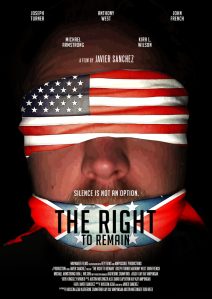 The Right to Remain is definitely a message movie with a very pertinent message for our trying times of racial injustice and civil unrest. This Ohio-made indie, filmed in my hometown of Columbus, was made before 2020 but its release seems even more timely with the outrage over police abuses dominating the news (it’s currently available for free on the film’s website as a five-part series). Even the title itself I find very fitting, taking its phrasing from the Miranda Rights that police officers are required to recite upon making an arrest and transforming it into a more exclamatory statement of defiance, one that could apply to the protests in the wake of George Floyd’s execution and the injustices roiling the country. The right to remain; the right to remain alive, the right to remain a citizen, the right to remain a human being deserving of equality. It’s all right there in the title as a starting point, so kudos to screenwriter/producer Javier Sanchez. The Right to Remain is a message movie that mostly succeeds on a patented formula even if it could have been a bit more ambitious or specific with its examination on race relations.
In 1987, Forsyth County Georgia is awash in racial acrimony. The overwhelming white citizens want to drive out black citizens from calling this county home. Master (Anthony West) is detained in the county jail after a botched bank robbery. The presiding officers harass, antagonize, and even torture Master during his extended lockup (where is the man’s lawyer?). Danny (Joe Turner) is an officer who doesn’t want to join in the harassment. He’s fighting against his own environmental upbringing, but he starts to see Master differently, even forming an unexpected friendship. Danny’s change of heart is tested when he learns that several townsfolk, aided by complicit officers, want to lynch Master to send a message.
Given the focus of the movie, it’s going to make liberal use of the N-word, which always carries a burden of justification for the storyteller. The movie is set in 1980s Georgia, and we’re following multiple racist characters, so it seems logical that when it comes to African-Americans, these people have one go-to word. It’s appropriate in that context but the filmmakers need to be careful about how often the word appears, not to dull its hateful power or, worse, to feel enabled by their setting to unleash the word without abandon. I feel like the filmmakers here have their hearts in the right place and trust them more with the N-word than Quentin Tarantino.

Behind-the-scenes picture from film website.
The message of this movie is pretty identifiable but still affecting. Watching two characters from different walks of life find common ground and build an uneasy friendship is a tried-and-true formula for mass appeal uplift. It recently even earned Oscar gold with 2018’s Best Picture-winner Green Book. The core of the movie is using a personal relationship and gradual reawakening from hate to discuss a larger issue, namely the mistreatment of black citizens and rampant police harassment. Through Master, the audience is able to personalize the experiences of a larger community. It’s all there and it still works from a general storytelling standard. However, do we need even more movies where black experiences are being told through the prism of a noble white person’s emerging epiphany? While he didn’t create this trope, I call this the Edward Zwick Model of nudging an audience with social commentary, like showing slavery and racism through a white P.O.V. (Glory), showing the Japanese modernization through a white P.O.V. (The Last Samurai), and showing the horrors of the diamond industry exploiting Africans through a white P.O.V. (Blood Diamond). Do we really need these gatekeepers to better tell the stories of minorities? I would say no, Hollywood execs would argue otherwise, but in 2020, I think using the suffering of a minority character to better educate a concerned white character is even more unnecessary. By no means am I condemning The Right to Remain and its filmmakers, good people with a story they wanted to tell and following a recognizable model to do so. I believe entirely in their good faith. Still, I kept debating whether this should be Danny’s story or Master’s.
Much of the movie is going to hinge on the writing and performances of the two men at the core of this relationship, so it’s a relief that this is where the movie shines. The two men begin to see past their prejudices, though, to be fair, this is far more pronounced with Danny realizing that his captive is not the animal his fellow officers decry. Master explains his reasoning for robbing the bank of the exact amount owed his family from Forsyth’s ancestors stealing his great-grandfather’s holdings in 1912. I enjoyed that he learns a sense of calm through his interactions with a kindly black pastor (Michael Armstrong), but it’s not a larger integration of spirituality, it’s actual pragmatic breathing exercises and meditation. Master even tries yoga. The larger emphasis is on Danny and his personal growth through his interactions with Master. It’s through small actions like a conversation, a shared game, a walk in the fresh air, but it feels earned and appropriately paced. By the end of the film, Danny is willing to put his life on the line to save Master and he has shaken free from the racist group-think that permeates the town. I like that even though the relationship between these two men improves, it’s not like everything can be readily resolved. You can tell Danny still has some lingering prejudices, and Master still has some doubts, but both men want to believe in the goodness of the other. I appreciated that degree of subtlety for a movie that doesn’t exactly trade in subtlety in service of its larger message. Not a complaint, mind you.
 Several supporting characters would probably have been better left out of the overall story. I don’t think we needed as many scenes with racists just glowering and being racist. As a movie, The Right to Remain runs around two hours total and could be trimmed down. As a series, if it were to remain so, I can understand the desire to refresh a viewer on the prejudices of the town and the stewing threat these bad men pose on the periphery of the story. The racist rogue’s gallery needed less check-ins. They bring in a white boy who was reportedly the victim of violence from a black man, and I thought we were going to get more examples of how racist brainwashing works through the role of this young boy with some very unfortunate burn make-up. Really, it looks like he has a pizza on his face minus the cheese. Except that’s not what happens, which seems peculiar that the good ole’ boys didn’t want to involve him in their fledgling murder message. Danny has a sickly pregnant wife (Vera Angelina Ignatov) whose narrative purpose seems to be to symbolize what he has lost in service of his job in a racist police force. That description makes it sound like she pushes him to take a stand against the pressures in his force but it’s really simpler than that. She’s the standard Wife to a Cop that reminds him he should be home more often. This also extends into the wife’s sister character (Kira L. Wilson) who also reminds Danny that he should be home more often. It’s redundant, and ending the film’s resolution with the wife’s sister’s personal recollection of when she knew racism was bad is strange.
The acting overall is both pleasant and earnest. West has a righteous defiance but also has a battle-weary resignation about his time as a black man in Georgia. He has an easy charisma that draws the viewer into his orbit. Seeing his responses to the tiny kindnesses offered is heartbreaking. Turner (Broken Mirror) begins as an uncomfortable but compliant officer and much of the movie rests upon his dawning realization of his own wrongs. Turner finds a well of decency to tap into with the character that makes him compelling even with the familiar formula. Turner and West have an amiable chemistry together and the best moments are their conversations. Another actor of note is John French (Confined) who plays what might be the most boisterously racist character I’ve seen in a movie since Alan Tudyk took my breath away in the Jackie Robinson biopic, 42. French is our primary villain and face of racism, and the actor seems to come alive with the pettiness and viciousness of his grotesque character. His chief seems to relish his position of authority and how we can abuse his powers. Also, given the Georgia setting, you’ll hear a range of Southern accents, some more understated and some more cartoonish.
I was slightly disappointed that the specific message of Forsyth County gets lost. The larger messages of racial tolerance swallow up the specifics of what happened in Forsyth, to the point that this story could have been told anywhere in the South. I was expecting the movie to come with facts and livid details about the history of Forsyth County and its bloody past of driving out all black residents in 1912 and how that legacy has shaped its descendants. There are brief news clips of Klansman and white supremacists rallying in 1987 to remind you of how prevalent this hateful organization still was in the community. There are even clips from Oprah Winfrey’s talk show, which worries me about copyright use and licensing for this production. The larger picture on racism still comes together with clarity, but I was hoping for something a little more specific about the county that inspired this movie. Imagine watching a movie about the Tulsa riots in 1921 and the decimation of Black Wall Street at the hands of envious white supremacists and that movie doesn’t go into specific details unique to its setting. It would be slightly disappointing because of the dramatic potential to a community opening up about its own past.
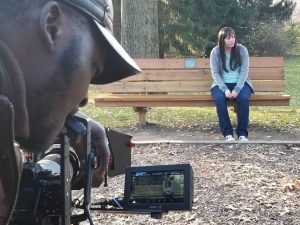
Behind-the-scenes picture from film website.
The Right to Remain is a low-budget indie ($10,000) so some technical issues and limitations are expected as long as they don’t fully rip the viewer out of the reality of the movie. The photography can be limited depending upon locations. Since much of the film is set in the whereabouts of Master’s jail cell, I was hoping for a larger variety of camera angles to spice up and differentiate the many sit-downs between bars. The sound design and recording, a notorious calamity of many an indie production, is also noticeably askew at points, with room tone levels clashing between shots. Other shots seem to use sound recorded from on-person mics where actors are rustling those microphones on their persons. An acoustic song seems to come in abruptly and leave just as abruptly, scoring moments awkwardly and then vanishing. It would be less bizarre if it didn’t show up repeatedly as if the sole musical selection for this universe. Any movie on a minuscule budget is going to have to cut some corners. Maybe the lighting isn’t dynamic here, maybe there isn’t as much coverage for certain scenes for the edit here, and maybe a location is lost and a more mundane setting is forced as a solution. There are numerous problems and solutions. I feel like director Hussein Azab (The Thin Blue Line) does a fine job of keeping things rolling without giving into artistic sacrifices. Sure, the sound could be improved, and maybe that pizza-face kid should just have been sidelined, but the big stuff is there on screen and it’s generally successful, which means the director had his priorities straight.
With message firmly pinned to its proverbial sleeve, The Right to Remain is a poignant drama that feels familiar and effective and well-acted and emotionally involving. It’s a low-budget success story of an Ohio indie who has found a timely relevance with its subject matter. Something tells me, sadly, that this movie will not stop being timely in the near future. The film is currently available for online streaming and even has a discussion guide with resources. It may be familiar, it could have been a little more polished, but the movie simply just works, and that’s a credit to the many cast and crew who had a worthy story to show the world.
Nate’s Grade: B-
Share this:

Becky (2020)
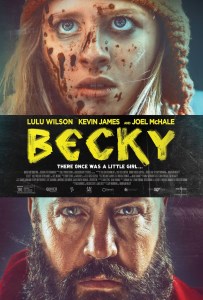 Imagine if Home Alone was more intense and populated with neo Nazis, and you’ll get a feel for Becky, a jubilantly gory, highly stylized indie thriller that might be as off-putting as it is entertaining. Kevin James, yes Paul Blart himself, gives an about-face turn as the leader of a group of Nazis that recently broke out of prison. With his bushy beard. swastika tattoos, and intensely quiet monologues, the stunt casting works out well, and James can be truly menacing. His band of goons are terrorizing a blended family in search for a macguffin of which just happens to be in possession of Becky (Lulu Wilson), an adolescent hellion they will soon reckon with. She knows the terrain of the family cabin and the woods and goes about picking off the bad guys one-by-one in fiendishly bloody, wildly over-the-top panache. That’s the real appeal of the movie, the various ways our pint-sized heroine takes down the Nazis. Directors Cary Munion and Jonathan Milott (Cooties, Bushwick) infuse plenty of visual style into their thrills, amplifying the intensity further, like a pounding camera edits and a walkie talkie confrontation between hero and villain where a series of pans makes it feel like they’re face-to-face. The film can be unsparingly brutal and hard to watch at times, walking a line between being darkly comic to simply being gross. Becky herself comes across like a brat and, as the killings continue, gleefully sociopathic. She’s still hurting from her mother’s death, she doesn’t want to have to save her soon-to-be stepmom and brother, but she’ll do it if it means killing more Nazis. One big tough Nazi has a crisis of conscience and demonstrates, at least onscreen, more depth than Becky. It’s all a bit too nihilistic by the end for my tastes. Becky ultimately is a movie about killing Nazis gory good and looking good doing so. If that’s enough for you, give it a watch.
Nate’s Grade: B-
Share this:

The Incredible Jake Parker (2020)
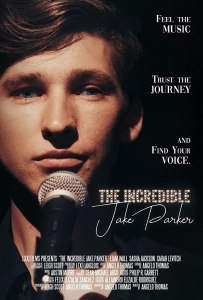 The Incredible Jake Parker is an Ohio indie written/directed/produced by Angelo Thomas, who just graduated from his arts college this spring. The 22-year-old adapted his own book into his first feature, all while finishing college and taking on activist responsibilities. The fact he has a finished feature film before he even graduated college, a film that was scheduled to open in multiple cities, is a damn impressive feat. Thomas is already well ahead of the game. Unfortunately, Jake Parker became another victim of COVID-19’s theater closings, and the limited release has been postponed. I was graciously given a digital link of the film to review and, even though I know people involved with the production, I vow to be as objective and constructive as possible with this film review. I honestly think the delay might help the movie, allowing for further critical examination and technical tinkering. As is, The Incredible Jake Parker is a well-made, albeit criminally short, indie that feels like it’s missing necessary development and potential drama to convey the steps in the journey of its titular star.
Jake Parker (Liam Wall) is a teenage musical sensation but he’s got a secret. He’s rapidly losing weight, enough to alarm doctors and his manager. Jake is anorexic. His tour is put on hold while he checks into a treatment center that will help him reflect and grow. He’s angry and eager to leave, but the more time he spends with the doctors and fellow patients, the more that Jake is able to tackle his personal demons with his body issues and figure out the man he wants to be.
The filmmakers behind The Incredible Jake Parker have an important and very personal message they take very seriously. Thomas has been open about his own troubles with an eating disorder and has spoken across the country about his experiences and insights. The character of Jake Parker is obviously informed from his own struggles and triumphs. Eating disorders are also a malady not typically associated with men, so smashing that taboo and educating viewers is admirable. We even see this flippant attitude in the movie where catty media figures wave away the implications of an eating disorder, especially for men, and prescribe just “eating a hamburger.” Body dysmorphic disorder is particularly affected by our omnipresent media culture that applies value to being thin, desirable, and staying within the codified boundaries of what is deemed appealing. That level of scrutiny and pressure can affect anyone’s mental health, let alone a performer whose press coverage and album sales can be affected by his good looks. It’s understandable to fall sway to negative thoughts that one’s body just simply isn’t good enough. The movie is filled with useful information about eating disorders as well as steps one can take to regain control over their body and mind and make healthy choices. By that regard, the movie can provide a great outreach to connect with people, especially young people, and inspire them to improve their own mental health and physical well-being. That’s what good art can do.
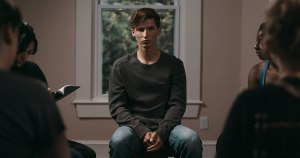 Now, with all that being said, it doesn’t feel like those good intentions have latched onto a suitable and engaging narrative to carry the burden of its worthy message. The movie is only 64 minutes long before its end credits and has the unmistakable feeling of missing development. We spend the first act establishing the problems for Jake and then in the last five minutes he finds effective solutions to those problems, but the connective tissue, the work, is missing in between. I’m going to go into some mild spoilers here though I don’t consider these to be significant because, realistically, did you expect Jake to not get better? I went back and re-watched what was Jake’s breakthrough therapy session and it amounts to being told that resilience is key and to find his inner strength. The very next scene involves Jake requesting ice cream to dine with a friend, seeming to now be able to manage his eating disorder, but why? Why was this a big breakthrough for Jake and why does it come with so much movie left? There’s another personal revelation that Jake is hiding that takes precedent in the last 15 minutes, which is odd to include so late after he seemed to overcome the movie’s big conflict, and even stranger to consider the fear it could pose to his musical career given modern-day sensibilities. It’s included to provide another scandal but it’s also there to get the plot even further across the hour-mark. Even his other late conflicts resolve so easily, some over text messages, that it begs the question of why introduce obstacles if they are so quickly overcome? When you wrap up your main internal struggle so early and with little elaboration, it leaves us questioning why we still have a movie.
So absent more in-depth examination on those problems, maybe we can use the extra time allotted to get to know Jake more as a character or the other residents of his treatment center, building a friendly network of lovable people leaning on one another to get better. The supporting characters are typically defined by their problem and stay that way. Mom (Rachel Coolidge) is an alcoholic, though we don’t see her drunk or even drink in hand if I recall, and Dad (John French) is a workaholic, though we don’t see him in a hurry to leave (the closest family Jake has is his British manager). Jordan (Sarah Levitch) has an eating disorder and was abandoned by her parents. I’m assuming the supporting characters at this treatment center all suffer from eating disorders but that could be my mistake. I have to go with this assumption because there is a raft of supporting characters that don’t open up about their specific problems, only occasionally their feelings of being helpless or being ashamed. A support group is a fantastic setting to derive some character-driven drama, forcing people to confront their pasts, mistakes, sense of self, vulnerabilities, relationships, and even butt heads before growing closer. It’s a conflict crucible ready for meaty scenes and yet it too is MIA. If Jake’s ultimate triumph over his personal demons is derived from the support he feels with the friends he’s made, then it would naturally need to feature meaningful interactions with supporting characters where we get to understand them and watch that progression of friendship and trust. It’s not that the material with these characters is bad, it’s just that they could all benefit from more of it.
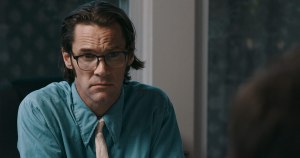 I do want to congratulate Thomas and his team for putting together a very professional looking movie. Even though its budget is a fraction of the Hollywood indie, The Incredible Jake Parker looks polished and proficient. The lighting and cinematography are a highlight of the movie, often finding compelling ways to frame the angular jawline of our titular star in anguish. It was filmed over nine days in Louisiana (boo) with some second unit work filmed in Columbus, Ohio (yeah). The songs we do get from Thomas and co-writers Austin Moore and Liam Wall are peppy and well composed with impressive production value. Just watching Wall sing is enjoyable and he seems at his most comfortable when he’s belting a tune and guitar in hand. The acting overall is generally good. Wall (Gold Dust) is a little stilted at times though it works for the awkwardness or clenched-jaw resentment he holds onto like a lifeline. Sasha Jackson (Blue Crush 2) has a few nicely delivered moments expressing her maternal worry and hope for Jake, who is more than just a client. The assorted supporting players make pleasant impressions, enough so that I desperately wanted them to have even more interactions to better allow the actors to shine.
Given Jake’s musical profession, I was expecting the film to include moments of his singing and guitar-playing for performances and songwriting, a reflection of his inner struggle for control and creative expression. What I wasn’t expecting was the movie to become a traditional movie musical where the characters just break into song and look into the camera. It first happens around the half-hour mark and took me aback, but I liked the two-minute introspective song and thought, “Okay, well if this is going to become a major element of the storytelling, I’m ready now.” I kept waiting for another moment of song-breaking and it didn’t occur until nearly the very end of the movie. It lasted, and I counted, 34 total seconds. Why break reality if it’s only going to last as long as a television commercial? If these two moments are the only ones that break reality to become a movie musical, then why include them if they only amount to two-and-a-half minutes? Could the sentiment not have been expressed with Jake merely playing his guitar and singing to himself rather than the music kicking in from on high? I was actually expecting more musical numbers simply because Wall can sing and play the guitar, as evidenced in the grabber of an opening scene where Jake records his amateur song that goes viral. He has talent so it would make sense that he writes a new song to discuss his journey, something he could perform at the very end to express his maturation and lessons learned, a new Jake Parker. That inspirational song, “Incredible,” plays over the end credits but why not actually see Wall perform the song to the camera, with the emotion pouring out of him, to mark the climax? It’s not like the film was running too long. Imagine the end of 2018’s A Star is Born and instead of Lady Gaga delivering that last powerful song to sum up her experiences, it just played over the credits.
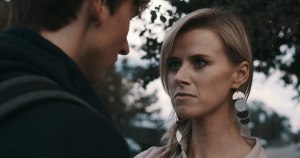 There are some other technical areas where The Incredible Jake Parker could benefit from some further attention before its big release rollout. The sound mix is often noticeably amiss with different shots having fuzzy interference that’s all the more noticeable when it’s edited with shots without. Some shots don’t seem to be using sound from other takes, so an off-screen character will sound distant because their dialogue was recorded away from the boom microphone. Why not pull sound from that character when they were on mic and layer it over? The color grading isn’t consistent at points, most notably when the film transitions from purchased stock footage that is vibrant in color to the more muted colors of the actual movie. I’m also hopeful that a new musical score can be applied (not the songs, the actual score) because it’s often too plain. The bigger technical element that could use another overview is the editing. Jake Parker is edited with a formula that a spoken line equals a shot cut. A character speaks. Next shot. A character speaks. Next shot. Repeat. It’s a stolid rhythm that can gum up the visual flow of scenes. The movie is crying out for another careful pass in the editing suite. It’s little things in the edit and pacing that can help mitigate whatever filming limitations there may have been.
The Incredible Jake Parker is a musical with a message and some spiffy technical acumen, especially considering that Angelo Thomas is only 22 years old and pulled this all off. Even though it’s only 68 minutes with credits, there is much to be impressed with this first film. There’s a late montage of real people (I’m assuming) who speak about their own struggles with eating disorders and mental health, their advice, and what a figure like Jake can mean to them, and while it may be manipulative my heart felt full-to-bursting while watching this genuine outpouring. It made me even more certain that had the film given more space to Jake’s journey, I would have been even more dazzled. Rare is the film I say could use an additional half hour minimum. The Incredible Jake Parker has all the hallmarks of great drama, with the insights of a man who lived it, so I wish we could have really dived into the development of its title character and his incredible story.
Nate’s Grade: C+
Share this:

The Wretched (2020)
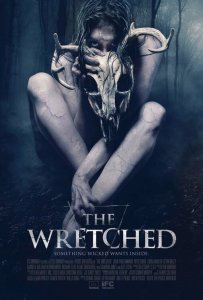
Very reminiscent of Fright Night, this movie feels like a lost relic to 80s coming-of-age movies and horror-next-door thrillers, and it’s generally great. We follow a teenager who is staying with his father over the summer; he’s also recovering after a drug-related accident. He’s convinced that his neighbor is really a witch who kills children and then fiendishly erases the memory of those children from the families she has inserted herself into. Nobody will believe him, especially with his past drug abuse, so he takes it upon himself to investigate the strange goings on, Rear Window-style, and potentially save lives once the witch is forced to jump into a new host and terrorize a new family. The Wretched is barely 90 minutes long and is splendidly plotted with every scene being meaningful, advancing the plot, shading characters and conflicts, heightening the stakes and suspense. The new-kid-in-town and young crush story elements work as well as the creepy horror. Overall, it’s a very fun movie that can switch modes when needed, being funny or sincere or spooky, and it does each with great finesse and execution. Writer-directors Brett and Drew Pierce (Deadheads) have a great affection for their characters as well as their material. It shows in the level of thought they give even small details, finding clever ways to serve payoffs as well as work emotional investment into a briskly told tale. There’s a very late twist that I should have seen coming but made me want to start clapping, and it works entirely within the carefully set-up rules of the supernatural monster and supplies an organic elevation to the stakes. I only wish the movie had given me even more. The Wretched is a charming throwback and proof positive that you don’t need to reinvent the wheel to make a good horror movie, just keep to a vision and see through the story to best serve and elevate that vision. It’s well worth your 90 minutes and I predict a bright future for the Pierce brothers.
Nate’s Grade: B+
Share this:

The Vast of Night (2020)
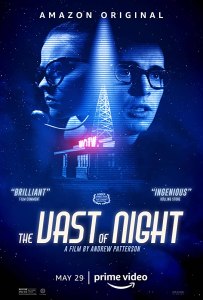 If you had told me that The Vast of Night was based upon a radio play or a narrative-driven podcast, something like the popular Welcome to Night Vale, I would have completely believed you. This is a very dialogue-driven story where the movie seems to hit pause and allow a speaker unfettered time to tell their tale in patient monologue, like a sci-fi edition of This American Life (I’m coming up with a lot of comparisons here). It’s a more high-concept, cerebral, imaginative-dependent science fiction. In 1950s New Mexico, a small-town radio DJ and a teen switchboard operator, both with dreams of leaving the town for bigger things, discover a strange signal and eyewitness reports of something in the sky. Over the course of one night, the characters investigate the signal and those who experienced it before. The Vast of Night flies right out of the gate, long takes giving space for fast-paced dialogue exchanges. The direction is very assured with long tracking shots to maintain the tightrope walk of a live theater performance that the screenplay imbues. I was always interested in what was happening but I can see many other viewers failing to click with the material and its narrative restraints. I do think the movie could use more of a resolution and errs by having the wrong combination of characters for a climax, denying the only real emotional catharsis that was offered by the screenplay. I’m sure many will simply find this movie slow and boring (it’s only 89 minutes but even that might be pushing it for many). The Vast of Night feels like an extended Twilight Zone episode, for better or worse. I applaud the ingenuity of the director and screenwriters on a small budget but I would not be surprised that bigger and better things lie ahead for each of these creatives.
Nate’s Grade: B
Share this:

Verotika (2020)
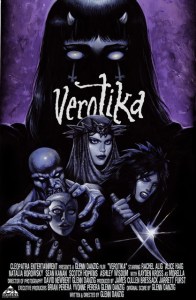 Misfits frontman Glenn Danzig loved the heavy metal aesthetic of big breasted ladies, fetish outfits, hulking monsters, and splashy gore, enough so that he started his own comic line in the 90s, Verotik (a portmanteau of “violence” and “erotic,” and yes that’s the explanation). They even adapted one of his comics, Grub Girl, into a 2006 adult movie, and I pulled this synopsis directly from Wikipedia: “One of the victims of the radiation is a sex worker whose scarred body is taken to a laboratory, where she wakes up while being sexually abused by a pair of necrophilic scientists, whom she kills on account of having given her ‘the worst f*** of my life.’ Grub Girl adjusts to being a zombie and returns to being a sex worker, discovering that being undead is advantageous to her career, as she is immune to disease and nearly impervious to pain.” Yikes. Anyway, Danzig took three of his comic tales and packaged them together into a low-rent horror anthology movie dubbed Verotika. Unfortunately, the final product is nothing short of one of the worst movies I have ever seen in my life. It is stunningly, exceptionally terrible in all facets.
I was left dumbstruck by the level of incompetence over the course of 89 ponderous minutes of awful. This goes beyond Tommy Wiseau and Neil Breen into downright Ed Woodian territory of ineptitude. I couldn’t turn away because I was trying to simply process everything I was seeing onscreen, to boldly attempt to understand so many choices made by Danzig as a filmmaker and storyteller. He serves as writer, director, and co-cinematographer. The finished film is not the so-bad-it’s-good derisive highs of Wiseau and Breen’s bemoaned catalogue of misfires. This is more just a slack-jawed “what were they thinking?” stupefied curiosity of an After Last Season (the worst film of the first 2000s decade, a movie so bad its small distributor asked theaters to burn their prints rather than ship them back). It’s not fun but baffling. It’s not silly but lecherous to the point of misogyny and discomfort. At no point are you transported to the weird imagination of an avant garde artist but instead you’re beset by huge lapses in filmmaking basics and a dearth of recognizable plot. With Verotika, there are no stories, only story premises that go nowhere and nowhere slow. While only 89 minutes long, it might be the most joyless, turgid, pointless 89 minutes I have experienced since After Last Season made an MRI machine out of paper print-outs.
 Allow me, dear reader, to describe for you the very opening minutes of Verotika, and please also understand that it only gets worse from there. The first segment is called “The Albino Spider of Dajette,” and it’s set inexplicably in France, which hamstrings every actor with a regrettable Pepe LePew accent that makes the segment even more ridiculous. Danzig could have spared his actors, who were clearly not capable of replicating French accents, the embarrassment but no. The opening minutes involve a busty woman, Dajette (Ashley Wisdom, porn actress), performing oral sex on a guy. He excitedly attempts to lift up her shirt, much to her chagrin, and is shocked to find that Dajette has eyeballs where her nipples should be. Yes, you read that correctly, she has literal eye nipples. The man leaves in horror and Dajette huffs dejectedly, “Not again.” These eye nipples will never amount to anything important, which is so confounding. Why include them? Her eye nipples cry a tear, which rolls down her breast and lands on a CGI spider, which then grows into a giant albino spider-man (Scotch Hopkins) with two working arms. This evil spider-man only comes out when Dajette is asleep, though she’s not sleeping now, so? He has a thirst for murder and sex and tells a prostitute he wants to rape her in the ass and then kill her. Her nonchalant response made me stare in amazement: “Ass f*** is my specialty.” Reader, I have described for you only the first few minutes of this entire segment. What is going on here?
The rest of this tale becomes repetitious as the spider-creature stalks and snaps more women’s necks, earning the moniker the “Neck Snapper” from the French media (imagine the strained pronunciation as “Nyek Snauhpah”). Dajette wanders around to stay awake, and this includes entering an adult film theater where the patrons conspire to gang rape her as soon as she nods off. She also enters a café where someone else’s cup is already waiting for her. Seconds later, a waiter asks if she wants any refills (“refeeelz”), and she declines and pays… for someone else’s cup of coffee? Here’s a prime example of the filmmaking shortcomings of Danzig. It would have been incredibly, stupidly easy to improve this scene simply by starting with Dajette at the table. By combining two shots of her walking along the street and then a shot of her indoors, still wearing her coat, and walking to a table, you are communicating an approximation of time. She has had no time to order her own coffee. All he had to do was start with her already seated and we could assume the cup was ordered off screen and before the edit. Verotika is replete with preventable bad decisions.
 Astonishingly, this segment is actually the best of the movie and each only gets demonstrably worse and more pointless. “Change of Face” is a clear homage/rip-off to 1960’s Eyes Without a Face as we follow a stripper/serial killer known only as “Mystery Girl” (Rachel Allig) as she slices off the faces of beautiful women to wear as her own. Our killer wears the faces of her victims to cover her own scarred visage while she strips for her customers. Considering she wears a mask to cover her face anyway while she dances, the face-removals seem gratuitous. If you’re looking for any clear motivation for this killer, even the simplest explanations, then you’ll only be further disappointed. Again, it would be so stupidly easy for Danzig to characterize the “Mystery Girl” as murderously jealous of the beauty denied to her, or present some insecurity that her stripping career and income will be shuttered if she cannot fix her face. Anything would have worked. Instead we simply get an absence of thought and development; this segment is taxed with several minutes of watching women lackadaisically walk around a stripper pole. It feels like Danzig had access to a strip club set for a day and was determined to use everything he shot. The epilogue of this segment even involves more lackadaisical dancing around a pole. The only thing that enlivens this segment is the acting of Sean Kanan as the detective tracking down the murderer. He talks like he’s trying to imitate Batman’s gruff voice and his chit-chat is blasé to the point of anti-comedy ironic perfection. “There’s your motive. They wanted a face,” he says. His big break in the case is finding a business card at the crime scene. Why would a stripper have a business card and why would this man assume she must be the killer? That would be like finding a carton of milk at a crime scene and declaring that the milkman was your top suspect.
The final segment is the most pointless of them all and feels like it should be visual accompaniment for talking heads on a History Channel special about Elizabeth Bathory, the notorious 16th century Hungarian noble who would bathe in the blood of virgins to stay young and vibrant. “Drukija Contessa of Blood” stars Alice Tate (Snowbound) as a woman who rubs blood on her face and body. That is literally the plot for thirty minutes. She slices some helpless women’s necks. She luxuriates in a bath. She rides a horse. She decapitates a runaway. She eats a woman’s heart while that victim inexplicably still writhes in agony well after the fact. There isn’t even the faintest hint of a plot here or characters. You would think we would follow one of the imprisoned women as she plots an escape. Once again, it feels like Danzig had access to certain elements that he was going to make sure got their overexposed spotlight. We watch Drukija stare into a mirror and make poses for several minutes. We watch Drukija sit in her creepy skeleton-lined bathtub for several minutes. We watch her ride a horse for minutes on end. At no point does Danzig offer a reason for the audience to care about anything happening on screen. The cruelty just becomes boring and as gratuitous as any other unfortunate moment in this unfortunate movie. The whole segment feels like watching a bored model on a cosplay photo shoot.
 The fundamental lack of story, characters, conflict drives me nuts, but the movie fails just as badly on its technical merits. I can excuse some lapses in filmmaking from a continuity standpoint as long as they are not glaring to rip me out of the movie. Anyone that nitpicks the placement of bed sheets from shot-to-shot rather than emotional engagement and narrative drive is simply watching movies wrong. However, Verotika is complicit in making the kind of goofs and mistakes you’d associate with a schlocky student films and not a (gasp) million-dollar horror movie. Danzig favors ending every scene in a fade out, and I’m not exaggerating when I say “every.” It’s like he doesn’t know when to end his own scenes (more on that below). There are specific limitations in the makeup and production design, but then why feature camera angles and lighting that expose those limitations? Things like the crotch of the spider-man being blown wide open and visible on camera or a superfluous CGI floor Drunkija struts over. There are a proliferation of lens flares, which I think Danzig feels are “arty,” and they do provide a brief respite from the very grimy, over exposed photography that can be dispiriting. Even with a million dollars, this movie looks depressingly cheap. Then there are sloppy mistakes nobody bothered to correct. The neon “café” sign that Dajette enters is above the café window, not over it, and facing inward, which means no potential customer from the outside would get the benefit of the sign. Murder victims are extremely unmotivated to get away from their eventual killers. Certain physical confrontations are so confusingly staged that character geography will alter in a flash like a scene was missing. A shaken police officer laments “if the press finds out about this” about the THIRTEENTH murder victim. I think the cat’s out of the bag, fella. Why do we need an Elvira-styled host (Kayden Kross, porn actress) making bad puns to introduce segments?
As a director, Danzig leaves his actors adrift with awkwardly non-existent guidance. It becomes readily apparent that Danzig was afraid to call cut too soon because many shots will linger on long after the point has passed, leaving actors to fidget or look around, waiting to be told the take was over. Sometimes this involves literal minutes of an actor doing something repetitious while the camera will zoom in and out continually. There are moments where the camera will duck around, unclear about what it’s meant to frame, looking for its subject or composition like a documentary filmmaker on the spot. Every actor suffers from this and shots and scenes have that uncomfortable feeling of dragging on haphazardly, missing the rhythm of film narratives. I bet you could shave those extraneous seconds off every scene and trim 15 minutes total. As a result of actors given bad material, nascent characterization when evident, funny accents, and little to no direction, there are plenty of actors struggling to perform whatever they’re intending.
 Even as a low-budget sleazy exploitation film, Verotika cannot even succeed by that metric. The gore effects are few and far between and Danzig likes to linger over what he can get, much like other elements. If he bought the makeup for one girl to be skinned faceless, you’re going to see that effect a dozen times. When the Contessa is chomping on a heart, the proportions are so out of scale that it dulls the impact of what is a fairly good prosthetic otherwise. Even when it comes to gratuitous sex and nudity, the movie seems oddly inept. During the interminable stripping scenes of “Change of Face,” the women don’t actually strip while they lethargically spin around their poles. The women on display are more fetishized as murder victims than they are as sex objects. Why include eye nipples and then do nothing with them? Where did they come from? Is this a genetic thing? Did Dajette’s mother have eye nipples and nurse her from them? My pal Ben Bailey came up with a better storyline with “eye nipples” on the spot, gifting them laser powers and a thematic angle about striking back against handsy men who won’t respect consent. Boom, right there, a better use of weird exploitation elements and he was only joking around.
With every conceivable level of filmmaking and storytelling, Verotika shows that Danzig is not remotely ready for the big screen. The paltry story is kept at premise-level, there’s a decided lack of characterization and stakes and intrigue, lots of repetition, and shaky direction that leaves actors astray with over-extended scenes. Even as an exploitation movie, you will be sorely disappointed. As a hopeful heir apparent to the so-bad-it’s-good club, Verotika is not the next The Room. Not even close. It’s bad and inept and boring and flabbergasting but it lacks the bewildering appeal of the best of the so-bad-it’s-good crew. It lacks a sense of sincerity. I doubt Danzig thought he was making great art or even something cool. It feels like he took a music video concept and bloated it to bursting (Danzig’s music is a constant background presence). Danzig actually has another movie scheduled for release this year, Death Rider in the House of Vampires, starring Devon Sawa, Julian Sands, and Danny Trejo. I can only hope he’s learned from this baptism by fire (and blood) and surrounds himself with professionals who can carry the burden when he falters.
Nate’s Grade: F


 nathanzoebl
You must be logged in to post a comment.