Blog Archives

Public Enemies (2009)

Considering the talent in front of and behind the camera, it’s hard not to describe Public Enemies as anything but a letdown. This Depression-era gangster film is heavy on period details and very tight-fisted when it comes to characterization. You’d think given 140 minutes and the natural charisma of Johnny Depp that an audience would come to some kind of understanding with notorious bank robber John Dillinger. Nope. The characters remain perfunctory the entire time, pushed into conflicts by a brisk pace that manages to squeeze in three bank robberies, two prison breaks, and many police shootouts. Because the movie barely takes time to breathe, the love story between Dillinger and Billie Frechette (Oscar-winner Marion Cotillard, a dead ringer for pop singer Katy Perry) is never credible, the tension never feels palpable, and director Michael Mann (Heat, Collateral) seems overly smitten with his distracting high def digital photography. You never really feel any sense of danger or interest. The characters on screen feel like strangers even after 140 minutes. Depp makes the movie more tolerable than it would be without his presence. Mann, one of three credited screenwriters, seems to assume the audience is well versed in Dillinger history and so he skips over plenty of fertile territory. Public Enemies certainly hums with plenty of polish but it comes across as mostly mundane due to such flimsy character work. It’s a collection of good scenes that fail to make up a satisfying whole.

Nate’s Grade: B-

Perfect Stranger (2007)

What starts as a pretty poor thriller goes absurdly over the top by the tired Hollywood convention of a forced twist ending, and this one isn’t just forced, no, it contradicts everything that happened before it for 100 minutes. The movie piles up red herring after red herring trying to keep the audience guessing, but I think this is because Perfect Stranger had no idea how to end and who would be deemed the killer. As a result, the hedging feels like a lousy board game of Clue until the awful, ludicrous, inconceivable twist ending. It’s the kind of ending that is supposed to somehow make sense because the filmmakers flashed short bursts of a childhood incident that lacked context and clarity. Perfect Stranger really has one of the worst twist endings of recent memory because it makes no sense and defies all logic. If the ending were right why would someone wait years upon years to plan a murder to hide something that seems inconsequential? Why does someone think their friend is a killer because their computer memory recalled that they visited a company website despite the fact that this person is a journalist and going undercover at this same company? And why, stupid Hollywood characters, do you recite how you’ve figured out their deeply convoluted plan to the murderer only to get murdered? Halle Berry gives a rather embarrassing performance; she’s all over the map and I question much of her character’s actions and anxiety, especially when seen ALONE, if the twist ending holds. Perfect Stranger is ridiculous junk that tries to outsmart an audience by confusing them and then openly negating their story thanks to a twist ending that is intended to blow minds but will simply leave people scratching their heads and pitying everyone involved in this disposable dreck. And no, this has nothing to do with Cousin Larry and Balki.

Nate’s Grade: D

Sky Captain and the World of Tomorrow (2004)

Sky Captain and the World of Tomorrow started as a six-minute home movie by Kerry Conran. He used computer software and blue screens to recreate New York City and depict a zeppelin docking at the top of the Empire State building. The six-minute short, which Conran spent several years completing, caught the attention of producer John Avnet (Fried Green Tomatoes). He commissioned Conran to flesh out a feature film, where computers would fill in everything except the actors (he even used the original short in the feature film). The dazzling, imaginative results are Sky Captain and the World of Tomorrow.

Polly (Gwyneth Paltrow) is a reporter in 1930s New York. She?s investigating the mysterious disappearance of World War scientists when the city is invaded by a fleet of robots. The city calls out for the aid of Sky Captain, a.k.a. Joe (Jude Law), a dashing flying ace that happens to also be Polly?s ex. Joe and Polly form an uneasy alliance. He wants to stop Totenkopf (archived footage of Laurence Olivier) from sending robots around the globe and rescue his kidnapped mechanic, Dex (Giovanni Ribisi). She wants to get the story of a lifetime, a madman spanning the world to abduct scientists, parts, and the required elements to start a doomsday device. Along the way, Captain Franky Cook (Angelina Jolie) lends her help with her flying amphibious brigade. Together they might stop Totenkopf on his island of mystery.

Sky Captain is a visual marvel. It isn’t necessary a landmark, as actors have performed long hours behind green screen before (just look at the Star Wars prequels). Sky Captain is the first film where everything, excluding props the actors handle, is digitally brought to life inside those wonderful computers. The results are breath-taking, like when Polly enters Radio City Music Hall or during an underwater dogfight with Franky’s amphibious squadron. Sky Captain is brimming with visual excitement. The film is such an idiosyncratic vision that there’s no way it could have been made within the studio system.

Sky Captain has definite problems. For one, the characters are little more than stock characters going through the motions. The story also takes a backseat to the visuals. The dialogue is wooden and full of clunkers like, “You won’t need high heels where we’re going.” Generally the dialogue consists of one actor yelling the name of another character (examples include: “Dex!” “Joe!” “Polly!” and “Totenkopf!”). My father remarked that watching Sky Captain was akin to watching What Dreams May Come, because you’re captivated by the painterly visuals enough to stop paying attention to the less-than-there story and characters. The characters running onscreen also appears awkward, like they’re running on treadmills we can’t see, reminiscent of early 1990s video games.

Let’s talk then about those characters then. Paltrow’s character is generally unlikable. She’ll scheme her way toward whatever gains she wishes, but not in a chirpy Lois Lane style, more like a tabloid reporter. She whines, she yells, she complains, she berates, and she doesn’t so much banter as she does argue. Sky Captain is more enigmatic as a character. He seems forever vexed. Jolie’s Captain Franky Cook gives her another opportunity for her to use her faux-British accent. Jolie’s character is the strong-willed, sexy, helpful heroine that should be the center of the film, not Paltrow’s pesky reporter.

It’s also a bit undignified to assemble Laurence Olivier as the villain. It’s very unnecessary, but at least he wasn’t dancing with a vacuum cleaner.

Now, having acknowledged the flaws of Sky Captain, I must now say this: I do not care at all. This is the first time I’ve totally sidestepped a film’s flaws because of overall enjoyment. I have never felt as giddy as I did while watching Sky Captain and the World of Tomorrow. When the giant robots first showed up I was hopping in my seat. When I saw the mixture of 1930s sci-fi, adventure serials, and Max Fleischer cartoons, I was transported to being a little kid again. No movie has done this so effectively for me since perhaps the first Back to the Future. I loved that we saw map lines when we traveled from country to country. I love the fact that the radio signal hailing Sky Captain is reminiscent of the RKO Pictures opening.This is a whirling, lovelorn homage that will make generations of classic movie geeks will smile from ear to ear. I don’t pretend to brush over the flaws, with which story and characters might be number one, but Sky Captain left me on such a cotton-candy high that my eyes were glazing over.

One could actually make a legitimate argument that the stock characters, stiff dialogue, and anemic story are in themselves a clever homage to the sci-fi serials of old, where the good guys were brave, the women plucky, and the bad guys always bent on world domination. I won?t make this argument, but it could lend credence more toward the general flaws of Sky Captain and the World of Tomorrow.

Sky Captain is an exciting ode to influences of old. It’s periodically breath-taking in its visuals and periodically head scratching with its story, but the film might awaken childhood glee within the viewer. I won’t pretend the film isn’t flawed, and I know the primary audience that will love Sky Captain are Boomers with a love and appreciation for classic cinema. Sky Captain and the World of Tomorrow will be a blast for a select audience, but outside of that group the film’s flaws may be too overwhelming.

Nate’s Grade: B+

Cold Mountain (2003)

Cold Mountain (2003)

Premise: At the end of the Civil War, Inman (Jude Law, scruffy) deserts the Confederate lines to journey back home to Ada (Nicole Kidman), the love of his life he’s spent a combined 10 minutes with.

Results: Terribly uneven, Cold Mountain‘s drama is shackled by a love story that doesn’t register the faintest of heartbeats. Kidman is wildly miscast, as she was in The Human Stain, and her beauty betrays her character. She also can’t really do a Southern accent to save her life (I’m starting to believe the only accent she can do is faux British). Law’s ever-changing beard is even more interesting than her prissy character. Renee Zellweger, as a no-nonsense Ma Clampett get-your-hands-dirty type, is a breath of fresh air in an overly stuffy film; however, her acting is quite transparent in an, “Aw sucks, give me one ‘dem Oscars, ya”ll'” way.

Nate’’s Grade: C

Lost in Translation (2003)

Sophia Coppola probably has had one of the most infamous beginnings in showbiz. Her father, Francis Ford, is one of the most famous directors of our times. He was getting ready to film Godfather Part III when Winona Ryder dropped out weeks before filming. Sophia Coppola, just at the age of 18, stepped into the role of Michael Corleone’’s daughter. The level of scathing reviews Coppola’s acting received is something perhaps only Tom Green and Britney Spears can relate to. Coppola never really acted again. Instead she married Spike Jonze (Being John Malkovich) and adapted and directed the acclaimed indie flick, The Virgin Suicides. So now Coppola is back again with Lost in Translation, and if this is the kind of rewards reaped by bad reviews early in your career, then I’’m circling the 2008 Oscar date for Britney.

Bob Harris (Bill Murray) is a washed up actor visiting Tokyo to film some well-paying whiskey commercials. Bob’’s long marriage is fading and he feels the pains of loneliness dig its claws into his soul. Bob finds a kindred spirit in Charlotte (Scarlet Johansson), a young newlywed who has followed her photographer husband (Giovanni Ribisi) to Japan and is second-guessing herself and her marriage. The two strike up a friendship of resistance as strangers in a strange land. They run around the big city and share enough adventures to leave an indelible impression on each other’’s life.

Lost in Translation is, simply put, a marvelously beautiful film. The emphasis for Coppola is less on a rigidly structured story and more on a consistently lovely mood of melancholy. There are many scenes of potent visual power, nuance of absence, that the viewer is left aching like the moments after a long, cleansing cry. There are certain images (like Johansson or Murray staring out at the impersonal glittering Tokyo) and certain scenes (like the final, tearful hug between the leads) that I will never forget. It’s one thing when a film opens on the quiet image of a woman’s derriere in pink panties and just holds onto it. It’’s quite another thing to do it and not draw laughs from an audience.

Murray is outstanding and heartbreaking. Had he not finally gotten the recognition he deserved with last year’s Oscar nomination I would have raged for a recounting of hanging chads. Murray has long been one of our most gifted funnymen, but later in his career he has been turning in soulful and stirring performances playing lonely men. When Murray sings Roxy Music’s “More Than This” to Johansson during a wild night out at a karaoke bar, the words penetrate you and symbolize the leads’ evolving relationship.

Johansson (Ghost World) herself is proving to be an acting revelation. It is the understatement of her words, the presence of a mature intelligence, and the totality of her wistful staring that nail the emotion of Charlotte. Never does the character falter into a Lolita-esque vibe. She’s a lonely soul and finds a beautiful match in Murray.

Lost in Translation is an epic exploration of connection, and the quintessential film that perfectly frames those inescapable moments of life where we come into contact with people who shape our lives by their short stays. This is a reserved love story where the most tender of actions are moments like Murray carrying a sleeping Johansson to her room, tucking her in, then locking the door behind. The comedy of disconnect is delightful, like when Murray receives incomprehensible direction at a photo shoot. The score by Jean-Benoît Dunckel, front man of the French duo Air, is ambient and wraps around you like a warm blanket. The cinematography is also an amazing experience to behold, especially the many shots of the vast glittering life of Tokyo and, equally, its strange emptiness.

Everything works so well in Lost in Translation, from the bravura acting, to the stirring story, to the confident direction, that the viewer will be caught up in its lovely swirl. The film ends up becoming a humanistic love letter to what brings us together and what shapes how we are as people. Coppola’s film is bursting with such sharply insightful, quietly touching moments, that the viewer is overwhelmed at seeing such a remarkably mature and honest movie. The enjoyment of Lost in Translation lies in the understanding the audience can feel with the characters and their plight for connection and human warmth. A work of art like this sure doesn’t come around every day.

Writer/director Sophia Coppola’’s come a long way from being Winona Ryder’’s last-second replacement, and if Lost in Translation, arguably the best film of 2003, is any indication, hopefully we’ll see even more brilliance yet to come. This is not going to be a film for everyone. A common argument from detractors is that Lost in Translation is a film lost without a plot. I’ve had just as many friends call this movie “boring and pointless” as I’ve had friends call it “brilliant and touching.” The right audience to enjoy Lost in Translation would be people who have some patience and are willing to immerse themselves in the nuances of character and silence.

Nate’s Grade: A

The Gift (2000)

Sam Raimi is a slick director and is maturing smoothly. The Gift is a nice ensemble pot-boiler in the South. Cate Blanchett gives a remarkable performance that was, as most were that were nominated, better than Julia. Keanu Reeves finds a role he can actually excel with in that of a wife beating redneck; he’s actually quite scary in it. Giovanni Ribisi gives the best performance of his career as a mentally challenged mechanic. The film coasts on some good atmosphere and direction by Raimi, but it is too easy to figure out the final turns in the end.

Nate’s Grade: B

Boiler Room (2000)

Boiler Room is like a Wall Street for the dot-com kids, hell they even have a scene where they openly quote and recite Glengary Glen Ross. Giovanni Ribisi plays the son of a judge and the head of a gambling front he runs in his home that decides to cut his teeth in the world of stocks and options. Boiler Room begins as an insightful and well-paced inside look toward the cut-throat world that crunches the numbers and keeps the leg of our economy afloat. I find it fascinating that a good base of our economy is based upon round table rumor and the opinions of a select few. But the brash and stirring scenes of the politics of a sell are then given up when the FBI is introduced and Gio tries to take the company out from its dirty inside. The movie then falls to the wayside of entertainment. Boiler Room is a surprisingly engaging film that decides to go down the wrong path.

Nate’s Grade: B

Gone in 60 Seconds (2000)

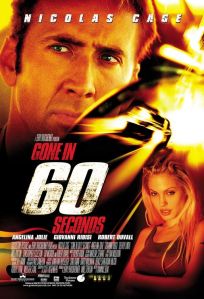
The movie I’ve seen trailers for since last summer finally hits theaters in a summer full of hungry patrons all wishing for the biggest explosion and coolest effects. But with its star heavy cast and array of sleek cars can Gone in 60 Seconds propel itself to the front of the race with audiences?

Nicolas Cage plays a reformed car thief forced back into the fray when his screw-up brother (Giovanni Ribisi) botches a deal for a local toughie. To rescue his delinquent bro Cage must steal 50 cars over the next three days for the man. So Cage wastes two days assembling his team of usual stereotype frat kids who are “the best and brightest” to aid in the mission. That leaves 24 hours for Cage and company to steal 50 cars and save the day minding any moral objections over grand theft auto.

Gone in 60 Seconds is a living dream of testosterone with fast cars, sexy girls, and colossal explosions. But all the action is mercilessly loud yet surprisingly tame and empty. All the action lacks true tension or any real semblance of excitement. The director uses poor choices of rapid quick-cut edits that dull any build up of excitement. Most of the action doesn’t even center on the theft of cars, it just happens. Excluding one chase scene toward the end Gone in 60 Seconds is a popcorn movie with no flavor.

The script and characters take a back seat toward the effects and speeding cars but this to be expected from producer Jerry Bruckheimer, the man who gave us the equally boisterous Con Air and The Rock. This time the holes of the plot are easier to see and the dialogue no less cheesy especially when car talk turn innuendous. It’s easy to argue that story should be forgotten because audiences came to see cool cars and cool crashes, but it’s also easy to argue that those cool crashes and cars are distractions (as is Angelina Jolie) from the thinly strained story. When you have time to really analyze the plot in an action film you know the action isn’t up to par.

Gone in 60 Seconds could also serve as an apt description for Angelina Jolie’s running time. The recent Oscar winner dons bleached dreads and those pouty lips but is still seen less than Waldo – and that is a criminal mistake with someone like her. Gone in 60 Seconds has a bounty of Oscar winners with scant supporting screen time yet it can’t fool the crowd.

Gone in 60 Seconds may fit the criteria for a grand summer fireworks show but can never deliver the goods. It may be flashy, loud, and fast but this flick just isn’t running on empty, it’s past the “E.”

Nate’s Grade: C-

The Mod Squad (1999)

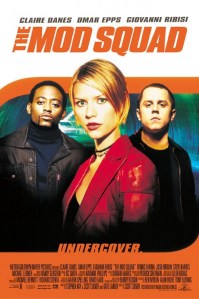
There are some movies out there that you simply can’t stop yourself from scratching your head and wondering how it ever got made in the first place. Some movies so horrible that you ponder what any big suited executives were thinking. Well folks, The Mod Squad is one of those movies.

It’s the cinematic updating of the Vietnam era show epitomizing the rebellion against authority and suppression by the Boomers like only Aaron Spelling can. I’m convinced that if you pay adequate attention to the plot you will actually lower your intelligence but don’t hold me to it. It’s only a theory, I still need the tests to come back. This basically is nothing more than a watered down 90-minute jeans ad. “Oooh, look at those jeans Claire Danes shoots up in! I wonder if they have them in a size 30 waist?”

This is one of those movies I seriously can’t find anything remotely good to mention. Though I’m trying to get it all out of my head as quickly as humanly possible. I feel sickened by this poison MGM has thrown out to the masses. I remember the last time Generation X & Y tried looking back nostalgically and enviously on the Boomer’s playground. It was called Woodstock ’99. Anyone care to remember what happened there?

Nate’s Grade: F