Blog Archives
The Theory of Everything (2014)
 A biopic on the life of Stephen Hawking, arguably one of the most brilliant men in the world, stricken with ALS and given only two years to live, should be resolutely fascinating and inspirational. And it is at points, but there’s still a gnawing dissatisfaction with The Theory of Everything, a sense that there isn’t more to it, that it lacks a center, that, primarily, it should be better. The film follows Stephen (Eddie Redmayne) as a PhD student who immediately falls in love with Jane (Felicity Jones). Shortly after their courtship, he is diagnosed with ALS and rather than preparing for the end, he pushes forward to great intellectual discovery and achievement, though the hardships and care for his physical disability places tremendous strain on his marriage to Jane. The film does a nice job of examining how a relationship comes to an end and without having to cite one party or another as a villain. It’s so measured and understanding and empathetic, but it’s also somewhat docile and hesitant, keeping its distance when it could dive deeper into Hawking and his family. Theory is far too reliant upon the tropes of biopics, speeding through significant moments for Stephen and Jane with an almost comical degree (watch how quickly the kids multiply). The moments that stray from this formula are the ones that stick the most, like a shocking moment where Stephen exits his chair to pick up a fallen pencil, a striking and poignant moment so effectively communicating the desires of its character. The film needed more creative detours. Director James Marsh (Man on Wire) has a good command of his visuals but I was left wanting a more daring approach to a story of human endurance, like 2007’s Diving Bell and the Butterfly. The real reason to watch the film is the amazing performance by Redmayne (Les Miserables). The physical control he’s able to have over his body in the latter stages is astounding, but his performance is much more than just a collection of tics. There’s a moment late in the film where, even in his limited facial configuration, he breaks your heart with the richness of his acting. It’s such a great performance that you just wish the rest of The Theory of Everything could measure up.
Nate’s Grade: B-
Share this:

Third Person (2014)
 Paul Haggis is the Oscar-winning writer/director of Crash, so a man not known for subtlety. And that can be fine, but with his latest effort, Haggis wastes his time on a sluggish triptych that doesn’t come together in any satisfying or clever manner. Like Crash, we follow multiple storylines that we expect to intersect or crisscross. Liam Neeson plays an arrogant author checked into a French hotel trying to write his next novel. He engages in a series of cruel and flirty games with his mistress (Olivia Wilde). Adrien Brody plays a fashion spy in Italy who grows a conscience to help an immigrant regain her daughter. Mila Kunis is a New York actress struggling to get her life in order so she can regain some measure of custody for her son. Right away, the characters are rather bland and remote, refusing to provide much depth or development. Then there’s the fact that the plot requires so little of them, falling into a deadly lethargy that it can’t shake free from. You keep waiting for something more significant to take place but the characters just dawdle, spouting dialogue that never feels authentic. I kept waiting for the twist spoiled by the trailer for Third Person, and by the time two hours passed, I had to note that it was not a mid-movie twist spoiled by the trailer, it was the twist ending. Did the marketing department watch their own movie? I’ve never seen that before; late plot developments, yes, but never the twist ending. There is a reason why these characters are so poorly developed but it’s still not a satisfying reason to watch blasé people blunder around with little direction for over two hours, especially when they have no discernible connection to one another beyond heavy-handed linked themes. Hey, at least Third Person has a favorable amount of Olivia Wilde nudity to keep your interest. After that’s done, though, you can check out just like this array of substandard and morose characters.
Nate’s Grade: C
Share this:

The Fault in Our Stars (2014)
 With a premise involving two teenagers with terminal cancer, you’d be correct to assume that The Fault in Our Stars is a sad experience. It wants to be an unsentimental version of the Big Cancer Weepie, like a more hip version of Love Story. It wants to obliterate your tear ducts but in a way that won’t make you roll your eyes from an overdose of maudlin material. Based upon John Green’s international best-selling young adult novel, the doomed romance of the year has already devastated millions of moviegoers. Is it the feel-bad movie of the summer with a soundtrack Zach Braff would approve?
Hazel Grace (Shailene Woodley) is a 16-year-old girl dealing with lung cancer. She lugs around an oxygen canister to her group therapy sessions, really to everywhere she goes. Her parents (Laura Dern, Sam Trammell) try and give her enough space, try to make her feel like a normal teenager, but they all know what is coming. Then one day at group therapy she meets Gus (Ansel Elgort), a tall, handsome, effortlessly confident young man in remission himself (he had a leg amputated from cancer). Gus hones his sights on wooing Hazel, winning her over. She resist at first but then finds herself falling for the charming fella (“I fell for him like falling asleep; at first slowly, then all at once.”).
 With constant life and death stakes and the certainty of a young life, it would be easy for the film to go overboard with its emotional histrionics, and yet the real grace of the film is its more realistic approach to portraying this life. It just doesn’t seem fair for someone so young to be stricken with a deadly disease that will pluck him or her from the Earth before settling into adulthood, but these things happen. Hazel and Gus are characters that aren’t begging for sympathy or even special treatment; they’re tired of being treated like lab specimens too fragile to be left on their own. It’s easy to lose the person when the outside world completely identifies them as afflicted. The skill of this movie is that it’s heavy with drama and sadness but it doesn’t quite overwhelm, at least until the last act. Until then, much like the characters, the movie finds the moments of happiness, connection, and tenderness with human contact. You feel the bursts of nerves and excitement over the flirty connection between Gus and Hazel. You’ll enjoy the couple-y moments they share, finding their own identity as a pair, like claiming “okay” as their own secret coded language. You’ll feel warm and fuzzy over that first kiss. It’s a winning pairing that produces a steady stream of sweet exchanges and discoveries. This is something of a silver lining movie that can make you ruefully smile through your tears.
But as a Big Cancer Weepie, and with two suffering lovers, there is a definite cloud that hangs over the entire movie. You’re nervously waiting for some sort of turn for the worse. From a storytelling standpoint, I think every ticket-buyer knows with two cancer-stricken leads that at least one of them will be dead before the end credits. And so we wait for the bad news, wait for that other shoe to drop, and this unsettling dread permeates the first half of the movie, tainting all those happy couple moments. Gus and Hazel have several cute moments, but I found myself holding back, waiting for the proverbial hammer to drop on their small shared happiness, and sure enough it will come. The entire third act is dominated by one character’s descent into terminal. For the sake of spoilers I won’t say which, though readers with keen analytical skills can likely guess which of the pair is more expendable from a plot standpoint. It’s at this point when the movie transitions from sad to full-blown weepie, looking to draw out every last tear. With the diagnosis set, our couple heads toward that date with oblivion, and we get all sorts of weight heart-to-hearts, teens grappling with their own legacy, and even a practice funeral for friends to say exactly how much the soon-to-be-departed loved one mattered. Every step is wrung out, even to the point of one last letter/message before death that serves as the closing, considerate voice over. It’s hard to resist the cumulative effect of all these big dramatic plays at your emotions (I got teary at several points but held my ground).
The question arises at what point is this blatant emotional manipulation? The first half of The Fault in Our Stars finds a balance between the heaviness and the levity of first love, grounding its characters and their emotional highs. However, with that aforementioned turn of sullen events, the plot then becomes one long series of Sad Ruminations. What will the friends do without their pal? What will the family do? What does this harsh realization do to other terminal characters and their own family relationships? What about coming to grips with certain death? And then there’s the practice funeral. For a movie and a set of characters that refused to dwell in a pit of sadness, that’s all that the second half of the movie feels like. It also feels like the two-hour-plus plot is overextended to squeeze in one sad ruminating scene after another. In a way, it reminded me of the onslaught of emotional punishment that was the last act of Marley & Me, an otherwise enjoyable movie that devastated every dog owner by its conclusion. It feels a bit much.
 And this leads me to another issue with the adaptation process, namely that Gus is actually a character with little depth to him. He’s a smiling, immensely likeable figure who doggedly pursues Hazel and falls for her hard. But what is he as a person? He’s overly confident, compassionate to others, witty, charming, but these are more superficial descriptions than deeper analysis. I suppose one could argue he’s just decided to embrace life smiling, but for the most part Gus comes across as a prime figure of squishy wish fulfillment. He’s too good to be true, and with a lack of stronger characterization, that’s the way he plays. Now, I certainly liked the character and found Elgort (Divergent) to be a charming lad, but when the film transitioned to sadder territory, my feelings felt blunted. I would have felt more for this couple had Gus felt more like a real person.
It’s a good thing then that Hazel is the protagonist and main point of view, especially when Shailene Woodley as lead actress. I’ve raved about Woodley before, particularly last year’s underrated Spectacular Now, but every new leading performance is further proof that she is one of her generation’s best young actresses. There is no artificiality in this woman’s body. Her performances are master classes in exuding naturalism, blending into the character, finding subtle ways to express a wide range of emotions; seriously, this woman can express so much just with a tilt of her head and the right kind of smile. Woodley is terrific once again, instantly locking in your sympathy. Her trial of love and suffering run the danger of being heavy-handed but Woodley seamlessly anchors the movie, guiding the audience back to her sphere whenever things get too overwrought. When she tears up, I teared up. When she unleashes a howl of grief, I had to fight every impulse in my body to join her. Her chemistry with Elgort is suitable if unspectacular, but Woodley sells every emotion and without a hint of artifice. If she were in a Big Cancer Weepie, you’d never know it given the skill of her performance.
I can’t imagine there will be much surprise for anyone who watches The Fault in Our Stars. Two young lovers with terminal cancer have a way of writing itself. What separates this story from other sappy tearjerkers is its presentation and perspective. This is a movie that flirts between jaded and maudlin, scoffing at the overt sentimentality of grief culture yet finding a middle ground that feels humane and honest and earned. Woodley’s strong, emotive performance helps ground the film even when the long string of manipulation begins. I wish Gus was a stronger character rather than a charming romantic compliment, a dream boyfriend who indeed comes across as too good to be true. I wish the movie also would not get swallowed up by the heavier elements it found balance with before. With all that being said, this is an engaging drama first and an amiable romance second. You may see the end coming from the start, but the same can be said about all of us. We all know how our own story is going to end. The only difference is the people we touch in between the start and the stop. That is our lasting legacy. The Fault in Our Stars is more a journey than a destination, and it does enough right with enough sincerity and intelligence to endure the pain.
Nate’s Grade: B
Share this:

Edge of Tomorrow (2014)
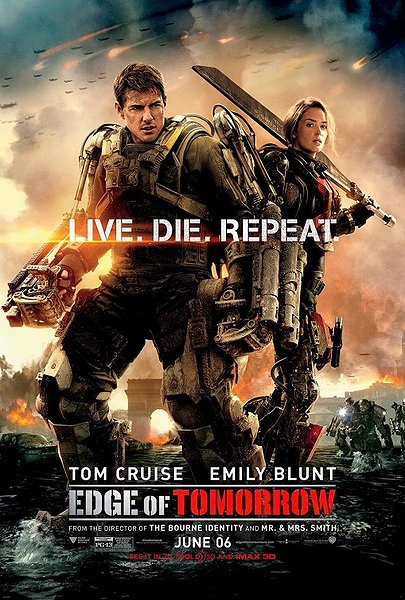 I’ve always been one able to separate the art from the artist, so while Tom Cruise may annoy people in real life because he jumped on a couch one summer, that doesn’t halt my enjoyment of the man’s movies. It seems with every new Cruise vehicle that under-performs at the box-office that I must be in the minority. Cruise hasn’t had a hit to his name since 2011’s suitably awesome Mission Impossible: Ghost Protocol. Both Oblivion and Jack Reacher, perfectly solid action movies, failed to make over $100 million domestically, further calling into question the drawing power of Tom Terrific. It seems that his latest, Edge of Tomorrow, is going to suffer a similar fate. This is a shame. As my critical colleague Ben Bailey said in his own review for the film: “Edge of Tomorrow might just be the most critically acclaimed box-office bomb of 2014.”
William Cage (Cruise) is chiefly an Armed Forces PR flak. He goes on TV to push the talking points of the United States military, which is in a heap of trouble. Aliens have landed in central Europe and spread quickly, proving to be nearly unstoppable. There was one soldier who was able to lead a successful counter attack. The “Angel of Verdun” is Rita (Emily Blunt), a soldier Cage proudly chirps only spent a day in her mechanical fighting suit beforehand yet proved to be so deadly. After vaguely threatening a high-ranking official rather than report for a doomed counter assault, Cage is shipped to the frontlines as a deserter. In hours he and a motley crew of ground forces are flown to the beaches of France, where the aliens will slaughter them. In the firefight, Cage is covered with alien blood and gains their special power. The reason the aliens have won every battle, save one, is because they have the power to reset time. They learn from their errors, which is why they always anticipate humanity’s attacks. Now Cage has this power. Every time he dies, the day resets and he starts over, trying once again to survive. The only person who understands him is Rita, who once had the same power. Together, with some extensive training, they may be able to thwart the alien invaders for good.
 Edge of Tomorrow is the ultimate video game movie, and while I would normally mean this in a pejorative sense, it is actually a compliment. With every death, Cage gets to start over, looking for a way to complete the next stage of the next level, learning from his costly mistakes and hoping to get to the boss battle that usually closes the level. From a structure standpoint, it’s a pure video game, albeit an older sidescroller (remember those, kids?). The visuals and mechanical battle suits also further support the video game comparisons. But really, Edge of Tomorrow is Groundhog Day meets Starship Troopers but brilliantly executed. There is something deeply satisfying about the Groundhog Day formula, namely getting seemingly endless chances to fix one’s mistakes, to try out new paths. It’s also inherently satisfying as an audience member because you watch your hero fail time and after time but they’re still active, they’re still trying to achieve a goal, or a new goal, and thus when they do succeed it’s even more triumphant and gratifying. We get to learn alongside our protagonist. Also, it allows the narrative to explore new material without going stale. In most stories we have one set path, but in films like this one with a time loop, it’s like we get to see all the wheels-within-wheels, the stories just offscreen happening simultaneously. It opens up the world in more interesting and playful ways, providing more payoffs than just one set narrative destination. We get assorted answers to our “what if”’s. Plus we get more screen time with Bill Paxton (2 Guns) as a comically hardass master sergeant. Edge of Tomorrow mines all these areas expertly. This is a movie that embraces the possibility of its sci-fi premise. It’s constantly clever, fast-paced, lively, and expects its audience to keep up with the pace.
It’s great to see director Doug Liman flex his action-thriller abilities again, ineffective or dormant since 2005’s Mr. and Mrs. Smith. The man has an innate ability to orchestrate action without losing sight of character. The beach invasion sequences have plenty going on, enough so that you won’t be bored after multiple trips, and unlike last summer’s disappointing Elysium, this is one movie that knows how to make proper use of a mech suit. These suits don’t look that impressive but they pack some mighty firepower. It’s rather cool when Cage, after a litany of failed trips, has the beats of combat to memory, knowing to shoot in this direction at the right second. It’s like watching a man harness the omniscient power of God (“I said I was a god. Not THE God.”). Under Liman’s guidance, the action is big and exciting and fun, more so than any other Hollywood action movie I’ve seen this year (The Raid 2 is still in a class its own).
The action sequences and special effects are all relatively good, but it’s just the sheer fun of the movie that makes it special for a summer would-be blockbuster. It’s like you get multiple movies smattered together but the eye is always forward to the goal, taking out the alien brain/host. The structure is almost foolproof: by the end of Act 1 he gets the time-tripping powers, and by the end of Act 2, he loses them and the heroics to close the movie have to count for real. I wish the final boss battle didn’t happen to take place in the bowels of a famous landmark/destination, but I suppose Liman and company needed a change of pace from all the beach activity. While the movie covers plenty of ground repeatedly it never feels old or directionless; while it has its share of sticky exposition and silly plot mechanics, it never overwhelms the story or the entertainment factor. The basics of who the aliens are, how they attack, what their magic blood does, what the rules are for utilizing said alien time-repeating power, you would imagine that they would be too silly or bog things down, but they don’t. Except for the very end (the concluding two minutes), the movie plays within its own system of rules. That also means no unrealistic romantic entanglement. Sure we expect movie stars to fall for one another, especially in peril, but for Rita, every day is the first day she’s ever met Cage. He develops feelings for her but she credibly keeps thoughts of romance at bay.
 It’s also a mordantly mirthful movie. Cage can only reset when he dies; if he is just wounded and passes out, he’ll lose his special reset power. So every insurmountable roadblock, wrong choice, or crippling injury must be met with one conclusion, namely Cage being snuffed out. Rita carries out most of the executions in the second half, with a blasé sense of routine duty, like a plumber fixing a clog. It doesn’t really get old and Liman utilizes montage well to give the comedy an extra punch. It lightens a movie more or less centered on human annihilation and mortality. And for the legions of Tom Cruise haters, there’s got to be some degree of entertainment value in watching the man die again and again and again and, well you get the point.
Cruise ably shows again that he is more than capable of carrying an action film (he’s over 50 now too). The man still has enough energy and physical stamina of an action hero in his 30s, and his charisma is still there in spades. It’s also interesting to watch Cruise play a cowardly character. I should have expected it considering that Cage’s arc has to start somewhere before he becomes the super soldier. However, the movie would never have been as good if Cruise didn’t have a strong leading lady, and the surprisingly buff Blunt (Looper) is an excellent match for her costar. She’s tough and can beat the snot out of you. Just her very walk exudes confidence and determination (is it too late for her to be Wonder Woman in the next Superman film?). Having walked in Cage’s shoes before with the time-replay power, she has an extra weariness to her, a certain devil-may-care attitude, especially in battle. The two actors make a winning team and Cage’s recruitment of Rita is another mission with another worthy payoff.
The original title was All You Need is Kill, based on a Japanese graphic novel, and I can’t help but think how much of a better, striking title that is to describe this movie. It’s a wonderfully entertaining movie, with its action spectacle tempered with an intelligence rare for a summer blockbuster that doesn’t have Christopher Nolan’s name attached as director. Here is a playful sci-fi movie that doesn’t downplay its sci-fi, doesn’t dumb down its plot, and explores the richness of its world one dead Cruise at a time. It’s clever and satisfying and brings all the visual fireworks you’d demand. It’s a rotten shame that Edge of Tomorrow appears destined for the cinematic scrapheap. We need more movies like this one. Reverse the tide people and see this movie on the big screen while you can. It’s everything we want in a summer blockbuster fully realized.
Nate’s Grade: A-
Share this:

Labor Day (2013)
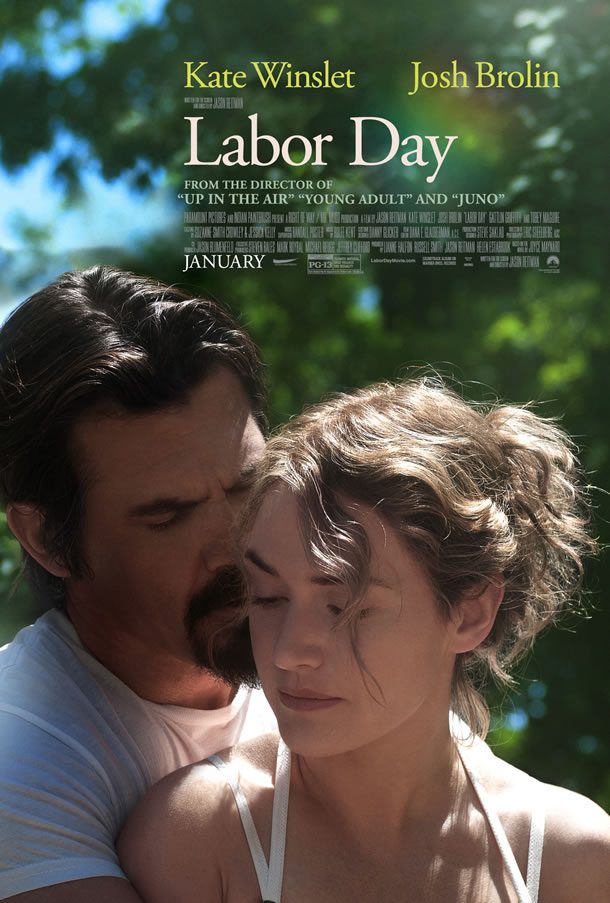 Labor Day, based upon the novel by Joyce Maynard, is the kind of sappy material that you never would have expected director Jason Reitman to attach his name to. Reitman has been accumulating an enviable career of top-shelf dark comedies (Thank You for Smoking, Up in the Air, Young Adult), yet his touch with characters and actors, as well as his delicacy with tone, reminded several of a young Billy Wilder. The stuff of Labor Day felt more like a Lifetime channel original movie. This is just one artistic miscalculation from the start and it doesn’t get better as it goes.
Back over Labor Day weekend in 1987, young Henry (Gattlin Griffith) is living with his grieving mother Adele (Kate Winslet) and performing many of the duties of a husband (don’t get gross). It’s been some time since Henry’s parents divorced but Adele has become a shell-shocked recluse who can barely talk or look others in the eye. While visiting a grocery store, Henry runs into a dangerous man named Frank (Josh Brolin). He’s bleeding from the abdomen and intimidates Adele to give him a ride. Frank is an escaped prisoner and he takes to hiding at Adele’s home. After the initial hostage period, Frank allows Henry and Adele to walk around freely, as long as they don’t tell anyone where he is. As the days pass, Frank helps out around the house, helps Adele get out of her funk, and becomes a surrogate father figure for Henry. The unconventional family must evade the police and skeptical townsfolk to make a run for it.
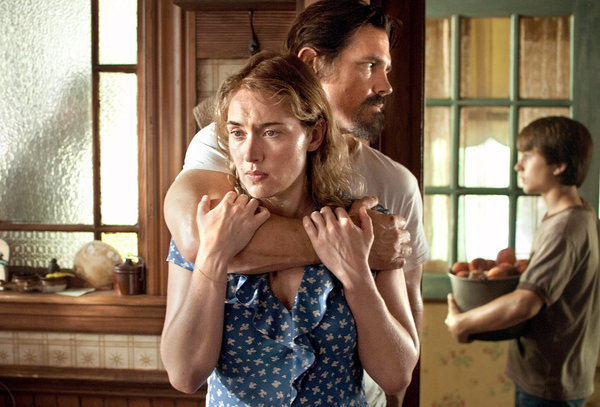 The very premise and its tone are just not a good fit for Reitman. First off, the movie plays out far more like a hostage thriller than any sort of romance. If you were to look deep inside, the romance can be explained as one very emotionally needy woman and her child going through Stockholm syndrome. The entire movie takes place over the titular Labor Day holiday, which means that all these changing feelings have to morph over the time period of three days. I don’t know if I’d call that love, even in Movie Land. Hey, Frank didn’t kill everyone and he helps around the house, isn’t he great? These people should be far more afraid for far longer. It is almost comical how saintly Frank becomes and how many surrogate father activities he squeezes into the abbreviated window of time. He performs handyman jobs all around the house, teaches young Henry how to change a tire, tosses a baseball with the kid, teaches everyone the finer points on pie making, and other such helpful activities. I understand that these two lonely people finally see a replacement man; for Henry a father, for Adele a lover. Again, the three-day time window makes everything appear like the manifestation of Stockholm syndrome. How many of those abducted have uttered, “He’s not that bad. You just don’t know him like I do”? Frank’s back-story is tragic but he is a wanted felon and he has no problem threatening both of these people’s lives in the beginning. Yeah he doesn’t resort to violence or yell in their faces, but why would he against an adolescent boy and his easily cajoled mother? No matter how long Reitman spends showing us the softer side of Frank, especially while preparing delectable dishes of food, he’s no more developed than the common Misunderstood Bad Boy.
Then there are the dawdling coming-of-age moments clinging to young Henry, a boy growing up quickly in a tumultuous holiday weekend. It strikes me as tonally odd to already take a tricky balancing act with the film’s plot and then tossing on a coming-of-age addition. The story is told from Henry’s perspective, and that’s a major problem as well. He’s the least interesting person in this dramatic setup. Being confined to his viewpoint often keeps us distant from the deeper drama going on. I’d rather spend time with Adele and Frank bonding so that the romance can find some traction, but no. Al we hear are the thumps from the other side of the wall and the gentle whisperings between them in stolen glances. It’s a frustrating perspective because quite frankly nobody really cares about this kid’s sexual awakening and his daydreams about the cute girl’s bra. His dad (Clark Gregg) wants to talk to him about the birds and the bees. His mom talks about the same. It’s a somewhat uncomfortable position for the audience with both parents wanting to cover the sex talk. There’s a wanted man hiding in his home! Henry’s personal growing up drama has no equivalency to this. Of the three main characters, doesn’t Henry seem like the worst participant to tell the story? It doesn’t help that Tobey Maguire narrates as older Henry. Have we not learned from The Great Gatsby: Maguire’s voice does not suit narration.
It’s the film’s more tense moments where you get glimpses of the real movie here, the thriller that’s been gussied up and disguised as some strange romance. Whenever someone gets close to discovering what’s really going on in that house, the movie picks up and grabs your interest once more, albeit fleeting. The fear of getting caught is potent but it should have been more omnipresent. The film, through Henry’s perspective, is treated like this nostalgic chestnut of that one summer a convicted killer held us hostage. The police are canvassing for an escaped prisoner but the neighborhood doesn’t seem to be that alarmed, still going about their business bringing desserts and fresh produce to one another’s doorstep. Too much of the film implies the threat, like with a short glimpse of a police checkpoint, but places it on the back-burner so that the romance can take shape. Again, this is a byproduct of being stuck in Henry’s perspective whereas the kid might not have the best understanding of how serious everything is (he’s worried his mom will abandon him and run off with Frank). But in those brief moments of dread and tension, this is where Labor Day works, and Reitman does a great job of turning the screws and building that suspense. It makes you wish the whole thing were a thriller.
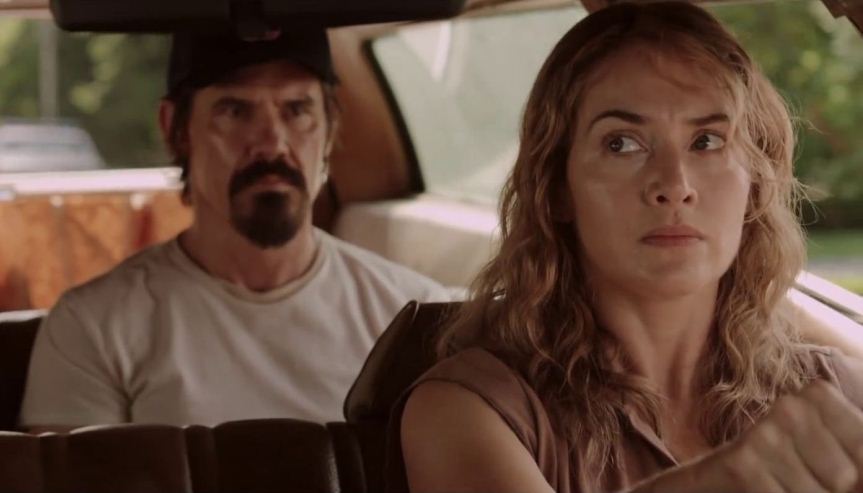 No one is going to question that Winslet (Divergent) and Brolin (Gangster Squad) are great actors, but boy do these characters underachieve. There is one very effective and moving monologue Winslet has about her pregnancy problems that have turned her away from the world, but it’s not enough. For much of the movie, she plays such an anxious and internalized character, so it’s hard to really follow her emotional development. That monologue does the most heavy lifting but it’s pretty wan before and after. Winslet is too good an actress to play essentially a catatonic woman that’s fairly mute. Brolin can play a soulful brute in his sleep. There’s so little to challenge him and so he seems on autopilot. It also hurts that both Frank and Adele have very limited conversations. It’s a romance told in gestures and handclasps (and the rhythmic thumping of walls at night). It’s not their fault that their characters are underwritten and unsatisfying. Griffith (Green Lantern) is a nice young actor but he too is forced to communicate much with little and comes up short. James Van Der Beek (TV’s Dawson’s Creek) is a local cop who appears for one scene, and afterwards you wish he would stick around longer. Look for Reitman good luck charm J.K. Simmons (Dark Skies) as a helpful neighbor.
Reitman is such a talented director that he can almost pull off sequences in Labor Day despite all of its inherent structural, tonal, and perspective flaws. From a technical standpoint, the movie is a gauzy, amber-accented tale with plenty of strong alluring visuals to set you at ease. There are these trembling moments where you almost see what attracted Reitman to the film, but the finished product is just a mushy misfire. It’s earnest without having earned our emotions, and the thriller elements and the romance elements are in constant conflict. We all remember our grandparents telling us that magical moment they knew they had met the one when he tied her up and held her hostage. Much of the drama that comes from the premise is handicapped from the mistake of having Henry as the chief storyteller and point of view. His limited involvement means we’re kept at the peripheral for too many important moments. I have no doubt Reitman will rebound and quickly (he’s already filming his next movie and has optioned a book for his next next movie). Get ready to have Labor Day play every subsequent Labor Day weekend on the Lifetime channel, its true home.
Nate’s Grade: C
Share this:

Nymphomaniac volumes I & II (2014)
 When Danish film director Lars von Trier said he wanted his next movie to be “porn” he wasn’t kidding. The controversial filmmaker wanted to explore the world of a woman addicted to sex, following her history of varied experiences over the course of two movies/volumes. Actors lined up for the notoriously demanding filmmaker. During the sex scenes, computer effects magic married the actors’ faces and upper bodies with the lower parts of porn stars. Upper half, Charlotte Gainsbourg, lower half, some pornographic double, all spliced together into one onscreen human being. Think about that little special effects ground-breaker, putting Hollywood faces into hardcore sex scenes. Knowing von Trier’s pessimistic tendencies, and his penchant for heaping abuse upon his female leads to the point of uncomfortable exploitation, you may rightly cringe about the prospect of a von Trier “erotic” movie. That’s the funny thing about Nymphomaniac; it’s all about sex, sometimes graphically so, but it’s never erotic. It’s an intriguing, sometimes maddening look at human sexuality and our inhibitions and frailties, until a horrible ending spoils it. In the end, von Trier just couldn’t help himself.
The story boils down to this: Joe (Gainsbourg as an adult, Stacy Martin as the younger version) is found beaten and unconscious in an alley. The kindly, monk-like Seligman (Stellan Skarsgard) finds her, brings her back to his home, and tends to her wounds. Joe says she brought all of her pain upon herself. Seligman finds this hard to believe. She uncorks a lengthy series of tales about her sexual awakening and desires.
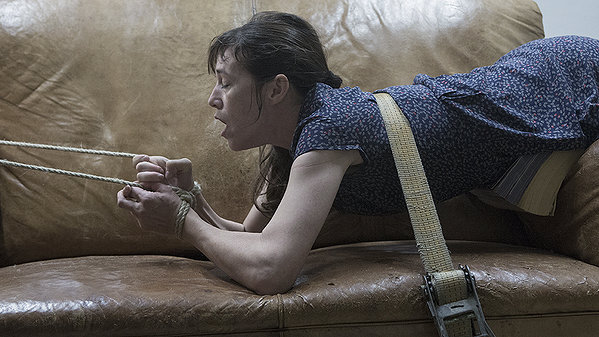 In many ways, Lars von Trier is the best and worst candidate to present a four-hour opus on the life and times of an avowed nymphomaniac. The man approaches the idea of sex addiction in practically the most clinical way possible while still being cinematic. You can practically envision Seligman as a stand-in for von Trier, countering Joe’s sense of shame with a broader, scientific perspective. Really, this is the tale of a woman spilling her guts about all her dirty little secrets and a man nodding along, asking questions, and dismissing her self-loathing with his reason and empathy. It’s sort of like being inside a therapist’s office. I can’t say whether or not I find all the analogous asides to be interesting or simply insufferable pretension. While Joe is detailing her behavior, Seligman will stop her and provide further context, often bringing in such subjects as fly fishing, the mating habits of fish, the Fibonacci sequence, Eastern Orthodoxy, and classical music. It’s almost absurd how encouraging Seligman is, dismissing every action of Joe’s sordid past through an example. After a while, it almost becomes a humorous game all its own, as we know Seligman will use every story as a stepping off point to some weird outside connection. Every item in Seligman’s bare bedroom inspires a story from Joe, which leads to a suspicion that she is something of a salacious Keyser Soze, piecing together her story on the spot; some of the coincidences with Jerome (Shia LaBeouf) seems just a bit too much. Seligman’s enlightened and intellectual asides force the audience to consider deeper meaning with Joe’s actions. Is she irredeemable, does she have control over what she’s doing, is she doing anything even bad? Over the four hours of psychological examination, the doctor is out. Nymphomaniac, especially in Volume Two, is the best film yet on sex addiction. It doesn’t demonize the behavior, it doesn’t treat it as sensationalistic, and it doesn’t overtly judge its lead characters and the choices they make, nor does it spare them the devastating consequences.
The graphic nature of the film is getting all the headlines but Nymphomaniac treats its heroine as an addict trying to get a hold of herself. We begin with young Joe innocently discovering her sexuality, especially discovering the pull she can have over an almost endless parade of weak-willed men who will follow her every whim. If that was the only plot, then there would be little separating von Trier’s film from any late-night cable erotic series (“Oh, let me tell you the time I met this man and we did this…” –Repeat). Over the two movies, we get a stronger sense of how utterly trapped she is by her urges, by her addiction. When she’s dealing with the undignified death of her father, Joe finds whatever solace she can with a willing bedmate. She places herself in precarious situations chasing after that orgiastic high, which disappears at the conclusion of Volume One. The cliffhanger separating the two volumes is that Joe loses her ability to feel sexual pleasure, which is rather problematic for a nymphomaniac. And so in Volume Two, Joe desperately searches for a means to get her groove back, at one point abandoning her own child so that she can pursue her kink. Joe goes to counseling, joins a sex addict group (she bristles at the term and prefers “nymphomaniac”), and tries to detox, at one point removing everything vaguely sexual from her apartment, including anything knob-shaped.
 The film is structured as a series of vignettes and anecdotes, broken up with von Trier’s tried-and-true onscreen chapter system. As expected for a film based around anecdotes, some stories are more interesting or revealing or simply entertaining than others. The stories are a little more whimsical in Volume One but by the time we get to Volume Two, they become more punishing and sad. It’s one thing to bet your promiscuous gal pal who will have sex with the most people on one train ride home, or on a prank to stick a restaurants dining utensil up your vagina, but it’s another when an adult woman, night after night, leaves her toddler at home so she MAY have the opportunity to have her behind whipped. The young Joe stories are easier to shake off as youthful experimentation and thrill seeking, which Seligman rationalizes as well. However, they set up just exactly the path that the adult Joe was destined for. The tales in Volume Two have to ratchet up the stakes, given Joe’s absent mojo, so what was once titillating can become downright disturbing. von Trier’s four hours offer plenty of feel-bad feel-good opportunities along the human sexuality sphere. Adult Joe thinks introducing a language barrier could be enticing, so she asks an African immigrant if he’ll have sex with her. He agrees, but brings his brother along. The two men bicker in a different language, while Joe sits there, head slumped against her hand, comically waiting for these two naked men, their penises wagging in the foreground of the camera, to get to business. It’s quite a funny and ludicrous turn of events.
One story in Volume One stands out for its raw emotional power. Joe has a whole schedule of lovers visiting her door. Well one such older man wanted to have Joe all to himself but her price was high: he had to leave his wife, “Mrs. H.” Surprise, he does, and Joe is already uncertain if this new arrangement is what she wanted; her offer was better in the theoretical sense that he would never cross that line. Well the misses (played with chomping disgust by Uma Thurman) comes for a visit and she brings her kids along. She wants her children to see what their daddy traded them away for. At first, the wife acts civil with some stinging passive-aggression, but the uncomfortable incident is dragged out, and the emotions reach a fever pitch, with crying all around. It’s so uncomfortable, so potent, and so memorable, forcing Joe, and the audience, to think of the ripples of consequences from simple sexual dalliances. While Joe is having her fun, unbeknownst to her, there are far-ranging consequences that she, and by extension the audience, choose to ignore because all those pesky details would get in the way of our fun.
The most troublesome storyline is also one of the longest, with Joe having her backside swatted by a no-nonsense sadist played by Jamie Bell (Man on a Ledge). This guy insists there will be no penetration and his rules are to be followed strictly. It starts out intriguing to get a sense of who this guy is and what his practices will be. Joe has to sit with other women between the hours of 2-4 AM, and maybe she’ll get picked. Night after night, she goes through this setup, so desperate to feel the spark of desire again. This situation feels like it goes on forever. There is no easy climax. Rather it sets up the darker turn for Joe’s character, as she gives up being a mother and a wife. To make ends meet she becomes a debt collector, using her knowledge of men, particularly heir weaknesses, to coax them back into paying. There’s one disarming moment when she takes great pity on a pedophile that will surprise you, and it’s the only incident that causes Seligman to disapprove. Her boss (Willem Dafoe) advises her to think of an eventual replacement she can groom, and his method is singling out a young girl with no support, becoming her world, and slowly manipulating her to do your every wish. In a von Trier film, that is what a retirement 401k package looks like. This whole storyline, including her young mark (Mia Goth) romantically falling for her would-be maternal figure, just feels misplaced, like von Trier doesn’t know how to bring his four-hour opus to a close.
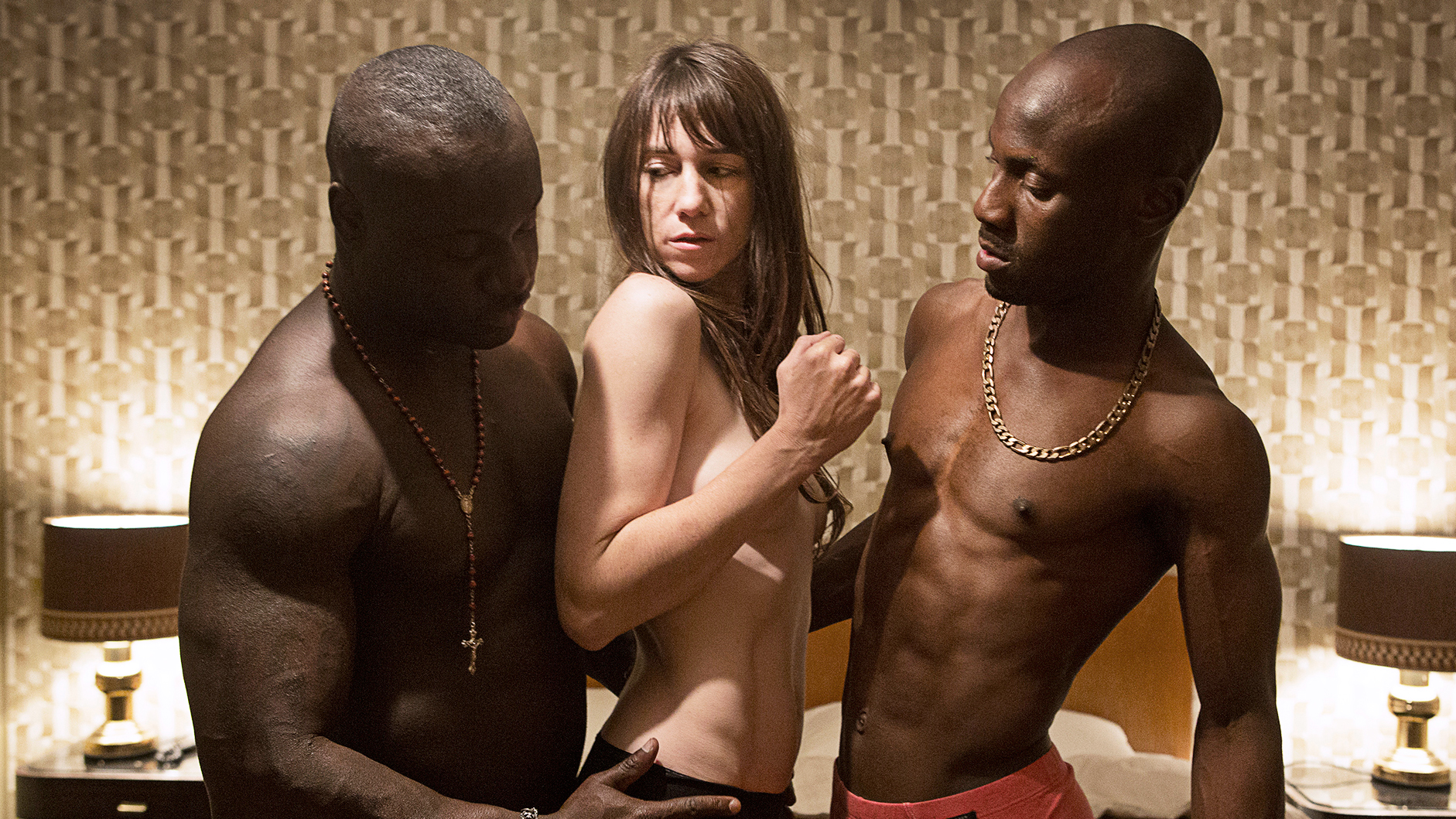 That’s because he doesn’t! This paragraph is going to delve into the conclusion of Nymphomaniac, so be warned that there will be major spoilers being discussed. If you wish to remain pure, skip to the next paragraph. During Volume One, I had the unmistakable feeling that all of this had to be leading somewhere. It wasn’t just going to be one woman distilling her life stories over the course of one night. I also figured there had to be a reason for why Seligman would rationalize every one of Joe’s actions, shifting blame away from herself. And there’s truth to what he says, namely that the world judges Joe far more harshly for her actions because she happens to be a woman committing them. If a man was performing the same stunts, or left his family, he would not be seen as damningly. Then early on in Volume Two, Seligman reveals himself as asexual, a man born without any sexual desire. He argues he’s the perfect person to hear out Joe’s tales of woe, as he can objectively analyze them free from lust and desire and titillation. Then, by the end of volume Two, Joe as decided to change her ways. She wants to be someone different, someone better. She’s turned the corner. What, a glimmer of well earned hope emerging at the end of a von Trier film? That’s impossible. This natural ending is destroyed thanks to von Trier’s nihilistic perspective; he just can’t help himself. And so, though it makes no narrative sense and seems completely out of character, Seligman comes back to Joe, tries to rape her, and is then shot dead. That’s the end. Every man is a deviant. It just completely undoes Seligman’s entire perspective, as von Trier abandons whatever gains he’s made over four hours for what amounts to a groan-worthy joke. It is without question one of the worst, most misguided endings I’ve seen in a film. It makes the previous four hours feel like a lousy setup for a lousier joke.
It’s a shame because Gainsbourg gives a terrific performance as the older Joe. The actress is no stranger to von Trier and his sadomasochist ways, having also starred in Antichrist and Melancholia. You get a sense of her character’s desperation, the thrills of her youth now gone. She’s also grappling with her own fallibility, the anger that comes from that, her antipathy with others, and the regrets and jealousy that penetrate her hard exterior (no pun intended). She’s trying to act above society, an operator who plays by a different set of rules, but it’s fascinating when the emotions reveal themselves from the sensations. And Gainsbourg puts all of herself into this role, submitting to her character’s many mental and physical tortures. Even if she has a body double pasted in, it’s still representational of her and Joe. Gainsbourg manages to draw us in, not wanting our sympathy but eventually earning it. Martin, as young Joe, gets just as much screen time as Gainsbourg, but there’s a vacancy there to her acting, a certain passivity that makes young Joe feel more like a spectator than a participant in her life. Skarsgard (Thor: the Dark World) is an appealing foil for Joe, almost comical in how accepting he is and how excited he can get with his digressive connections. The only other actor of note in the large ensemble is LaBeouf (Transformers) who affects a strange accent but sticks with it. We’ll see if his self-imposed exile from Hollywood and acting sticks as well.
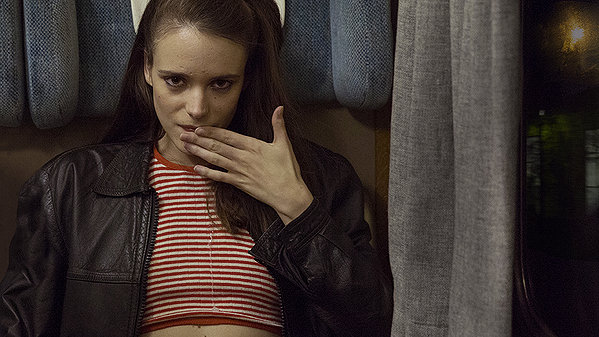 I’ve spent this entire review talking about everything else rather than detailing the nature of the graphic sex, the point that earned Nymphomaniac much of its curiosity with the general public. That’s because the explicit nature of the sex is inconsequential. I understand that that may sound odd for a movie literally called Nymphomaniac, but that’s because von Trier’s movie is less interested in the salacious and tawdry acts and more about deconstructing a life lived and the increasingly fraught rationale for her choices. Much like Blue is the Warmest Color, the graphic sex is the headliner, and it is occasionally graphic and unsimulated, with more than a few vaginal close-ups. The sex is incidental, a symptom of the human condition, and von Trier’s less-than-sensational look at such a sensational topic grounds the movie intellectually. With Nymphomaniac, von Trier is posing questions, pushing his audience to question our own views on sexuality and concepts of normalcy and what is and isn’t in good taste. We’re prurient creatures lapping up all the dirty details and copious amounts of nudity, but the introspection is what sticks, and it’s an incisive character study that opens up in many beguiling, illuminating, and surprisingly relatable ways…. Until the end. There’s no way to account for Nymphomaniac and just forget the ending. Four hours and for what? I cannot fathom what von Trier was going for rather than a return to his M.O. of humanity resorting to casual cruelty. If you can bear it, Nymphomaniac is a fitfully entertaining film, provocative to the end, and then it all slips away thanks to cinema’s worst practical joker.
Volume 1: B-
Volume 2: C+
The Ending: F
Nate’s Grade Overall: B
Share this:

Winter’s Tale (2014)
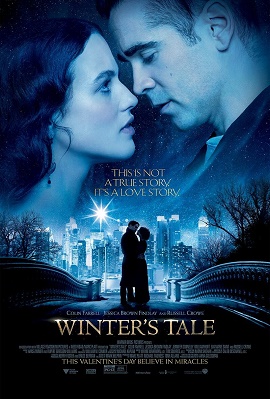 Every now and then you get to witness a special movie that doesn’t so much offend as it inspires, and what it inspires is a question you grapple with during the entirety of its run time, mainly – How did this get made? At any point, did the producers or actors or anyone stop, take a moment to reflect on the movie they were participating in, and think, “Wait, what is going on here?” Bad movies made by hacks are easy to shrug off because, well, hacks don’t know any better but bad movies (see: InAPPropriate Comedy, or better yet, bleach your eyeballs first). With Winter’s Tale, there are people who should know better, people that have been awarded Oscars. These people should resolutely know a terrible movie while they’re making it. Maybe they did. Look deep into their eyes.
In 1918, Frank Lake (Colin Farrell) is an orphan long abandoned by his family so he could have a better life in America. He hasn’t taken this message to heart. Frank worked as an expert safecracker under the employ of local crime boss Pearly (Russell Crowe), and Pearly hasn’t taken kindly to Frank leaving. Frank is able to escape Pearly’s goons and finds love with Beverly Penn (Jessica Brown Findlay), a wealthy heiress afflicted with consumption. Pearly doesn’t want Frank to get away because Pearly is really a demon in the employ of the Devil (Will Smith, yes you read that right). In the battle of good versus evil, Frank and Beverly appear to be at the focal point.
 I have to give writer/director Akiva Goldsman some credit for making an unabashedly earnest movie in an era of irony and ready-made snark. His goopy romantic fantasy longs to exist in a simpler era, but even then Winter’s Tale would fall apart on many levels. Its sheer unbending corniness is both a blessing and a curse. Magic realism is one thing (check out 2001’s Amelie as a how-to guide), but what Goldsman seems to be going for is a modern fairy tale (our maiden locked away in her tower, true love’s kiss, etc.). The film wants the audience to fall under its spell but instead will likely elicit numerous unintentionally hilarious moments; I was laughing to myself throughout, trying to comprehend all of the hokum and poor decision-making (Will Smith as the devil?).
Let’s begin with the fact that the movie is an obtuse fantasy that feels like it makes up its plot and its rules as it goes along. Bleeding fantasy and fantastical creatures into the everyday world is a marvelous conceit but it needs finesse and careful rule building. Otherwise it doesn’t so much feel like a story with a sense of internal logic as it does a bedtime story that can always just create a new shortcut or extension. The very first few minutes of the film will already push your credulity to the test. We see an adult Peter on the run from Pearly and his goons and all of a sudden he runs into… a white horse. Ah, but this is no ordinary horse, this is a magic flying horse, and Peter flies away to live another day. Yep, within minutes, we’re given a magic flying horse. No groundwork. Worse, the horse just randomly appears when the plot demands, and I think the horse is supposed to represent the side of God in this cosmic battle between good and evil. Whatever, there is a magic flying horse. From there the film gets even cornier. It’s the type of movie that posits the stars are really human beings, and so, in the end, rather than having our hero ride off into the sunset he (spoilers be damned) flies off into space on his magic flying horse and he BECOMES a new star, resting beside the star meaning to represent his beloved (never mind that these stars would be millions of light years apart). If you can read that sentence without rolling your eyes then congratulations are due.
Another problem is this massive time leap that creates far more plot holes. After Beverly succumbs to her illness, which I might add happens literally SECONDS after she’s done having sex for the first time (Colin Farrell killed her with his penis), the film leaps forward to present-day. However, Peter was given immortality through Beverly’s miracle. I suppose you could view miracles as a byproduct of sex. At first glance, this almost seems like a cruel gift; your love is dead and now you have to live forever without her. For no discernible reason, Peter also suffers amnesia, because, really, why not? All he does day after day, presumably for… 90 years, is sketch the same image of a redheaded girl in public places. In the intertwining years, why hasn’t evil Pearly picked up on the fact that Peter is still alive? He’s only been sketching the exact same image. Also, how does Peter even support himself? How does he feed himself? Who are his friends? These are the questions that arise when you take this foolish route with the plot. It could have been avoided with a simply Rip Van Winkle-style hibernation or time jump. Another problem is that Peter grew up with the 90 years of history, meaning he should know what things like the Internet and library cards are. He’s not a man out of time. The solution to Peter being confirmed is to seek out the still-living Willa (Eva Marie Saint, nice to see you again). The problem with this is that Willa should at least be over a hundred years old if you do the math. If the purpose of the leap forward was to just save another character we hadn’t seen previously, why does it have to be 2014? Why couldn’t it just have been 1940 or any other earlier period?
And the central romance between Frank and Beverly is just so boring you wish Frank would move on to someone new. Presumably they fell in love at first sight, which just so happened to be when he was in the process of robbing her home. Ah, but you see, her love redeems him because that’s really the whole role of the sick love interest in movies, to make the other figure a better person through this shared experience of grief. So in this regard it’s no surprise that Beverly lacks defining characteristics outside of her ailment. She plays the piano and falls fast for Farrell’s bushy eyebrows, but that’s all we got here. The entire second act of the film follows their abbreviated courtship, but there’s no real moment where you buy into their romance. Like most of the film’s storytelling, we’re told something is and expected to buy into it 100 percent without flinching. They’re in love, what more do you need? Well, some interesting characters would be a start.
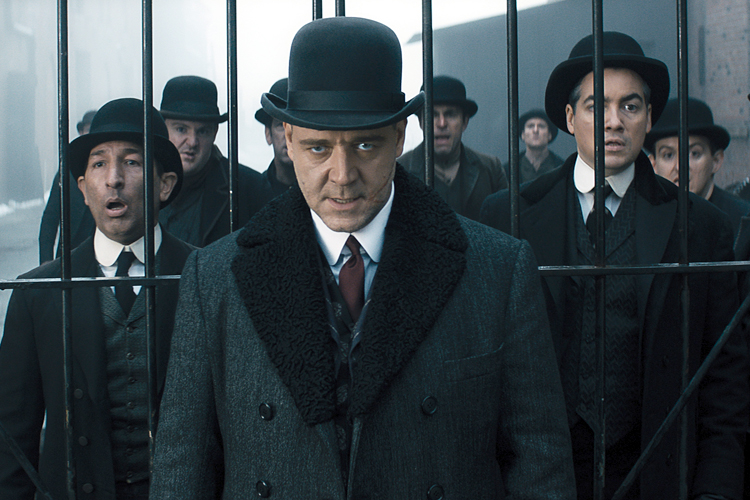 I’m fairly certain that all of these actors were doing Goldman a favor by appearing in this nonsense, but only Farrell (Saving Mr. Banks) walks away favorably. He is the best person onscreen who burrows into their character, ignoring the absurdity of every moment, yearning so hard that you almost want to give in. You won’t. Many will best remember Findlay as the Lady Sybill on TV’s Downton Abbey (she was also the reoccurring ghost on the BBC’s Misfits). Here she gets little else to do but smile and give those knowing looks that all afflicted characters give, as if their illness has opened up the secrets to the universe for them. Crowe’s performance will likely draw up comparisons to his maligned work in Les Miserables, a performance that wasn’t as bad as advertised theater snobs. This performance, however, is as bad, as his Irish brogue seems to overtake him and he comes across like a hotheaded big bad wolf. Jennifer Connelly’s appearance isn’t even worth mentioning as it is that slight beyond the fact that she’s the mother of a terminally ill child (you really thought the movie had any sense of restraint?). The film has numerous well known actors for flashes, like Kevin Corrigan, Kevin Durand, Graham Green, Matt Bomer as Frank’s immigrant father. One suspects their brief time was either a sign that the screenplay evolved as production went or that they were repaying a debt.
I will say the only saving grace in this entire blunder is the cinematography by Caleb Deschanel (The Passion of the Christ). Even when the cheesy special effects take flight, Deschanel makes sure the images are worth watching, having a special skill with the cool hues of the wintry color palette. I wanted to at least credit one redeeming aspect.
The inconsistent plotting and rules, the corny and overly wistful characterization, the overwhelming silliness of every single moment, Winter’s Tale will spark far more guffaws and derision than plaudits. It’s a movie that bludgeons you with its unrelenting maudlin nature disguised as romantic fantasy. The source material is beloved by some but it all comes across as nonsensical twaddle onscreen. Goldsman’s screenwriting credits run the gamut from award winning (A Beautiful Mind, Cinderella Man), to big budget to notorious stinkers (Batman & Robin, Lost in Space). It’s hard to judge the man’s talents with such a wide range of quality. However, I can question the finished results of Winter’s Tale and openly wonder what in the world convinced Goldsman to cash in all his Hollywood cache to direct this dreck. I’m almost tempted to encourage people to watch Winter’s Tale just to try and make sense of it themselves, to try and take in 118 minutes of earnest bad decisions. Whether it’s the magic flying horse, the 100-year-old news writer, or the fact that we’re dealing with a bad guy named Pearly, or Will Smith as Lucifer, but sometimes Hollywood unleashes a disaster that begs to be seen.
Nate’s Grade: D
Share this:

Tyler Perry’s Temptation (2013)
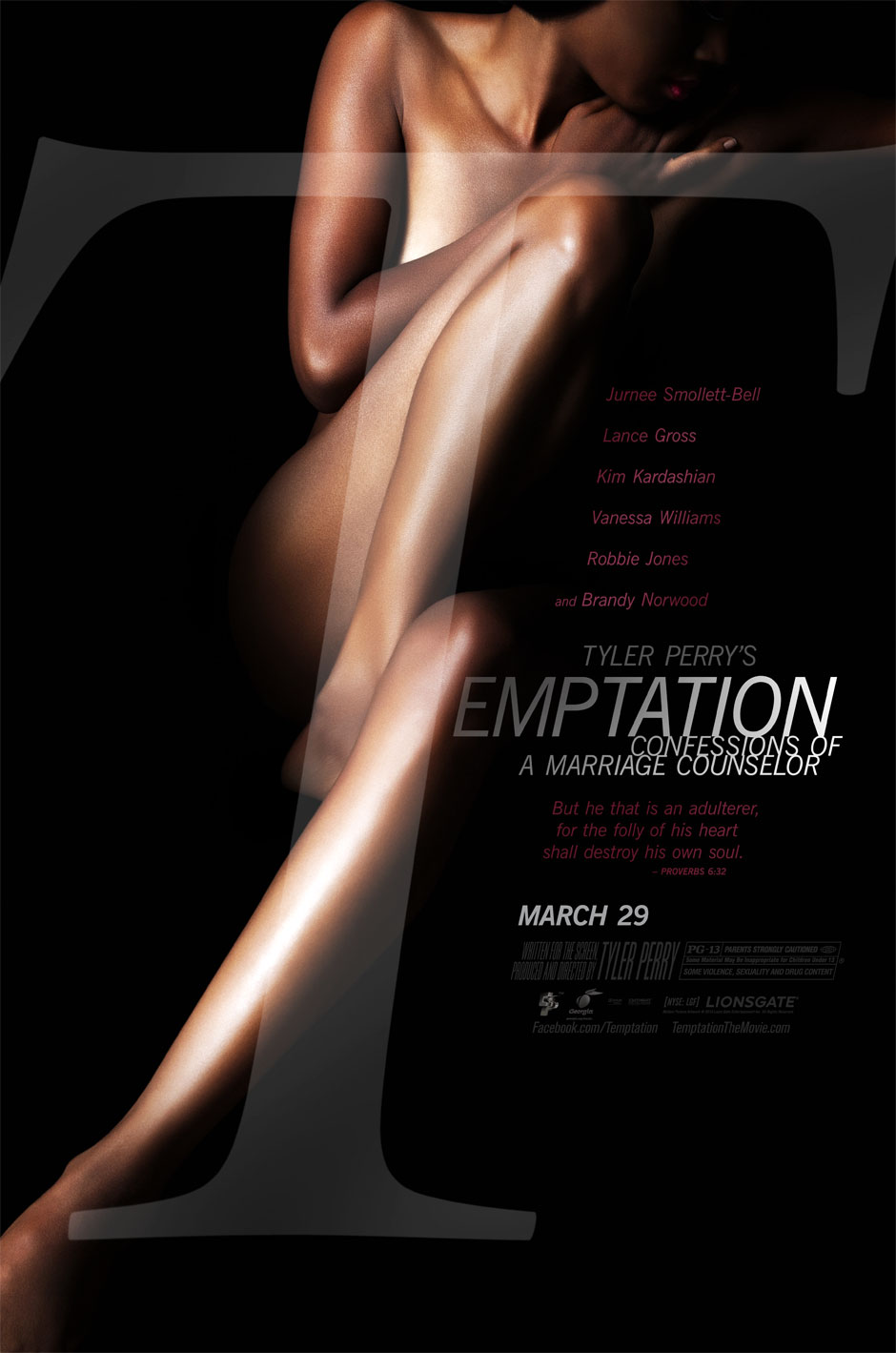 I’ve never seen a Tyler Perry movie before this review. I’ve paid attention to the noted writer/director making his own empire with healthy returns from African-American audiences, primarily female. The man has developed a monstrous following built upon his stage plays and now his films. Honestly, I just never felt the desire to watch a Perry film. I sort of figured what I’d be getting and decided I had other things to do with my time. So why did I finally take the leap and watch a Perry film? I don’t think most objective critics would refer to Perry’s oeuvre as quality, but I also don’t think a past Perry production has been as derided as Temptation: Confessions of a Marriage Counselor (based upon his play). One of my duties as a film critic is to seek out the movies I suspect may be the worst of that year so that I can have a better perspective on the best and worst movies in a calendar year (my only rationale, besides morbid curiosity, for watching InAPPropriate Comedy). Chiefly I watched Temptation because I feared it would be bad, and it was indeed, but what I didn’t expect was how incensed it would make me with its repugnant, piggish, and asinine portrayal of women. Oh, and the rest of the movie isn’t good either.
A marriage counselor tells a young couple the cautionary tale of Judith (Jumee Smollet-Bell), a 26-year-old therapist working for a high end Washington D.C. matchmaker service. She’s married to her childhood sweetheart, Brice (Lance Gross), who works as a pharmacist with dreams of opening his own store one day. Judith would like to open her own counselor office but is told to wait. Then Harley (Robbie Jones) steps into her life. He’s the rich successful inventor of Class-Meet, “the third most successful social media guru since Zuckerberg.” Let that one soak in (who or what is #2?). Harley wants to develop a personality matching service and thinks Judith’s unique insights into people are key to cracking this business. In reality, he just wants to sleep with her and eventually does one night when he forces herself on her. Judith is a wreck and can’t stop seeking more attention from Harley. Not even Judith’s mother, Reverend Sarah (Ella Joyce), can save her as she plummets into a life of drugs and shocking behavior.
 The ostensible message from Perry’s film/sermon is so odious that it caused me great discomfort and made me question Perry’s reputation as a female-friendly writer. This is designed to be a cautionary tale about the power of lust leading good women astray, and it appears that it’s only women in this world, but moving on. It’s designed to impart lessons to the audience, but the only lesson I kept partaking, again and again, was that, ladies, it’s all your fault. It’s all Judith’s fault and she must be punished for her wicked ways, except it only takes a small moment of pause to realize that this is completely untrue. First of all, Judith’s marriage is not the wellspring of happiness that Perry may want people to interpret. Her husband has fallen into old routines and clearly neglects her needs; the guy forgot her birthday TWO YEARS IN A ROW. How does that happen? There are clear communication issues as well. He’s unwilling to expand his sexual activity beyond chaste lovemaking in the same location. He expects her to cook him food by the end of the night (more on this topic later) and he downplays her desires, not just sexually, but professionally, her goal to open her own counseling office. They’ve been childhood sweethearts for over twenty years, but that time commitment doesn’t necessarily mean that they are meant for one another (more of that topic later).
Regardless, all of this is context for Judith considering straying from her husband with the more assertive, dangerous, and attentive Harley. But here’s the distinction. Judith is raped. She doesn’t cheat on her husband, Harley rapes her, and she blames herself. Not just that, Perry and the film appear to take the position that she is to blame, that she brought it all on herself. She tells Harley no, he advances anyway, she physically tries to push him away but he overpowers her, finally adding, “Now you can say you resisted.” I’m sorry to be blunt but what the fuck is that? What kind of sick, rape-culture coddling erroneous thinking is this, that all women secretly want sex despite physically trying to escape and screaming no? Harley isn’t supposed to be an upstanding character, so his actions have some degree of understanding in context, but how could Perry posit this garbage? And apparently, according to the movie, she really wanted it all along despite her protests because only a day later she’s flooding Harley with phone calls begging for more. She’s fallen for her rapist. At no point does any character refer to this as rape. At no point does Judith consider herself a victim. At no point does any character blame someone other than Judith.
What’s even more disgusting is that Judith must continue to be punished, and so (spoiler alert) she is given HIV. Harley is HIV-positive, and so the man who raped her transmitted a deadly STD, and it’s all Judith’s fault. She should have known better than letting a man like that rape her. I have to stop from throwing up in my mouth just typing these sentences. And for the final insult, the end reveals that Brice didn’t catch her HIV and in fact has a new wife and a lovely family. Judith is all alone. Because it’s not possible for HIV-positive people to raise children, right? The closing shot, I kid you not, is Judith’s sad long walk into the distance, to essentially contemplate what she did and all that has been wrought. Forget that despicable nonsense.
Perry’s films deal with such unrelenting melodrama that you’d be hard-pressed to find anything subtle, least of all is the religious content. Thanks to my colleague, Ben Bailey, and his self-imposed penalty of watching all of the Madea films (enjoy Madea Saves Christmas, Ben) I have a better understanding of the man’s tropes in his prolific filmography, and Perry’s proselytizing is a constant. I don’t have a problem with faith and spirituality, a personal subject, but rarely are matters of faith as simplistic as Perry’s solutions seem. Perry’s ongoing solution seems to be going back to Jesus for the one-size-fits-all problem of… not enough Jesus. That’s about it. Every problem seems to stem from a deficient amount of religion or spiritual virtues in a person’s life. This notion extends to Judith as well, as her reverend mother seems to pinpoint all her troubles to not going to church. You see, sleeping in on Sundays has made Judith a less moral person, even though she still firmly believes in no sex before marriage enough to not even consider questions of sexuality with her profile service she’s designing with Harley. Really Judith, do you think everyone has those same values? I could lay that same inquiry to Perry, because none other than the devil besets Judith, at least that’s literally what Harley is referenced to at several points. And in such black and white concepts, the complexity of a relationship naturally deteriorating and entering malaise is summed up with a ham-fisted account that our heroine wouldn’t have had her troubles if she had just been more religious. She was raped and given HIV as a lesson to go to church, you see.
The mother character is the embodiment of self-righteous indignation and hypocrisy. At no point is any of her judgmental sermonizing helpful, and the fact that she breaks into her daughter’s home to have a spiritual intervention is just ridiculous. What is most appalling is a revelation that the movie barely has time to note before speeding past. Rev. Sarah has told Judith her whole life that her father died when she was young. He’s actually alive. Judith unloads this bombshell, throwing the full weight of her mother’s hypocrisy in her face, which mom causally brushes aside and says, “This isn’t about me. It’s about you.” No, lady, you lying about your daughter’s father is definitely about you. She offers no explanation for her decades of deceit and immediately moves back to demonizing Judith’s behavior. That’s very godly of her.
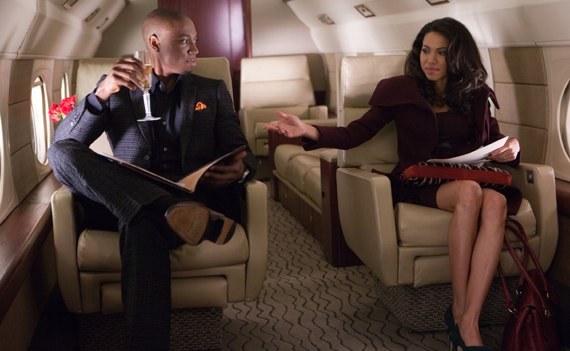 Another ongoing theme in Temptation as well as Perry’s previous films is the all-out taboo of divorce. This old-fashioned perspective dictates that people, and notably women, should stick it out no matter what, even if their spouse is abusive, as in Diary of a Mad Black Woman. Apparently in this world it’s better to be a married woman who gets beaten than a divorced woman who is physically safe. Newsflash: some relationships are not worth saving. Some people, despite effort and love, are just not meant to be together and some relationships just cannot be fixed. That conclusion isn’t giving up, it’s accepting a hard reality and meeting it with guts. This warped perspective is also tied in with the expectations placed upon Judith, namely being subservient to her husband. Seriously, her mom complains that she doesn’t cook enough meals for her husband. The depiction of this old-fashioned relationship itself isn’t as insulting, but when given certain credence that this subservient-woman relationship is superior, that’s when any freethinking individual, man or woman, should feel offended.
And I haven’t even mentioned that Kim Kardashian is in this movie, and oh ye God is she terrible. Written especially for her, Kardashian acts like a whiny child with one baby-voiced way of delivering any line. She could recite the Declaration of Independence and it would sound like a helium-voiced robot. Smollet-Bell (TV’s True Blood, The Great Debaters) actually delivers an acceptable performance given everything she has to fight against. She has a memorable face and displays enough talent to be noticed. The gentlemen do fine jobs, though Gross (TV’s House of Payne, Our Family Wedding) is far, far too sexy for a pharmacist. The man stepped out of the shower and has the physique of a superhero, not some guy who’s going to give pills to little old ladies.
Need one more example as to how astonishingly false and misguided and downright offensive Temptation is? In the opening narration, Judith explains that her childhood dream was to become a marriage counselor, and Brice’s childhood dream was to become a pharmacist. What? I doubt you’ll be able to find any two children on this planet where pharmacist and marriage counselor are at the top of the list. It’s details like this that showcase the lack of care given to the plot, characters, and general attempts at subtlety. The details don’t matter in Perry’s world because all that matters are the Big Points he has to say with the force of a falling anvil, usually about marriage and God. Temptation is a detestable film because of how ugly it treats women and its myopic, pigheaded, and often outdated views on relationships. It’s like the movie was created in a different era, one where women were expected to know their place. In the realm of Tyler Perry’s Temptation, if you go away from Jesus, you will get raped and you will get AIDS and you will have no one else to blame but yourself, ladies. This tone-deaf sermon is full of bad messages, bad writing, bad acting, and naive answers to complex human problems. The only real temptation you should feel while watching this movie is to eject it and break the DVD in half.
Nate’s Grade: D-
Share this:

The Canyons (2013)
 Before Veronica Mars success on the high-profile crowd-sourced fundraising site Kickstarter, there was The Canyons. Written by novelist Bret Easton Ellis (American Psycho, Less Than Zero) and directed by Oscar-nominee Paul Schrader (Affliction, Taxi Driver), it promised to be a more legit opportunity for fans to fund a real movie, something they could actually see on the big screen. The production successfully raised a budget of $150,000 with rewards like script coverage by Schrader, working out at the gym with Ellis and his physical trainer, and Robert De Niro’s moneyclip from Taxi Driver. The little production that could got even more press when tabloid darling Lindsay Lohan was cast as the female lead. The New York Times released a lengthy blow-by-blow in January of the tumultuous film shoot, mostly centered around Lohan and her antics. It was a fascinating read. The Canyons is a better behind-the-scenes news article than a competent sexy thriller. The best actor in the film is a male porn star. Make of that what you will.
In the City of Angels, Christian (James Deen) is spinning a web of deceit. He regularly invites other men over to have sex with his girlfriend, Tara (Lohan). His assistant, Gina (Amanda Brooks), has a boyfriend, Ryan (Nolan Gerard Funk), who wants to be an actor. She convinces Christian to offer him a small part. It just so happens that Ryan and Tara used to date back when they were struggling actors. They’ve also started a new affair. Christian suspects something is amiss and schemes to punish and destroy Ryan and his dreams of Hollywood fame. Meanwhile Ryan is trying to scheme himself to get Tara to finally leave the rich and luxurious clutches of Christian.
 Woe to thee expecting a plot or characters worth watching. Despite the presence of artistic heavyweights like Ellis and Schrader, The Canyons is a movie that does a disservice to the word bland. This movie is powerfully bland. There’s just nothing to attach to other than the fascination of Lohan. The characters are posh, privileged, unlikable, and morally slipshod, which is the Ellis specialty. Except in the past he’s given them personalities to go along with their nihilistic narcissism. Christian is a pale likeness of Patrick Bateman and has no charisma or intriguing sense of darkness to him, something to keep you watching. Mostly he’s just a jerk. But he’s not even an interesting jerk. The plot is a merry-go-round of infidelity, as numerous characters have secret paramours, which makes their cumulative jealousy all the more absurd. What does Christian have to get so upset about? He invites men and women over to have sex with Tara. They even engage in a foursome. I suppose there is the limp argument that he’s not in control, but how tedious is that? Ultimately, you’re watching Bland Character A complain to Bland Character B about how unhappy Bland Character C makes them. This scenario repeats many times. I wish there was more gratuitous nudity to hold my attention. It’s a soap opera that you want to turn off. The entire screenplay feels like weak, reheated Ellis depravity without anything memorable.
Here’s an example of how lazy the screenwriting gets: after Christian is done having sex with Cynthia (Tenille Houston), a yoga teacher (that’s one way of doing it), they relax. In this scene, Cynthia asks questions that have no real purpose other than to advance exposition, and it’s sorely obvious. It’s all, “What did she mean by that?” and, “Why would you go to this place?” Every screenplay has exposition but the trick is to make it as invisible as possible. Pacific Rim did a particularly great job at masking its exposition so that it arrived in a way that didn’t feel like the plot was stalling. The fact that Ellis doesn’t even put forth any effort to disguise what is naked and clunky exposition just speaks to an overall sense of lethargy or indifference on his part with the script. I wouldn’t be surprised if Ellis knocked this out over one long, monotonous weekend.
The other mortal misstep is that Schrader makes the movie so serious that you’ll find yourself laughing at spots. This is not great material to begin with, nor compelling characters, but it could have, emphasis on “could,” worked had the production embraced its silly sense of luridness. There’s a reason we’re more forgiving of late-night thrillers with copious amounts of vice. They accept their identity. I think Schrader may have read Ellis’ lackluster script and envisioned another Looking for Mr. Goodbar (I’m not confusing it with Schrader’s own American Gigolo). This is not a morality tale but Schrader seems to think otherwise. I don’t sense any cohesive commentary about young people and their sexual mores or the predominance of technology and its negative impact on human connection. Christian and Tara text at the dinner table. He films “movies” on his phone of their sexual trysts with strangers culled from Craigstlist. There’s a big difference just including these items and actually having something to say. Schrader opens and closes the film with montages of rundown movie theaters, many shuttered up and long out of business. What am I supposed to decipher from this exactly? Tara asks Gina, who works in the movies, when was the last time she went and saw a movie, a film that honestly made her feel something. Gina is stumped, but that’s all you get for that thematic reference. Is Schrader taking out his ire on the state of Hollywood filmmaking and the studio system? Regardless, you won’t feel anything form The Canyons either.
 So why would someone want to watch this movie? The only factor I can surmise, beyond morbid curiosity, is the presence of Lohan. I doubt this movie would seem as compelling absent the troubled actress. Would people be clamoring to see this movie if it starred, say, Hilary Duff instead? I won’t pretend I’m above this. I watched The Canyons out of sheer curiosity, and that inquisitiveness hinged upon Lohan. She hasn’t starred in a theatrically released movie since 2007’s I Know Who Killed Me (my #2 worst film of that year), and she’s fresh off the infamous Lifetime movie of Elizabeth Taylor that many websites turned into a drinking game. There’s an undeniable rubbernecking quality here. There are a few moments where it feels like character and actress have merged, and her crying jags about lost opportunities, dreams gone awry, feel inescapably real for her. I think she would have been better served with a less solemn tone and more sudsy and sundry thrills.
Deen has the best feel for Ellis’ pulpy material, and while he doesn’t really click as a menacing figure even as he’s murdering people (he’s too much a Jewish boy next door type), he does come across as a megalomaniacal creep. Perhaps my expectations were just too low for a porn actor, so my apologies for my prejudices. Given the right material, Deen may surprise (not by his full-frontal nude scene). I do think that Katie Morgan (Zack and Miri Make a Porno) has the ability to transcend porn. She’s just so effortlessly charming, something that most of the actors in The Canyons have trouble with. Funk (House at the End of the Street) cannot get a good grip on his character’s emotions and thus he just seems pissy all the time. I’ll spare the other actors mentioning but I feel the need to inform that Oscar-nominated director Gus Van Sant plays Christian’s trust fund-mandated therapist. Guess what doesn’t work well?
Those seeking an outrageous exploitation film filled with soapy sex and intrigue, as well as pretty people behaving very badly, will be surely disappointed with The Canyons. I guess it all depends on your expectation level for a film that bypassed the traditional financial system and crowd-sourced on the basis of Schrader and Ellis’ notoriety. I’m glad that both artists found a conduit for collaboration and found a way to make it happen on the (relative) cheap. I just don’t know why it had to be this crummy story. Thematically, Schrader and Ellis seem to be completely at odds, which results in a super serious movie about terrible, and terribly boring, characters doing little else but indulging in vices and whining (also a vice?). Without the presence of Lohan to add a curiosity factor, there is honestly no good reason to spend good money on this dithering project. The moderate success of The Canyons is somewhat comforting, but really, this wasn’t a movie that deserved people’s donations, and it certainly doesn’t deserve your time.
Nate’s Grade: D+
Share this:

The Great Gatsby (2013)
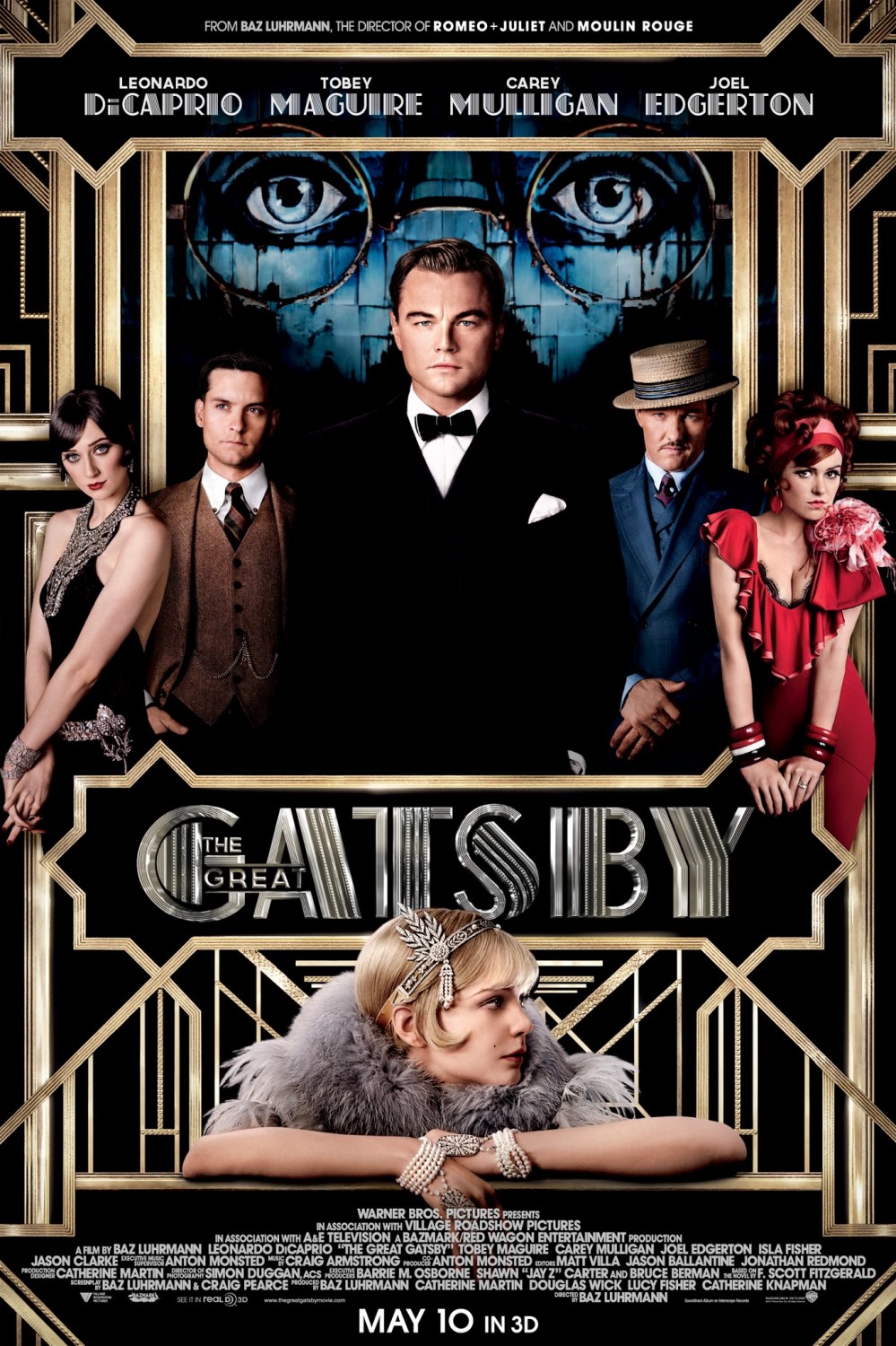 It seemed like some sort of educational mandate that every child in the United States was forced to read F. Scott Fitzgerald’s novel, The Great Gatsby, when they were in high school. In my highly unscientific number crunching, it appears that those who actually enjoyed the book are in the minority. I recall loathing it, but then again, when you’re fifteen, you sort of loath everything. Enter Australian director Baz Luhrmann, the showman who exploded the screen in razzle-dazzle run amok with Romeo and Juliet and Moulin Rouge!. Not exactly the kind of filmmaker one would fathom helming an adaptation of a classic of American literature, but the man’s style of excess seems like a suitable match for Fitzgerald’s tale of high-class overindulgence.
In 1922, young Nick Carraway (Tobey Maguire) moves to the hustle and bustle of New York City, living close to his cousin Daisy (Carey Mulligan) and her rich husband Tom Buchanan (Joel Edgerton). He’s also the neighbor to the mysterious and newly rich Jay Gatsby (Leonardo DiCaprio), a reclusive man who opens his mansion up to prolific bacchanals. Rumors persist in who he is and how he accrued his enormous fortune. He’s an old flame of Daisy’s and is secretly hoping she’ll attend one of his raucous soirees. He enlists Nick to help arrange a reunion for them, and soon enough Gatsby is already planning their happy future together again. Trouble is, Tom isn’t willing to lose his wife without a fight.
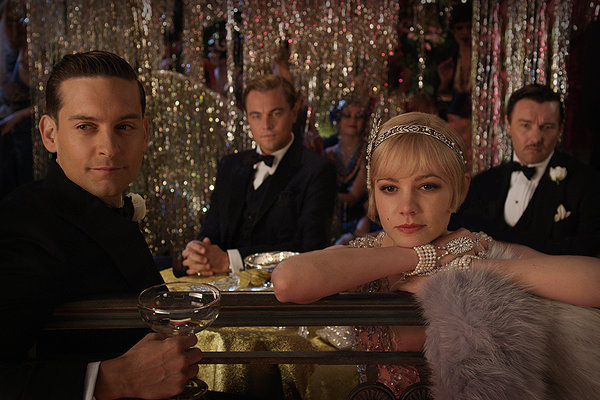 Luhrmann’s helming of The Great Gatsby gave me exactly what I desired and expected. The movie is convulsing with energy and the first hour just moves; be it the camerawork or people onscreen, for long stretches there always seems to be some degree of onscreen movement. Luhrmann’s signature theatrical visual atmosphere is vibrant, joyous, and a perfect translator of the lavish lifestyles of the noveau rich in the Roaring ‘20s. The man brings to startling life the sensations of being young, privileged, and carefree, and the use of anachronistic music, while not nearly as textured and thematically relevant as Moulin Rouge!, adds to the fun. I quite enjoyed a low-key, jazzy rendition of Beyonce’s “Crazy in Love.” Luhrmann’s style treks in excess but it’s a much more pleasant, dreamy, and altogether beguiling form of artistic indulgence than, say, Michael Bay or Tony Scott and their respective macho visual fetishes. Luhrmann’s campy sense of style doesn’t come across as overly suffocating or distracting, at least to my eyes, and instead the man injects his movies with tremendous energy, immersing you into a new world of old and modern. This is what Luhrmann was meant for. While other canonical classics of American literature may not survive a glitzy Lurhmann treatment, it’s a good match for the extravagant excess of Fitzgerald’s setting. Lurhmann’s visuals are glorious, and the 1920s era is brought to glamorous life. You get the sense it was one giant party without any lasting consequences (if you were rich enough).
The second half of the movie slows down considerably after the amped-up introduction. We’re caught up in the characters at this point, as we should be, and the Gatsby/Daisy reunion dominates the plot. I suppose there are only so many Busby Berkeley numbers and confetti explosions one can encounter before the plot has to set in. Lurhmann and company stick pretty faithfully to Fitzgerald’s plot (rest easy, lazy high school students of today and tomorrow). Interestingly, they are far more explicit about Gatsby’s securities fraud, knowingly making a fortune off junk bonds, all in the name to impress Daisy. There’s a genuine sense of respect for the source material even with Luhrmann’s visual flourishes; at several points, Fitzgerald’s text floats onscreen. The problem is that Luhrmann’s Gatsby is almost entirely focused on the romantic coupling of its title figure and Daisy. Gone is the class criticism, the indictment of the follies of the rich, the examination of the dark side of the American Dream, and the subtext. You’ll get plenty of shots of that famous green light, 20th century literature’s most famous and unsophisticated symbol (pay attention kids: green means go), but there’s little time for complexity. It’s not a screen romance worth this much attention, which is kind of the point, but when the movie clocks at over 2 hours and 20 minutes, drawing out a lackluster romance can become rather grating.
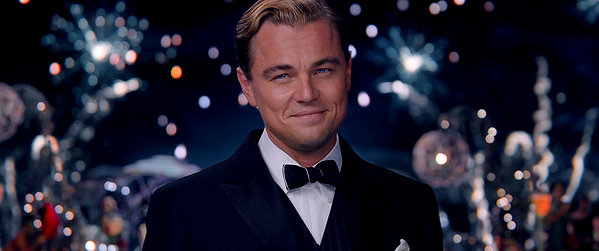 If I were top cite one major fault in Luhrmann’s incarnation, it’s that it adopts Nick’s fawning perspective and treats Gatsby as this tragic romantic figure. I acknowledge with every adaption there is a degree of interpretation, and romantic hero is certainly one facet of Gatsby, certainly how he sees himself, but by the end of Fitzgerald’s novel, Gatsby is really more a naïve man who really only sees Daisy as trophy, a prize for his reinvention and jumping up to the storied moneyed class. Daisy herself is certainly weak-willed but her emptiness (she says there’s nothing better than for a girl to be a “beautiful, young fool”) is part of the appeal to Gatsby because he can remake her however he wants. He’s not interested insomuch as her as a person. I don’t think that the Gatsby/Daisy escapades fall into the ranks of Great Tragic Couples of Literature, but that’s how Luhrmann interprets the novel, transforming Gatsby into a revered, honorable, and heartbreaking romantic we’re meant to shed a tear for. I suppose since we’re reliving the story through Nick’s perspective that events could be colored differently. Beyond just a simplistic analysis, it also misses the greater and more futile tragedy of a man trying to escape his past by obsessively recreating it.
The acting is fairly good all around, though the standout is certainly not whom you’d expect. DiCaprio (Django Unchained) is a good fit for the handsome social-climber, but the movie only asks him to play a limited range of emotions, rarely breaking free to show glimpses of the darker, less polished side of Gatsby’s carefully crafted image. He doesn’t exactly exude the charisma you would think necessary for the man, plus his use of “old sport” is so overly abundant it approaches farce. Maguire (Brothers) is a bit too earnest even for his role. It becomes readily clear within minutes that Maguire does not possess a voice for narration. The man is also a bit too old, at 37, to play the naïve, stars-in-his-eyes Nick Carraway. Mulligan (Shame) is given the least to work with since Daisy is meant to be rather opaque but she brings an extra amount of sympathy for a character trapped by her indecision and the demands of men. Easily the best actor in the bunch is Edgerton (Warrior). It would be easy for the guy to simply be the brutish heavy, the angry husband and easy to hate antagonist. Edgerton showcases a surprising depth, and you may find yourself feeling some smidge of sympathy for the lout.
Much like Luhrmann’s Moulin Rouge!, it’s an easy prediction that his Great Gatsby will be equally divisive. There will probably be as many critics decrying Luhrmann’s blitzkrieg of confetti and style as a campy cannibalization of an American classic as there will be celebrating the mad energy and obsequious reverence exhibited in a handsomely mounted, big-budget adaptation. The movie is even being presented in 3D, and did you ever think you’d hear the phrase “The Great Gatsby in 3D” in your life? I enjoyed Luhrmann’s gaudiness and indulgences, painting the screen with his vivid imagination. The impressive production design, costumes, visual effects, and overall visual aesthetic of the movie are a feast for the eyes. Now there are plenty of indulgences and excesses in the movie, particularly the emphasis on grand romance, but Gatsby entertains with few lags. Having read the book once and disliked it heartily in my youth, I can readily say that here is an example of where the movie is better than the book. Now if someone could go about making an improved version of The Lord of the Flies and A Tale of Two Cities, whatever you have to do, my teenage self will thank you kindly.
Nate’s Grade: B


 nathanzoebl
You must be logged in to post a comment.