Blog Archives
Rebel Ridge (2024)
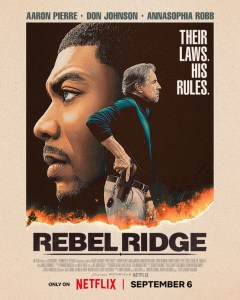 It only took minutes for me to be both engrossed and enraged by Rebel Ridge, the latest film from Jeremy Saulnier, a master of genre elevation. The scene begins with Terry Richmond (Aaron Pierce) riding his bike down a country road. A police cruiser appears behind him impatient to get around, and eventually the officer decides to use his vehicle to ram the bicyclist off the road. Afterwards, the officer tells Terry to stay on the ground and, upon a search of his belongings, discovers a stack of cash. Terry explains he cashed out his ownership in a restaurant and he’s on his way to do two things: buy a truck, and post bail for his cousin who was recently arrested for a minor drug possession. The police confiscate the money, accuse Terry of being involved with a drug conspiracy, and tell him that if he wants to fight for his money back, he’ll need to hire a lawyer and petition the court. Oh, and also the casual racism of the police officers is galling. With just his opening scene, Saulnier and his actors have made me feel vivid emotions and given me an underdog who I’m pulling for, a man who will come to serve as an honorable wrecking ball to this small-town police force who think they are above the law as it suits them. Saulnier’s movie tackles pertinent social topics with great care and detail, but it also delivers a masterful and satisfying action-thriller that knows how to entertain first and foremost rather than just incite.
 There are some serious criminal justice topics here dealt with unusually convincing clarity and accessibility, and that proves to be the ethos of Rebel Ridge, a message movie that knows it needs to be a movie first and a good one. Saulnier’s prior film work just oozes with dread and menace, though Blue Ruin and Green Room and even 2018’s Hold the Dark, by far the lesser work, dwell in bleak human outlooks. Very bad things will happen to people who stumbled into situations beyond their control, and usually by the end of the movie, there’s no recompense and we’re left to wonder about the empty cost of suffering. With Rebel Ridge, it feels like Saulnier has taken an assignment, like Netflix said to make one of your movies with your level of craft and thought, but also make it so the underdog is a badass and wins. I suppose one could argue that it’s turning a formula meant to defy convention back to convention, but by providing a crusader, we’re given a champion to root along that we can share confidence with. Terry isn’t invincible, some fearless behemoth who goes unopposed at every turn. He’s a formidable force but he’s also one man fighting against the forces of injustice and one black man fighting against racist white men in authority (superbly epitomized by Don Johnson’s good ole’ boy chief). Even with the power at his disposal, there are still limitations, which still makes the movie thrilling even if we ultimately suspect good might win out at the end. There’s nothing wrong with a triumphant ending as long as the work before establishes it as a fitting conclusion; tragedy and misery are not somehow more meaningful endings just because they are more serious or subversive. More people will learn valuable lessons about civil asset forfeiture and bail reform from this movie because it has a stirring and accessible story for a mass audience. The genuine thrills allow the messages to prosper.
And what thrills there are. There’s a staggeringly taut sequence where Terry is racing against time to get his cousin’s bail money deposited to prevent him from being transferred to prison. He’s checking the clock, looking down the small courthouse hallways, waiting for the officers he indisposed to come rushing back to arrest him. If only he can get this money deposited first. Saulnier does his own editing and creates a masterful sequence that left me nervously tapping my foot and awaiting the worst. The later confrontations with the police have a deeply satisfying turnabout, as these bullies come to realize far too late that they picked on the wrong man. Terry is an ex-Marine who taught martial arts and hand-to-hand combat to the Corps, but the most dangerous weapon he has is his mind. He’s constantly thinking about plans and implementation and adaptation. He’s intimidating already, but then when he starts to adapt, the sheer force of what this man is capable of makes him that much more incomparable. Even as a man on a mission, he’s still one black man fighting against a system of entrenched power that doesn’t like to bend when it comes to compromise or imposed oversight. He’s still got institutional power against him, and in one of Sauliner’s other movies, he probably would end with Terry winning a Pyrrhic victory but with the system ultimately standing, readjusting to maintain its dominance against further reforms. Here, that may still be true in a larger sense, but at least this one man can make a difference and bust a few racist bullies.
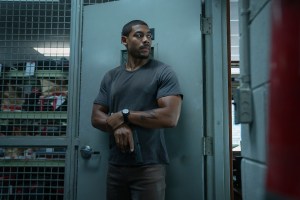 This experience wouldn’t be nearly as awesome without the commanding presence of its leading man. Pierce has had some noteworthy roles in Krypton and The Underground Railroad (he was also the amazingly named rapper “Mid-Sized Sedan” in M. Night Shyalaman’s Old). Originally, John Boyega (Star Wars: The Rise of Skywalker) was the lead role of Terry but Boyega bowed out weeks into filming in 2021 reportedly for “creative differences.” I cannot fathom any other actor in this role now that I have seen how thoroughly magnetic Pierce comes across. He’s a future star in the making and this should serve as a showcase for Hollywood. I like Boyega as an actor and have since 2011’s Attack the Block, but Pierce is a far more intimidating presence and likely candidate for action retribution. I cannot overstate how much better this movie is because it found the perfect leading man for its hero. Saulnier’s excellent command of the genre and tension is made even more compelling because of Pierce being our vehicle for comeuppance. His smooth intensity beautifully amplifies Saulnier’s percolating dialogue, finding the exact right tone and presence to make the challenges to power feel oh so combustible.
I wish the second half of Rebel Ridge was as perfectly structured and executed as that first scene. The second half gets a little lost in the details of its overarching small-town conspiracy. The momentum of the movie starts to slag a bit, and the clear connection of cause-effect plotting gets bogged down. There’s still important revelations and you get nice moments from the likes of James Cromwell as a judge and Steve Zissis as a courthouse clerk trying not to make waves within a system he acknowledges is unjust. The real significant supporting character is Summer (AnnaSophia Robb) as a lawyer with a past of drug addiction that she’s still trying to put behind her to earn back parental rights to her kids. She’s a good foil for our crusading hero, and her storyline also smartly allows for more social-political tangents to be hit about the difficulty of addicts and ex-cons to try and start over in the workforce. I wish she was more involved in the climax, as she’s relegated to being mostly a damsel needing to be saved after she proved so capable and cunning throughout the rest of the movie assisting Terry. The second half just isn’t as strong as the first half because the movie overextends with its conspiracy and history without the same tremendous clarity and urgency that drove the first hour of Rebel Ridge. The ultimate conclusion, while still satisfying, lacks the fireworks that we crave. It’s more a race against time and hoping that certain elements finally stand up against the corrupt police forces. It’s a solid ending, enough for a catharsis that Saulnier so rarely allows, but it’s not quite the release we might want, and maybe that’s the ultimate point.
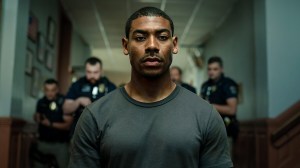 Rebel Ridge is a great genre movie that flirts with true excellence. It’s Jeremy Saulnier’s most accessible and crowd-pleasing movie, an action-thriller that executes its sequences of tension and retribution with as much care as it incorporates its Big Ideas for viewers to think over. Genre movies have long tackled relevant social and political topics, sometimes in ways that are far more meaningful and impactful than message movies that get bogged down in didactic dogma. But if you can link a relevant social issue to a story that grabs us and makes us want to inch closer to the screen, something that links a larger problem to a personal story, then you’ve found an accessible illustration that people will actually want to see. Rebel Ridge stands out among the Netflix house of action movies and proves that even a mainstream Saulnier can deliver the goods. Just because he’s working with a more conventional formula doesn’t mean that he hasn’t put thought and care into his characters and action. Rebel Ridge may leave you wanting a little more with its ending, but what it supplies is so engaging and entertaining that I’m happy to report Saulnier hasn’t lost his edge. Keep ‘em coming like this, Jeremy.
Nate’s Grade: B+
Share this:

Knives Out (2019)
 Rian Johnson is a filmmaker who likes to dabble across genres and put his high-concept stamp on them. His debut film, 2006’s Brick, was a moody noir-flavored mystery set in a modern high school. His next film, 2009’s The Brothers Bloom, was a whimsical con artist movie with cons-within-cons, and then Looper took time travel and twisted it into knots. From there the man was tapped to not only direct a new Star Wars movie but write one, and 2017’s The Last Jedi proved so divisive that Russia literally created robotic accounts to exploit raw feelings to better sow discord among Americans and undermine democracy. Johnson must have needed a detox from that galaxy far far away, and Knives Out is his version of an Agatha Christie-styled parlor mystery. Once again Johnson has taken an older genre, subverted its form, and made it his own in a way that feels reverent while also fresh, fun, and thoroughly entertaining.
Harlan Thrombey (Christopher Plummer) is a world-renowned mystery writer with a publishing empire in the millions. Then on the night of his birthday party, Harlan is found dead and every family member is a suspect. Could it be Marta Cabreara (Ana de Armas), the nurse who was last seen taking care of the old man? Could it be the daughter, Linda (Jamie Lee Curtis), eager to get out of her marriage to a cheating husband (Don Johnson, having a moment this fall)? Could it be the son Walt (Michael Shannon) who was going to lose his position of power in control of the family publishing empire? Could it be grandson Ransom (Chris Evans) who didn’t show up on time for the party but showed up early for the will reading? The local police detective (Lakeith Stanfield) is doing his best to navigate the many suspects. And then there’s the famed private eye, Benoit Blanc (Daniel Craig), hired by an unknown benefactor to discover foul play, who interrogates each family member, investigates the corners of the estate, and uncovers the truth.
 Knives Out is an incredibly fun movie to watch fly by for its extended 130-minute running time. The guessing game is enjoyable and there is a plethora of suspects and red herrings. Johnson is clearly a fan of the genre and doing his best to send it up in his own way while still staying true to its roots. Just look at the silly, Dickensian names and you can tell Johnson is enjoying himself (there’s a character named “Ransom”). The mystery is clever but it becomes something more than a whodunnit (more on that below) and that’s when Knives Out becomes special. Johnson has been repeatedly accused of being too clever by half, looking to produce some meta gymnastics to subvert audience expectations but to what end? This was an issue with the very end of Brothers Bloom and many had this same complaint with The Last Jedi. It’s not enough to subvert expectations if the alternative isn’t as compelling. Still, the choices that Johnson makes with Knives Out best serve to improve the emotional involvement in the story. That quality seems like a rarity when it comes to murder mysteries, because it’s all about solving the crime and not necessarily how it affects the people on a more human level. It’s a problem to be solved, an equation on the board, and the process eliminates the variables systematically. Except with Knives Out, Johnson opens up the central figure of Marta in such a way that she becomes a symbolic figure for the immigrant experience in this country, fighting for dignity and recognition. The political commentary isn’t deep, and some of the shots feel a little cheap, but where Johnson succeeds is treating Marta as an empathetic stand-in for an often-invisible class.
A half-hour or so into the proceedings, Johnson makes a very conscious choice that changes how we understand the mystery and especially how we’re involved. I’ll be careful about spoilers but suffice to say we get some very crucial information that makes us look at the murder differently. For the first act it feels like it’s heading into a whodunnit with our clan of suspicious relatives, but it does something else, and I would argue something better. The problem with an Agatha Christie-style whodunnit is that the film is structured toward solving one central mystery and other important dramatic elements can fall by the wayside. Once you know who the killer is, was the journey to unmask them worth the twists and turns? Johnson instead lets the audience in on crucial information so that Knives Out alters, and the “who” is less important than how this information affects our relationship with a set of characters. It becomes less who is the killer and more will this culprit get caught and how will they beat the encroaching investigation. It transforms the entire structure, where instead of everything leading to one reveal, now it becomes a series of mini-panics and scrambles to stay ahead of a trap. This made me that much more personally involved and Johnson doubled the dramatic irony and tension of scenes. It becomes more a series of obfuscation where we’re involved, remembering what clues might be the ones that ultimately prove too inescapable. There is a downside to this approach, letting out some big reveals early also serves to downplay the vast majority of the supporting players. These people are all given motives and suspicions early on, but once Johnson unloads his twists too many of these same characters just fade into the background, their story use extinguished.
 Another cheerful aspect of Knives Out is simply how much fun its cast is having, none more so than Craig (Spectre). I never really gave much thought to Craig as a comedic actor until 2017’s Logan Lucky, where he seemed to be unleashed, digging full bore into a charming and kooky supporting character, and it was downright joyful to watch him cut it up onscreen. He’s given such serious, macho roles but he really excels in the right comedic role, and he just has the time of his life playing Blanc. His southern-fried accent, penchant for theatricality, and garrulous nature all contribute to both tweak the idea of the clever inspector while playing into those clichés as well, steering into the fun we have with them. There were several moments I was left breathlessly cackling because of how Craig was delivering his lines with such relish. His explanation of the mystery being “a donut hole inside a donut hole” might be one of the best film scenes of the year. It also helps that Blanc has an affectionate working relationship with Marta, the heart of our movie, which makes this eccentric even more endearing to the audience. Just as Kenneth Branagh is continuing the adventures of his mustachioed private eye, I would happily watch another murder mystery featuring Blanc if Rian Johnson felt so inclined (pretty please).
The other actors do fine work even if many of them end up being underwritten figures either meant to be threatening suspects or cartoonish buffoons. Armas (Blade Runner 2047) is the lead actress and often the contrast for our rich elites and their out-of-touch perspectives; she’s the sounding board for their pettiness, acrimony, entitlement, and thinly-veiled racism. Armas just shines in the role as this figure who routinely makes the right choice even when it costs her. She’s a relatable, hard-working, kind character trying to keep her moral bearing in this high-stakes contest. Evans (Avengers: Endgame) is enjoyably smug and a welcome force to antagonize and puncture the egos of his fellow family members. Shannon (The Current War) has his effective moments of conveying menace and being laughably impotent. Every other actor does good work but too many of them barely make a blip. I forgot Riki Lindhome (Garfunkel and Oates) was in this movie from scene to scene. It’s a big cast so the goal is to make the most of their moments, and there isn’t a bad performance in the bunch, though some are far more broad.
Knives Out is a fun experience and further proof that when Rian Johnson really sets his mind on a certain genre, good and clever entertainments sprout. I want this man to tell the stories that excite him because there are still many more genres that could use the Rian Johnson stamp.
Nate’s Grade: A-


 nathanzoebl
You must be logged in to post a comment.