Blog Archives
Ghostbusters: Frozen Empire (2024)
 I am a lifelong Ghostbusters fan, I enjoyed the 2021 reboot, and I come to the sequel, Frozen Empire, as one of those fans that grew up with the cartoon series in the 1980s. There is a contingent of Ghostbusters fans who dismiss the movie as merely a comedy about a bunch of schlubs who resort to paranormal shenanigans to make a buck, and these fans dismiss anything larger in world-building, mythology, or direct sincerity as missing the point. I disagree. There can be a vivid, flourishing world of supernatural beings and connections to the human world, if you can tell a compelling story with characters we want to follow. Frozen Empire is an okay TV episode expanded into movie form, finding little for most of the voluminous characters to do. There’s an ancient evil and tying back the legacy characters, who don’t present much meaning beyond extended cameos. The 2021 movie had me on an emotional level, saying goodbye to a character and seeing how that loss has affected multiple generations of his estranged family. The closest thing Frozen Empire features to emotion is young Phoebe Spangler (Mackenzie Grace) wanting to be treated like a responsible adult and making friends with a ghost girl. It’s kind of sweet, and it’s smart to tie this friendship into the larger threat. The movie has several side plots littering the peripheral, from Finn Wolfhard trying to catch Slimer and being trusted to drive the Ecto-One, to Paul Rudd trying to find his footing as a stepdad, to Kumail Nanjiani as a junk dealer learning to follow his family’s noble mission of protecting others. I liked learning more about Winston’s (Ernie Hudson) Men in Black-style secret agency of studying ghosts and testing out new supernatural tech, and it presents a fun new setting where we can learn more. The ultimate story about defeating an evil spirit, coming together as a team, and learning to give others room to succeed or fail all seem a little pat, a little too familiar. It’s fine that this movie has lower stakes, even with a would-be apocalyptic threat of ancient evil. Not every movie needs to avert the apocalypse. It feels like little thought has been given to extending the new characters from the 2021 movie. There are too many characters to service here, which is why everyone other than Phoebe feels like a nascent supporting character or overextended cameo at worst (did we need the return of Podcast?). It’s still a fun movie that any Ghostbusters fan will likely find enough to enjoy, but it also feels like it might be the last Ghostbusters movie, at least this iteration, and it ends with a reminder of what the franchise can be, at its best, but also a warning of what it can be without careful development and vision.
Nate’s Grade: B-
Share this:

Crossroads (2002) [Review Re-View]
 Originally released February 15, 2002:
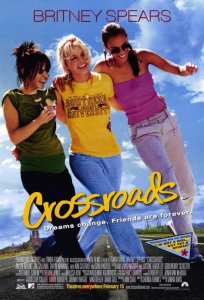
When informed that her feature film debut was receiving shrieks of laughter during advanced screenings for critics, Britney Spears said she was glad because she never likes the same films the critics do. Well Ms. Not That Innocent, the truth hurts; you’re not a girl, not yet an actress. Crossroads is really the filmic adventures of Britney Spears and her ever-present navel. The navel should get second billing, but alas, we do not live in a society of equality for navels.
The film opens up with three 10-year-old best friends burying a box of wishes and dreams and promising to be bestest friends forever and ever. They make a pact to come back and dig up the box on the night of their high school graduation. Flash to the present and the word “bestest” isn’t what it used to be. Lucy (Britney Spears) has become the virginal nerd preparing to give her speech as valedictorian. Kit (Zoe Saldana) has become the haughty popular snob, obsessed over getting married ever since she got her first Bridal Barbie. Mimi (Taryn Manning) is pregnant and become the trailer trash girl that everyone sees fit to remind her of. Despite their growth apart they all do come together to reopen their box of dreams. Mimi informs the others that she plans to head to California to audition for a record deal in an open contest. Kit decides to use this opportunity to check up on her boyfriend at UCLA who has been strangely evasive. Lucy complains that by having her nose in a book her entire high school experience she never got to go to a football game or even “hang out.” Somewhere a small violin is playing. She decides to jump at this chance and possibly see her mother in Arizona, who ran out on Lucy and her father (Dan Akroyd) when she was only three. The wheels of their adventure are provided by guitar-playing mystery Ben (Anson Mount). He pilots them on their travels to the Pacific coast, though the girls think he might have killed someone, but oh well.
 Crossroads is filled to the brim with every imaginable road trip cliché. The girls “open up” after getting drunk, have a scuffle in a bar, reap in the sights of nature, and perhaps create some sparks of romance with their hunky heartthrob of a driver. The car also inevitably breaks down and the girls have to find a way to scrape some quick cash together. They enter in a karaoke contest and Britney proceeds to sing Joan Jett’s “I Love Rock and Roll” with her two gal pals providing backup. But no, this isn’t the last time you’ll hear Ms. Brit sing. In an effort to pad as well as become a showcase for its star, Crossroads gives us many scenes of the girls just singing to the radio. Besides Jett, Shania Twain’s “Man I Feel Like a Woman” and Sheryl Crow’s “If It Makes You Happy” are also on the chopping block. You’ll also be accosted by the movie’s single “Not a Girl, Not Yet a Woman” several times, including one scene where Poet Britney is asked to share her poem and it ends up being the song’s lyrics.
Saldana (Center Stage) is not given much, as the attention is always centered on Britney, so she merely comes off like a token conceited character. Only Taryn Manning (crazy/beautiful) comes away with a little dignity. She gives Mimi a lot more heart than should be there and shows some honest reflections for her character. She also, coincidentally enough, looks like a dead ringer for Joan Jett with her black bangs.
Crossroads is nothing but a star vanity project for Spears, with some not-so-subliminal Pepsi product placement here and there. This was not a script looking for a lead; this was something Britney’s management team suited for her, and Crossroads is perfectly suited for Britney. It allows for many ogling periods of booty shaking. The majority of the film’s drama doesn’t even concern her, and when she does have to act, her scenes are cut short to help her when the real drama unfolds. The movie’s true intentions are revealed when Britney is shown in her pink underwear twice in the first 15 minutes.
 Crossroads moves along on gratuitous skin shots of Spears half-naked body every 20 minutes until it reaches its torture chamber of a final act. In this very melodramatic period we get abandonment, date rape, infidelity, and even a miscarriage in one of the film’s most shameless plot devices. Of course none of these horrors matter, especially a psychologically damaging miscarriage, because Britney has to get to her BIG audition in order to perform, yep you guessed it, “I’m Not a Girl, Not Yet a Woman.” She also has to wear what looks like kitchen drapes while she sings.
You’ll walk out of the theater wondering many things. Why does Britney wear pink in EVERY single scene she’s in? There’s even one scene where she changes from a pink top to another pink top and is FOLDING a third pink top into a suitcase. Are we to believe that Akroyd and Spears share some kind of genetics? In what high school would Britney be considered a nerd?
Hopefully Crossroads will be the pop princess’ last foray into film, but I strongly doubt this is the last we’ve seen of Britney Spears. Crossroads is a terrible girl-power trip. Only Spears’ target demographic will enjoy this melodramatic mess. Truly, the two largest groups that will see this film are adolescent girls and creepy older men who fawn after adolescent girls. Crossroads is exactly everything you’d expect.
Nate’s Grade: F
——————————————————
WRITER REFLECTIONS 20 YEARS LATER

I’ve been waiting for this mea culpa for twenty years. In 2002, I saw Britney Spears’ movie debut, Crossroads, opening weekend with some friends with the chief purpose of seeing how bad it would be and tearing it to shreds for my collegiate newspaper. I graded it an F and sharpened my knives to eviscerate the star vanity project and everything it supposedly represented, eventually declaring it the worst film of 2002. Many years later, I have to wonder just exactly what was I so upset about with a middling road trip drama? What made this movie more deserving of a critical take-down than any other movie of that year? Had Spears not been its star, I doubt I would have expelled as much vitriol. So then the big question becomes, what did Britney Spears do to deserve so much ire from the 19-year-old version of myself? After some further reflection, I think I have some answers, and I’m glad I’ve had some significant growing up since then. I think it comes down to a personal animus blinding me as a critic, and this is something I’ve tried to push through and shed as I’ve gotten older and hopefully more experienced at evaluating art.
Flashback to the mid-to-late 1990s, and it was a golden time for fans of alternative rock, such as myself, bands that were cutting edge, audacious, and reaping the commercial rewards as well. MTV was filled with bizarre and exciting music videos from eclectic artists that were given an elevated platform. I grew my sense of self through my burgeoning musical taste, enveloping myself in the sounds of the Smashing Pumpkins, Radiohead, Tori Amos, and many more. And then the pop infusion began in 1997 with Hanson and really exploded with the emergence of the boy band craze and young pop stars like Spears and Christina Aguilera and others. Suddenly the music I was accustomed to, the music that to me was built on artistic integrity and depth, was being pushed aside for music that felt shallow and inferior, driven by exploiting the clean-cut physical beauty of the performers as compensation for substance. My younger self felt irritated that the music I considered to be genuine and revelatory was supplanted by bubblegum pop ditties. In my sophomore year of high school, for a Canterbury Tales group assignment, I co-wrote an epic quest for a strange band of characters to go to a Hanson concert and kill the three mop-headed brothers (I also had the collective pre-teen audience rise up and retaliate, killing our band of heroes). Looking back, there’s nothing new about any of this. Music has gone through many spells where pretty pop stars have coasted because of their looks and sex appeal. For whatever reasons, it felt personable, like an attack, and that is such a misplaced assessment on the winds of popularity.
 I’ve tried to eliminate anything that feels like a personal attack from my film criticism, because at the end of the day it’s just a movie, and whether or not it works for me, and it may work for others, it’s still only a movie. It’s not like the filmmakers personally robbed me of anything other than my time, and as my friends will often chide me, I chose to watch these movies I knew would be almost certainly dubious entertainment options. I’ve re-read several past film reviews and winced as I found myself resorting to low blows or critiques about body appearance. My review of 2008’s The Hottie and the Nottie (for the record: not a good movie) was a glorified take-down of Paris Hilton and everything she supposedly represented, a prized vapidity. I deleted heavy portions of it, especially those shaming Hilton for her promiscuity. It made me ashamed. As I’ve grown, I’ve tried to focus solely on the art and story of each movie. If the performance was weak, it’s just a reflection of a bad performance and not a bad person deserving of some sort of misplaced score-settling by yet another angry random guy on the Internet.
That brings me back to the star of Crossroads, Britney Spears, who in the ensuing decades had the culture rally to her back as well as re-evaluate the treatment of the paparazzi-heavy targets of the 2000s. She was celebrated for her sexuality and demonized for it as well, again not exactly new in the realm of media. After so many years under the harsh scrutiny of the public spotlight, in 2007, Spears shaved her head, attacked a paparazzi car, and checked in for much-needed mental help, and in doing so essentially signed her life away for the next 14 years to her father, who had the final say over her finances and tour commitments and even whether or not Spears could have an IUD removed. She was finally released from her conservatorship after a groundswell of public support in 2021. She’s released many more albums, had a long-standing residency in Las Vegas, and has even talked about turning her struggle for agency into a big screen movie.
 Crossroads is an odd concoction because of how many people went on to have robust careers. Chief among them is the credited screenwriter Shonda Rhimes who would become one of the preeminent TV power producers of the twenty-first century with Grey’s Anatomy, Scandal, and Bridgerton. Fans of Rhimes’ adult soaps might find recognizable traces of her plotting with the overly melodramatic third act of Crossroads. This was also one of the earliest movies for Zoe Saldana, an integral part of THREE high-profile, highly successful sci-fi series, Avatar (where she has blue skin), Guardians of the Galaxy (where she has green skin), and the J.J. Abrams’ Star Trek (natural skin). She was also in the first Pirates of the Caribbean just a year after Crossroads. Then there’s Taryn Manning who found memorable parts in 8 Mile, Hustle and Flow, before redefining her career as the memorable, and dental-deficient, Pensatucky on Orange is the New Black. Anson Mount would later go on to prominence in TV series like Hell on Wheels and Star Trek Discovery (less so Marvel’s Inhumans). Apparently many of the other actors in Crossroads agreed to sign on just to meet Spears, like Dan Akroyd, Kim Catrall, and Justin Long. Even Mount was hesitant until the urging of none other than Robert DeNiro, who read lines with Mount from the Crossroads script during their downtime on 2002’s City by the Sea (DeNiro reed Britney’s lines, which makes me wonder what he could have done in the lead).
Reading back over my original 2002 review, I actually think most if not all the criticisms of the movie still land. The movie is rife with road trip cliches. The third act is indeed a torture chamber that really tilts the drama into overdrive, though smartly places the workload on the abilities of Saldana and Manning. There is definitely an unsettling preoccupation with Spears’ sexuality with the film. I wrote, “The movie’s true intentions are revealed when Britney is shown in her pink underwear twice in the first 15 minutes,” and I can’t disagree. It’s an uncomfortable watch at points, not because anything on screen is so salacious or ribald (Spears in fact insisted on her character’s use of profanity to be stricken to maintain her image) but because of what it thinks its audience wants. I suppose there were thousands of teenage girls looking to someone famous like Britney Spears for inspiration, and the lesson of waiting until you feel comfortable with a partner, and it’s your choice, is worthy, but the primacy emphasis on Spears’ body feels wrong.
My concluding line in my review was meant to summarize my stance, indicating that Crossroads is “exactly what you expect it to be,” and in 2002 I guess that meant the worst of the worst. In 2022, that just means a familiar, formulaic road trip movie with lots of melodrama. Yes, it’s a star vehicle for Spears’ acting career and there are many opportunities for singing, but that doesn’t make it any worse than any other mediocre drama aimed at a teenage demographic. And in 2022, I can say that I appreciate the pop music of the 90s. There were some real top-notch ear worms there and they still stand up to this day, easily hum-able when they reappear on radio. Spears and her ilk did not get the full credit they deserve during their reign. Crossroads is, to excuse a forced metaphor, a sort of crossroads for myself as a critic, something I’ve tried to improve upon as I got older. Movies are good and bad. Their intentions might even be noble or prurient or purely driven by money, but they’re still only movies and not personal attacks. I’m sorry Ms. Spears for unfairly maligning you, your acting ability, and your movie. Crossroads is easily not the worst movie of 2002. It’s merely mediocre at best and undeserving of antipathy.
Re-View Grade: C
Share this:

Ghostbusters: Afterlife (2021)
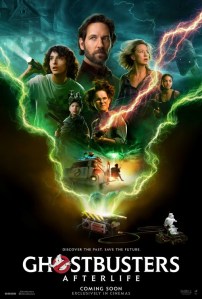
As I stated in my review for the 2016 Ghostbusters, allow me to wax nostalgic and explain my own private history with the franchise: “Growing up in the 80s, other kids had Transformers, or G.I. Joe, or He-Man, but I was a Ghostbusters kid. I fell in love with the 1984 original movie, slept below the poster for most of my childhood, and obsessively collected all of the action figures and toys, watched with glee the animated TV series, and hold the world and its characters in a special personal place.” This franchise means something to me. I think about the hours I spent playing in this world and my imagination and my own stories illustrated with marker and crayon, and it makes me extremely happy as well as reminds me how I fell in love with weird storytelling and macabre, ironic humor. I’ve been waiting for more Ghostbusters movies for my adult life. The 2016 movie was fine, I wasn’t enraged by it in the slightest, but it didn’t scratch that itch. While replicating some of the same plot beats, the 2016 movie was not reverent to its source material. Now the 2021 Ghostbusters, delayed over a year and a half from COVID, goes completely in the other direction. Ghostbusters: Afterlife is reverent to a fault, and while it has been met with mixed reviews and complaints of overdosing on slavish fan nostalgia, I found it to be a charming and fun family adventure that left me laughing, cheering, and even crying.
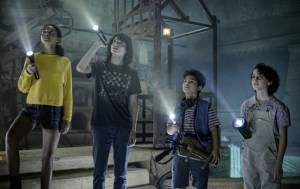
Egon Spangler (Harold Ramis, R.I.P.), original Ghostbuster, is dead, killed by a malevolent spirit. His estranged adult daughter, Callie (Carrie Coon), and her two teen children, Trevor (Finn Wolfhard) and Phoebe (Mackenna Grace), are shocked to learn of his death and their unexpected inheritance: a dirt farm in small-town nowheresville Oklahoma. They don’t know much about their grandfather and the kids are not exactly excited about relocating to a secluded mining town. Phoebe starts discovering weird pieces of technology hidden in the old house of her grandfather’s. A presence seems to be reaching out and trying to get the family to understand their real legacy. It appears that Gozer the Gozerian was not fully defeated on top of that New York City skyscraper in 1984, and Phoebe and her family must learn about the past in order to make sure we all have a future.
I can understand the charges of Afterlife being too nostalgic, but I don’t understand the charges of it being so enamored with its past that it poses a disservice to the movie standing on its own. This movie is intended at its very DNA to live within the shadow of the original films. The director and co-writer, Jason Reitman, is the son of the original films’ director, Ivan. It’s going to be reverent but that’s not an automatic bad thing. Whereas the 2016 reboot shrugged at past convention and went completely comedic, this edition takes the opposite approach, hugging onto the lore and past of Ghostbusters with heartfelt affection. If you’re a fan of the franchise, this adoring approach will likely be more favorable, not that the 2016 film is wrong for eschewing the established canon of the franchise and trying something new. If Afterlife had been a completely original story set in a Ghostbusters universe, I would have happily accepted that. However, just because something is outwardly nostalgic, or taps into fan service, does not mean it is destined to be an exclusive retread that only satisfies the hardcore base. I didn’t need the gratuitous Easter eggs of passing shots of a twinkie or Crunch bar, but they’re blink-and-you’ll-miss-them moments that don’t really relate to anything of consequence, so I can excuse them. Afterlife is similar to The Force Awakens in that it uses familiar plot beats to mirror events of its predecessors to ease back fans and new members to the fanclub, most especially in Act Three where Gozer’s demonic pooches are unleashed. I can understand many chaffing at this, but I feel that Afterlife does enough to justify its own creative existence even in facsimile rather than as some insular, facile, fan-stroking cash-grab.
This is, by far, the most dramatic of the Ghostbusters movies, a series that has existed in the realm of comedy. The prior movies were never spooky on adult terms, but they reached back into a primal, childlike curiosity and anxiousness over the unknown that made them creepy when they wanted to be. I don’t understand the umbrage some have expressed over Afterlife being more of a drama. First, the comedy is present throughout the movie with the characters making specific and wry observations that feel fitting for their situation. The humor is not as forced as the loping line-a-rama improv jazz riffs of Paul Feig’s 2016 film. I think this universe can sustain different kinds of stories being told, and I think that drama is perfectly acceptable as long as it’s earned, just like the comedy or horror elements. The central premise involves an estranged family coming to know the secret life of an absentee relative who abandoned them, so the more they learn about his Ghostbusting past and responsibilities, the closer they come to uncovering a clearer picture of who this man really was as well as their connections to him. Reitman and co-screenwriter Gil Kenan (Monster House) have smartly connected the investigation of the past into the development of personal relationships. We in the audience know the significance of the Ecto One and the ghost traps, but the new characters do not. We await them to understand the knowledge we already attain, but the movie doesn’t play this as characters dawdling. Each discovery unlocks new potential for the characters to shape who they choose to be, and each one gets them closer to their grandfather and reshaping their conception of the man who they wrongfully believed abandoned them for folly.
This all leads to a climax that had me genuinely in tears. I won’t exactly spoil it but Afterlife’s conclusion is less concerned with beating the Big Bad Gozer yet again and saving the universe. Reitman and company have smartly placed the real climax as an emotional catharsis; it’s more in keeping with Field of Dreams than some huge Marvel apocalyptic showdown. The ending is personal, emotional, and reaches into our universal desire for closure, for having that one last moment with a beloved who we no longer have any moments left to share, Reitman is clearly missing Ramis, a close family friend and inspiration who died in 2014, and this is his own way of processing his personal grief, offering an emotional output for the fans to share in, and allowing a grieving character/surrogate to find that needed release. It serves as a fitting conclusion and a special end note for any Ghostbusters fan who has held this franchise close to their heart for several decades, especially if shared with a paternal figure who may be gone.
The film also successfully channels a childhood perspective of awkward and awesome. It’s hard to create a story where a group of precocious adolescents discover strange things cooking in their sleepy small town without suggesting Stephen King and Stranger Things, but this isn’t necessarily a total negative. The earlier movies were always from a more cynical adult perspective. Yes, there were characters like Ray (Dan Ackroyd) and Egon who were true believers, but they were often set up for easy laughs. The tone of the series was mostly tied to the irony of the character of Peter Venkman (Bill Murray) that looked at the supernatural with droll detachment. This is the first Ghostbusters entry where the primary perspective is from children, and there’s something hopeful and heartfelt about a younger point of view with the supernatural material. These kids are excited and eager to learn more about the somethings strange in their neighborhood. It becomes endearing to ride along with them as they get to jump into the action. I loved the concept of a sidecar gunner seat for the Ecto One and how it felt like a childhood dream coming true. But it’s more than fan service because it serves as a point of progression for Phoebe’s sense of self, of embracing her scientific interests and roots, and taking charge in the face of unknown danger. It’s a coming out of sorts. When the kids are driving through (the always empty?) town and chasing a runaway ghost, wrecking storefronts from the boom of the proton pack, it’s a blast for them and us.

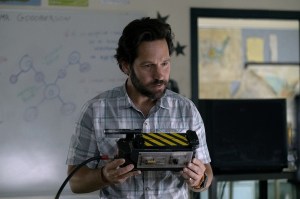
This is Reitman’s most commercial and mainstream film of his Oscar-nominated career. It’s interesting to me that this indie darling, who was on such a hot streak in the late 2000s, hit some speed bumps with the critical misfires of 2013’s Labor Day, 2014’s Men, Women, and Children, and 2018’s The Front Runner, so the next movie is a retreat to a big-budget franchise film. Reitman doesn’t necessarily have the best feel for large-scale spectacle, but he knows intimate character dramas and guides his actors well. Grace (Gifted, Haunting of Hill House) is wonderful as our plucky lead. Unfortunately for Wolfhard (It, Stranger Things), his dull character has nothing to do but pine for a local girl, scoff at his family, and then fix up the old ghostbustin’ mobile. Paul Rudd (Ant-Man) is as charming as ever as the school science teacher, especially as he nerds out over interacting with the Ghostbusters paraphernalia like an excitable fanboy living out his childhood dream. I wish Coon (The Leftovers) had more to do, but that’s my primary complaint in any movie where Carrie Coon is a supporting actress. Her chemistry with Rudd is strong and they could have done so much more together as adults trying to make sense of madness. They could have eliminated Wolfhard’s mopey older brother character entirely and given us more time with the goofy adults too. One feels like there is some secret contract where anything relating to 80s nostalgia requires the hiring of Wolfhard on hand.
Ghostbusters: Afterlife will not be the best movie of 2021. There are areas that could have been improved and streamlined and better developed. However, Ghostbusters: Afterlife will most assuredly be my favorite film experience of 2021. It’s a heart-warming continuation for fans with enough wit and whimsy to charm while owning its obvious and intended connections to the original. I may not be the most objective source on this particular matter, but I know what I like, and this movie had moments of pure happiness that just shot right through to my dopamine center. We’ll see if this movie can restart the dormant franchise, and strike more on its own, but even if this lone 2021 entry is all that we eventually get, I’m happy I got to experience this magic once again. I can’t wait to see it again with my dad.
Nate’s Grade: B+
Share this:

Pearl Harbor (2001) [Review Re-View]
 Originally released May 25, 2001:
It turns out we went to war in 1941 not because of Japanese aggression, Hitler’s dominance in Europe, or the protection of freedom and democracy. Sorry kids. The real reason we went to war was to complicate and then clear up Kate Beckinsale’s love life. At least that’s what director Michael Bay and screenwriter Randall Wallace would tell you with their indulgent epic Pearl Harbor.
We open in Tennessee in the 20s with two boys who dream of being pilots. Rafe (Ben Affleck) and Danny (Josh Hartnett) grow into strapping young lads who flash their hot dog flyin’ skills at basic training, which brings them chagrin from superiors but admiration from peers. Rafe falls in love with a young nurse named Evelyn (Kate Beckinsale), who goes against ARMY rule and passes Rafe in his eye exam portion when he has a slight case of dyslexia. But he’s just so cuuuute. The romance builds but Rafe feels like he’s grounded when all he wants to do is fly, and volunteers to fight in the RAF over in Europe. He promises he’ll be back to see his lovely Evelyn. Of course he gets into an accident and everyone assumes that poor dyslexic Rafe is fertilizing a lawn somewhere with his remains. Hence Danny slowly but surely develops something for Evelyn in their periods of mourning, and the two consummate their puppy love with a tango in parachute sheets.
All seems well until Rafe returns back from the dead throwing a wrench into Evelyn’s second date parachute plans. Thus the Hollywood favorite of the love triangle endures until the end when the two fly boys enlist in the Doolittle attack against Japan, months after the ferocious attack on Pearl Harbor. The real purpose of the Doolittle attack was not militarily but merely for morale. The real purpose it serves in the movie is to shave off an end on our love triangle.
 Pearl Harbor allows us to follow a group of youthful and innocent starry-eyed kids from training to combat. Each seems pretty much exactly the same to each other. It’s near impossible to distinguish which character is which. It’s like the screenwriter didn’t even have the gall to resort to cliche supporting character roles, and he just made one character and duplicated it. The only one who was noticeable for me was the character of Red (Ewen Bremner, julien donkey boy himself), but that was simply because the man had a speech impediment. We also have our handful of young nurses alongside Beckinsale, and I had an easier time distinguishing between them; everyone had different hair colors.
If you look in the pic, or the credits, you’ll see that two of the nurses would turn out to be Jennifer Garner (Alias) and Sara Rue (Less than Perfect), both stars of ABC shows, and ABC is owned by, yep, Disney. Coincidence? Probably. When they ran this on TV they actually advertised Jennifer Garner above Kate Beckinsale. That reminded me of when Seven ran on TV shortly after Kevin Spacey had won his well-deserved 1999 Best Actor Oscar for American Beauty, and they gave him second-billing in the advertisement over Morgan Freeman, the movie’s true main character.
Affleck has a hayseed Southern twang, but seems to mysteriously disappear for long stretches. Hartnett seems to talk with a deep creak, like a door desperately trying to be pushed open. Beckinsale manages to do okay with her material, but more magnificently manages to never smear a drop of that lipstick of hers during the entire war. We could learn a lot from her smear-defying efforts. Gooding Jr. is pretty much given nothing to work with. I’m just eternally grateful he didn’t go into a usual Cuba frenzy when he shot down a Zero.
Michael Bay has brought us the ADD screenings that are the past, loud hits of The Rock and Armageddon. Teamed up with his overactive man-child producer Jerry Bruckheimer once more, Pearl Harbor is less Bay restrained to work on narrative film as it is Bay free-wheeling. His camera is loose and zig-zagging once more to a thousand edits and explosions. Bay is a child at heart that just loves to see things explode. When he should show patience and restraint he decides to just go for the gusto and make everything as pretty or explosive as possible. This is not a mature filmmaker.
Despite the sledge hammer of bad reviews, Pearl Harbor is not as bad as it has been made out to be. The love story is inept and the acting is sleep-inducing, unless when it’s just funny. It doesn’t start off too badly, but twenty minutes in the movie begins sinking. The centerpiece of the film is the actual Pearl Harbor bombing that clocks in after ninety minutes of the movie. The forty-minute attack sequence is something to behold. The pacing is good and the action is exciting with some fantastic special effects. The movie is bloated with a running time a small bit over three hours total. Maybe, if they left the first twenty minutes in, then gave us the forty minute attack sequence, followed by a subsequent five minute ending to clear up our love triangle’s loose ends… why we’d have an 80 minute blockbuster!
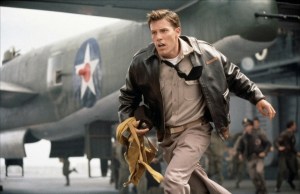 Pearl Harbor doesn’t demonize the Japanese, but it feels rather false with their open-minded attempts to show both sides as fair minded. It gets to the point where they keep pushing the Japanese further into less of a bad light that it feels incredibly manipulative and just insulting. It seems like the producers really didn’t want to offend any potential Pacific ticket buyers so the picture bends backwards to not be insulting. The only people who could be offended by Pearl Harbor are those who enjoy good stories. Oh yeah, and war veterans too.
The cast of Pearl Harbor almost reads like another Hollywood 40s war movie where all the big stars had small roles throughout, kind of like The Longest Day for the Pepsi generation. Alec Baldwin plays General Doolittle and is given the worst lines in the film to say. Tom Sizemore shows up as a sergeant ready to train the men entering Pearl Harbor. He has five minutes of screen time but does manage to kill people in that short window. Dan Akroyd is in this for some reason or other, likely because Blues Brothers 3000 has yet to be green lighted. John Voight is easily the most entertaining actor to watch in the entire film. He gives a very authentic portrayal of President Roosevelt. I still find trouble believing it was Voight under the makeup.
The blueprint for Pearl Harbor is so transparent. They took the Titanic formula of setting a fictional romance against a disaster, with the first half establishing characters and our love story, and then relegating the second half to dealing with the aftermath of the disaster. It worked in Titanic (yes, I liked the film for the most part), but it doesn’t work here. Pearl Harbor is a passable film, but the mediocre acting, inept romance, square writing, and slack pacing stop it from being anything more. Fans of war epics might find more to enjoy, especially if they don’t regularly have quibbles over things like “characters” and “plot.” To paraphrase that know-it-all Shakespeare: “Pearl Harbor is a tale told by an idiot. It is full of sound and fury, signifying nothing.”
Nate’s Grade: C
——————————————————
WRITER REFLECTIONS 20 YEARS LATER

Believe it or not, there was a point in time where people actually considered the possibility of Michael Bay making an Oscar contender. It seems mostly absurd now but at the time there was a benign sense of hope with the production of Pearl Harbor, the most expensive movie greenlit at the time ($140 million) and whose ultimate costs would exceed $200 million. The blueprint for the movie is easy to spot, borrowed heavily from the success of another risky and very expensive movie about sinking ships, James Cameron’s Oscar-winning blockbuster Titanic. If you’re looking for a movie to follow, you could certainly do worse than the highest grossing movie ever (at the time). There was great speculation and buzz about the movie, for its immense production scope, for the reported ambitions, for the prospect of Bay trying to make a serious movie, albeit a serious movie that still included a healthy helping of his usual explosions. There were similar rumors of disaster courting Titanic, then the first production to go over $200 million, and that turned out fine. Well, as should be obvious especially twenty years after its initial release, Michael Bay is no James Cameron in the realm of filmmaking and action storytelling.
Upon its release Memorial Day weekend in 2001, Pearl Harbor opened to a critical drubbing and general audience indifference. It failed to live up to whatever hype or hope had been attached, though it did snag a Guinness World record for most explosions if you value that honor. Bay has never since attempted a “prestige picture” again, resorting to the comfort of doing what he knows he can do well, showcasing large robots punching each other in between pretty explosions. I don’t know what the real legacy of the Pearl Harbor movie should be but I think, twenty years later, it’s a mediocre attempt to recapture something of a past, whether that was the movies of the 1940s or a very very specific movie from 1997 that rhymes with Smitanic. It’s too bad Pearl Harbor is still a three-hour shrug of a movie.
 A full 90 minutes is devoted to setting up the nascent characters and history before that fateful attack on the Pearl Harbor naval base in Hawaii on December 7, 1941, and that’s the first major misstep for the film. Much of the emotional involvement is built upon a romance that simply does not work in any capacity. Ben Affleck plays Rafe, a dyslexic pilot who charms Evelyn (Kate Beckinsale), a nurse who decides to help him cheat his medical exams. The first 45 minutes demonstrates their abbreviated courtship and romance through a series of cute moments that fail to coalesce into something more meaningful. And if you think that was rushed and abbreviated, after Rafe is believed to be dead, it’s about ten minutes before his best friend and fellow fighter pilot Danny (Josh Hartnett) is starting to fall in love with her and impregnating Evelyn in no time at all. Then Rafe returns, shocker, and everyone is upset with each other and confused, which is exactly what the Japanese military was waiting for, now knowing this is the ultimate time to strike its big assault.
I read that Bay rebuffed some of the more persistent criticism about the fetid romance, saying he and screenwriter Randall Wallace (Braveheart, We Were Soldiers) were aiming to replicate the romances of 1940s movies. To me this sounds like an inartful dodge. The romance in Pearl Harbor is not a throwback to a decade of movies that brought us Casablanca and The Shop Around the Corner and The Lady Eve, classic romances that knew how to pull your heartstrings and still register emotions to this day regardless of being over 70 years old. I think when Bay says he intended the romance to be older, nostalgic, he means simpler, and that’s just an insult to modern audiences as well as film audiences from the 1940s. This romance is just poorly written, not simple. Part of it relates to the chemistry between the three actors, which seems waterlogged, but most of the failure falls upon the shoddy character interactions. This is a movie devoted to having characters exclaim and explain things on screen rather than show you. Instead of watching characters fall in love over time, loosening and relaxing, flirting and deliberating, we just have characters declare feelings over the course of a few months of time. We’re supposed to feel conflicted when Evelyn finds comfort with Danny, but why should anyone care? Was anyone deeply invested in the relationship she had with Rafe? The other problem is that Danny is never even given a chance. His courtship is ridiculously short on time, and in fact his character drops out of the movie for what feels like twenty minutes before coming back to mourn Rafe’s loss. One of the guys says about Evelyn, “She’s got to be with someone, so it might as well be you.” Not exactly a ringing endorsement there, and also that’s pretty misogynistic thinking, my man.
 So much hinges on the romance and yet so little of it seems to carry as soon as the explosions kick in. Once the Japanese aerial assault begins, it’s all chaos until it’s over, and then it becomes about getting some measure of retaliation with the Doolittle raid for Act Three. The romance is, for all intents and purposes, put on hold for over half of the movie. It’s like the movie cannot make up its mind so it leaves it to the Japanese to clarify who Evelyn should end up with. When the entire emotional investment of the movie is predicated on a romantic triangle, and you don’t feel any semblance of human emotions for any combination, you might as well scorch the whole thing and have every participant make the ultimate sacrifice for God and country. This is why Pearl Harbor staggers because its love story does not put in the necessary work. I felt no more tension for Rafe or Evelyn in the bombing than any other nameless extra running for their lives.
As far as spectacle, Pearl Harbor can keep you entertained. Bay still knows intimately well how to stage scenes of multitudinous violence and chaos (his real lifelong romantic partner). The Pearl Harbor bombing is the absolute highlight of the movie and impressive in its scale. The shot of the bombing of the six American warships took six months of coordination to merely rig the 700 sticks of dynamite and cord for a shot that lasts all of 12 seconds. The production built the world’s largest gimble to simulate the top of the U.S.S. Oklahoma capsizing. The scale and scope of the attack is impressively massive and gives a real sense of how overwhelming this surprise attack was on the isolationist American military. The chaos that normally follows a Michael Bay action scene, where geography and mini-goals are lost, can actually be a virtue when communicating the surprise attack. You can get lost in all the noise and smoke. There are some moments that are just strictly movie silly, like a squadron of Zeroes chasing after individual people to shoot, or Tom Sizemore firing a shotgun while fighter planes zoom overhead. It’s little reminders that you’re watching a big screen entertainment of war rather than a realistic and jarring portrayal of the horror of combat. Bay only has one viewpoint when it comes to the military, to sacrifice, and to masculinity, so the tragedy of lives lost is only ever served upon the altar of a jingoistic reverence for military power. I would have preferred an entire half of the movie following the plight of the nurses trying to triage all the wounded and save who they could with dwindling supplies and even less time. That movie doesn’t get made by Bay. There aren’t enough explosions in that kind of movie and too much emphasis on realistic human suffering.
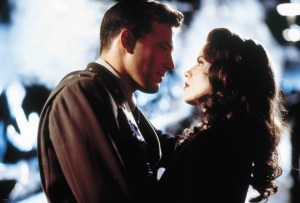 I’m also confused about the movie’s political apprehension. It bends over backwards to portray the Japanese generals as honorable and morally conflicted, which is better than mustache-twirling stereotypes, but this is still the aggressor country that had already invaded and occupied China. All of the good intentions of being more even-handed with the Japanese, perhaps to fight against anti-Asian demagoguery or even solely from money reasons, get supremely muddled when Bay decides to make the Pearl Harbor bombing even worse than it was in reality. The Japanese took great offense that in the movie their planes are seen attacking hospitals and civilian targets, something that never happened according to history and witnesses on both sides. Bay reportedly included the extra attacks because he wanted the attack to seem more “barbaric.” What is the point of better trying to represent a group of people and make up extra barbarism?
Looking back at my original review from 2001, I believe this was a watershed review for me. I wrote over 1200 words and it’s more in keeping with my current reviews than my early reviews. I find the analysis to be more critical than my early reviews where I was more likely to settle for puns and scant broadsides. This review has a few of those, but I also found myself nodding along with much of it even twenty years later. There are some marvelous turns of phrases, like “A Longest Day for the Pepsi generation” and Harnett’s voice sounding like a stubborn door refusing to stay open. There’s a punchiness to the writing that I recognize and admire, and it’s like I can see myself developing and finding my critical voice at this early juncture, which was almost two years into my beginnings as a fledgling film critic in Ohio. This one feels like a step above. I couldn’t end this analysis better than I did back in 2001, so I’ll quote my then 19-year-old self to close out both reviews: “To paraphrase that know-it-all Shakespeare: ‘Pearl Harbor is a tale told by an idiot. It is full of sound and fury, signifying nothing.’”
Re-View Grade: C
Share this:

War Inc. (2008)
 What is the point of this movie? I think I get it, at least get what they were going for. The military industrial complex is bad and can mislead countries into needless conflict just for corporate profits at the expense of human life. Sure, got that, then what the hell is with the storyline of a Eurasian popstar (Hilary Duff) who has daddy issues? War Inc. is a farce but it doesn’t have much of string to connect it all. It’s all so scattershot, from lampooning politicians and corporations to squeezing in contrived romance and peculiar and almost nonsensical flashbacks with a fast-talking Ben Kingsley who sounds like he’s doing an impression of Foghorn Leghorn. This movie feels like a collection of discarded scenes that someone pasted together. The movie’s cynicism is almost repellent, and this is coming from a self-described cynic. It isn’t the cynicism that bothers me but it’s the lack of any bigger point. The satiric targets are all cheap and easy, which would be acceptable if the movie did more with the material. War Inc. is remarkably tone deaf when it comes to satire. The Duff sequences are superfluous and are begging to be scandalous, which then undercuts the movie’s potshots about exploiting teenagers for sex. The movie just utterly collapses from the inside out by the end. The most memorable and headline-grabbing moment of War Inc. is when Duff drops a scorpion down her shorts. Does that sound like an enviable creative highpoint?
Nate’s Grade: C-
Share this:

Crossroads (2002)
When informed that her feature film debut was receiving shrieks of laughter during advanced screenings for critics, Britney Spears said she was glad because she never likes the same films the critics do. Well Ms. Not That Innocent, the truth hurts; you’re not a girl, not yet an actress. Crossroads is really the filmic adventures of Britney Spears and her ever-present navel. The navel should get second billing, but alas, we do not live in a society of equality for navels.
The film opens up with three 10-year-old best friends burying a box of wishes and dreams and promising to be bestest friends forever and ever. They make a pact to come back and dig up the box on the night of their high school graduation. Flash to the present and the word “bestest” isn’t what it used to be. Lucy (Britney Spears) has become the virginal nerd preparing to give her speech as valedictorian. Kit (Zoe Saldana) has become the haughty popular snob, obsessed over getting married ever since she got her first Bridal Barbie. Mimi (Taryn Manning) is pregnant and become the trailer trash girl that everyone sees fit to remind her of. Despite their growth apart they all do come together to reopen their box of dreams. Mimi informs the others that she plans to head to California to audition for a record deal in an open contest. Kit decides to use this opportunity to check up on her boyfriend at UCLA who has been strangely evasive. Lucy complains that by having her nose in a book her entire high school experience she never got to go to a football game or even “hang out.” Somewhere a small violin is playing. She decides to jump at this chance and possibly see her mother in Arizona, who ran out on Lucy and her father (Dan Akroyd) when she was only three. The wheels of their adventure are provided by guitar-playing mystery Ben (Anson Mount). He pilots them on their travels to the Pacific coast, though the girls think he might have killed someone, but oh well.
Crossroads is filled to the brim with every imaginable road trip cliché. The girls “open up” after getting drunk, have a scuffle in a bar, reap in the sights of nature, and perhaps create some sparks of romance with their hunky heartthrob of a driver. The car also inevitably breaks down and the girls have to find a way to scrape some quick cash together. They enter in a karaoke contest and Britney proceeds to sing Joan Jett’s “I Love Rock and Roll” with her two gal pals providing backup. But no, this isn’t the last time you’ll hear Ms. Brit sing. In an effort to pad as well as become a showcase for its star, Crossroads gives us many scenes of the girls just singing to the radio. Besides Jett, Shania Twain’s “Man I Feel Like a Woman” and Sheryl Crow’s “If It Makes You Happy” are also on the chopping block. You’ll also be accosted by the movie’s single “Not a Girl, Not Yet a Woman” several times, including one scene where Poet Britney is asked to share her poem and it ends up being the song’s lyrics.
Saldana (Center Stage) is not given much, as the attention is always centered on Britney, so she merely comes off like a token conceited character. Only Taryn Manning (crazy/beautiful) comes away with a little dignity. She gives Mimi a lot more heart than should be there and shows some honest reflections for her character. She also, coincidentally enough, looks like a dead ringer for Joan Jett with her black bangs.
Crossroads is nothing but a star vanity project for Spears, with some not-so-subliminal Pepsi product placement here and there. This was not a script looking for a lead; this was something Britney’s management team suited for her, and Crossroads is perfectly suited for Britney. It allows for many ogling periods of booty shaking. The majority of the film’s drama doesn’t even concern her, and when she does have to act her scenes are cut short to help her when the real drama unfolds. The movie’s true intentions are revealed when Britney is shown in her pink underwear twice in the first 15 minutes.
Crossroads moves along on gratuitous skin shots of Spears half-naked body every 20 minutes until it reaches its torture chamber of a final act. In this very melodramatic period we get abandonment, date rape, infidelity, and even a miscarriage in one of the film’s most shameless plot devices. Of course none of these horrors matter, especially a psychologically damaging miscarriage, because Britney has to get to her BIG audition in order to perform, yep you guessed it, “I’m Not a Girl, Not Yet a Woman.” She also has to wear what looks like kitchen drapes while she sings.
You’ll walk out of the theater wondering many things. Why does Britney wear pink in EVERY single scene she’s in? There’s even one scene where she changes from a pink top to another pink top and is FOLDING a third pink top into a suitcase. Are we to believe that Akroyd and Spears share some kind of genetics? In what high school would Britney be considered a nerd?
Hopefully Crossroads will be the pop princess’ last foray into film, but I strongly doubt this is the last we’ve seen of Britney Spears. Crossroads is a terrible girl-power trip. Only Spears’ target demographic will enjoy this melodramatic mess. Truly, the two largest groups that will see this film are adolescent girls and creepy older men who fawn after adolescent girls. Crossroads is exactly everything you’d expect.
Nate’s Grade: F
Share this:

Pearl Harbor (2001)
It turns out we went to war in 1941 not because of Japanese aggression, Hitler’s dominance in Europe, or the protection of freedom and democracy. Sorry kids. The real reason we went to war was to complicate and then clear up Kate Beckinsale’s love life. At least that’s what director Michael Bay and screenwriter Randall Wallace would tell you with their indulgent epic Pearl Harbor.
We open in Tennessee in the 20s with two boys who dream of being pilots. Rafe (Ben Affleck) and Danny (Josh Hartnett) grow into strapping young lads who flash their hot dog flyin’ skills at basic training, which brings them chagrin from superiors but admiration from peers. Rafe falls in love with a young nurse named Evelyn (Kate Beckinsale), who goes against ARMY rule and passes Rafe in his eye exam portion when he has a slight case of dyslexia. But he’s just so cuuuute. The romance builds but Rafe feels like he’s grounded when all he wants to do is fly, and volunteers to fight in the RAF over in Europe. He promises he’ll be back to see his lovely Evelyn. Of course he gets into an accident and everyone assumes that poor dyslexic Rafe is fertilizing a lawn somewhere with his remains. Hence Danny slowly but surely develops something for Evelyn in their periods of mourning, and the two consummate their puppy love with a tango in parachute sheets.
All seems well until Rafe returns back from the dead throwing a wrench into Evelyn’s second date parachute plans. Thus the Hollywood favorite of the love triangle endures until the end when the two fly boys enlist in the Doolittle attack against Japan, months after the ferocious attack on Pearl Harbor. The real purpose of the Doolittle attack was not militarily, but merely for morale. The real purpose it serves in the movie is to shave off an end on our love triangle.
Pearl Harbor allows us to follow a group of youthful and innocent starry-eyed kids from training to combat. Each seems pretty much exactly the same to each other. It’s near impossible to distinguish which character is which. It’s like the screenwriter didn’t even have the gall to resort to cliche supporting character roles, and he just made one character and duplicated it. The only one who was noticeable for me was the character of Red (Ewen Bremner, julien donkey boy himself), but that was simply because the man had a speech impediment. We also have our handful of young nurses alongside Beckinsale, and I had an easier time distinguishing between them; everyone had different hair colors.
]If you look in the pic, or the credits, you’ll see that two of the nurses would turn out to be Jennifer Garner (Alias) and Sara Rue (Less than Perfect), both stars of ABC shows, and ABC is owned by, yep, Disney. Coincidence? Probably. When they ran this on TV they actually advertised Jennifer Garner above Kate Beckinsale. That reminded me of when Seven ran on TV shortly after Kevin Spacey had won his well-deserved 1999 Best Actor Oscar for American Beauty, and they gave him second-billing in the advertisement over Morgan Freeman, the movie’s true main character.
Affleck has a hayseed Southern twang, but seems to mysteriously disappear for long stretches. Hartnett seems to talk with a deep creak, like a door desperately trying to be pushed open. Beckinsale manages to do okay with her material, but more magnificently manages to never smear a drop of that lipstick of hers during the entire war. We could learn a lot from her smear-defying efforts. Gooding Jr. is pretty much given nothing to work with. I’m just eternally grateful he didn’t go into a usual Cuba frenzy when he shot down a Zero.
Michael Bay has brought us the ADD screenings that are the past, loud hits of The Rock and Armageddon. Teamed up with his overactive man-child producer Jerry Bruckheimer once more, Pearl Harbor is less Bay restrained to work on narrative film as it is Bay free-wheeling. His camera is loose and zig-zagging once more to a thousand edits and explosions. Bay is a child at heart that just loves to see things explode. When he should show patience and restraint he decides to just go for the gusto and make everything as pretty or explosive as possible. This is not a mature filmmaker.
Despite the sledge hammer of bad reviews, Pearl Harbor is not as bad as it has been made out to be. The love story is inept and the acting is sleep-inducing, unless when it’s just funny. It doesn’t start off too badly, but twenty minutes in the movie begins sinking. The centerpiece of the film is the actual Pearl Harbor bombing that clocks in after ninety minutes of the movie. The forty-minute attack sequence is something to behold. The pacing is good and the action is exciting with some fantastic special effects. The movie is bloated with a running time a small bit over three hours total. Maybe, if they left the first twenty minutes in, then gave us the forty minute attack sequence, followed by a subsequent five minute ending to clear up our love triangle’s loose ends… why we’d have an 80 minute blockbuster!
Pearl Harbor doesn’t demonize the Japanese, but it feels rather false with their open-minded attempts to show both sides as fair minded. It gets to the point where they keep pushing the Japanese further into less of a bad light that it feels incredibly manipulative and just insulting. It seems like the producers really didn’t want to offend any potential Pacific ticket buyers so the picture bends backwards to not be insulting. The only people who could be offended by Pearl Harbor are those who enjoy good stories. Oh yeah, and war veterans too.
The cast of Pearl Harbor almost reads like another Hollywood 40s war movie where all the big stars had small roles throughout, kind of like The Longest Day for the Pepsi generation. Alec Baldwin plays General Doolittle and is given the worst lines in the film to say. Tom Sizemore shows up as a sergeant ready to train the men entering Pearl Harbor. He has five minutes of screen time but does manage to kill people in that short window. Dan Akroyd is in this for some reason or other, likely because Blues Brothers 3000 has yet to be green lighted. John Voight is easily the most entertaining actor to watch in the entire film. He gives a very authentic portrayal of President Roosevelt. I still find trouble believing it was Voight under the makeup.
The blueprint for Pearl Harbor is so transparent. They took the Titanic formula of setting a fictional romance against a disaster, with the first half establishing characters and our love story, and then relegating the second half to dealing with the aftermath of the disaster. It worked in Titanic (yes, I liked the film for the most part), but it doesn’t work here. Pearl Harbor is a passable film, but the mediocre acting, inept romance, square writing, and slack pacing stop it from being anything more. Fans of war epics might find more to enjoy, especially if they don’t regularly have quibbles over things like “characters” and “plot.” To paraphrase that know-it-all Shakespeare: “Pearl Harbor is a tale told by an idiot. It is full of sound and fury, signifying nothing.
Nate’s Grade: C
Reviewed 20 years later as part of the “Reviews Re-View: 2001” article.


 nathanzoebl
You must be logged in to post a comment.