Blog Archives
Hereditary (2018)

Hereditary has built up a great roaring buzz from film festivals and its oblique marketing. Numerous critics are hailing writer/director Ari Aster’s debut film as one of the scariest movies of a generation. The studio, A24, which has built up a fine reputation for art movies and genre fare, is releasing it. Except A24 has some trouble when it comes to its horror thrillers. Last year’s It Comes at Night was similarly beloved by critics yet audiences generally disliked it, angered by the misleading marketing that framed it as a supernatural horror (there was none, no titular “it” to come at night). I wonder if A24 learned their lesson and that’s why the trailers and ads for Hereditary have been intentionally hard to follow. After watching Hereditary and feeling let down, I wonder if A24 is in for another disparity between critics and audiences. This is a sloppy, unfocused film with little sense of structure, pacing, or payoffs. It’s a movie of moments and from there your mileage will vary.
Annie (Toni Collette) and Steve (Gabriel Byrne) are ordinary middle-class parents living with two teenage children, the older Peter (Alex Wolff) and the younger Charlie (Millie Shapiro), a girl given to peculiar habits. Following a tragic accident, the family is struggling to come to terms with their loss and their new lives. Annie seeks out comfort from a group meeting, and that’s where she meets Joan (the great Ann Dowd) who shows her how to contact the spirits of the dead via a handy incantation. From there, Annie tries to establish a connection to the realm beyond and possibly unleashes a spirit targeting her family.

With the rapturous critical acclaim that Hereditary has garnered, I was expecting something far more engrossing and far less sloppy. Structurally, this movie is a mess. It feels very directionless from a story standpoint, like the movie is wading around and blindly looking for an escape route into the next scene. Rarely will scenes have lasting impact or connect to the following scene; you could literally rearrange the majority of the scenes in this movie and not affect the understanding whatsoever. That’s, simply put, poor screenwriting when your scenes lack a more pertinent purpose other than contributing to an ongoing atmosphere of paranoia (more on that later). I’m struggling to make broader connections or add lasting thematic relevance to much of the plotting, and that’s because it feels so convoluted and repetitious for so long, until Aster decides it’s time to throw the audience the most minimal of lifelines. There is a moment late in the second act where a character finds a convenient exposition dump by looking through a photo album and a book that is literally highlighted. That at least explains the intent of the final act, but even as that plays out, by the end it’s still mostly confounding. The film ends with another exposition dump, this time as voice over, and I got to thinking that if it wasn’t for these two offhand moments you would have no idea why anything is happening. I had a friend whose girlfriend had been bugging him for Hereditary spoilers for months, so I carefully explained the movie to them as precisely as I could. By the end, he told me, “I still don’t get it.” Yeah, I didn’t get it either and I was actively trying.
There is a type of horror fan that will lap up Hereditary, namely the kind that places the creation of dread and atmosphere and memorable moments above all else. If you’re a gushing fan of David Lynch movies or Dario Argento and their sense of strange dream logic, you’ll be more ready to prize the sum rather than the whole of Hereditary. The aesthetics are pleasurable thanks to crafty production designer Grace Yun (First Reformed) and the moody photography from Pawel Pogorzelski (Tragedy Girls) that maximizes the space and draws out the anticipatory dread. There are effective moments where I gasped or squirmed, but there were also moments where I wanted to laugh. The key term is “moments.” Without a structure, sense of development, and attachment to the characters and their lives, Hereditary left me chasing fleeting entertainment.

Now when it comes to horror moments, I’ll again admit that everyone’s mileage will vary. Some people will watch Hereditary and be scared stupid. Others will shrug. That’s a deeply personal response. I can look at a movie like A Quiet Place and point to its intricate structure and execution to explain why its suspense was so affecting and satisfying. With Hereditary, because all it supplies is moments, I can’t explain why something will work or won’t for a person. Maybe you have a thing against headless corpses. Maybe you have a thing for jump scares (there are more than a few). Maybe you have a thing for invisible girls making clicking noises with their tongues. Then again maybe you’d enjoy a narrative that gave you a better reason to care and that organically built meaningful scares through tangible circumstances.
If you can hang onto the final nightmarish act, that’s when Hereditary is at its best, finally picking up a sense of momentum and finality. The first forty-five minutes of this movie more closely resemble something like Manchester by the Sea, a family unit becoming undone through grief and guilt, simmering grievances just under the surface. It’s well acted, especially by Toni Collette (Krampus) as a mother barely escaping the pull of her boiling anger at her son and the universe as a whole. She gets a few quality moments to blow up and it feels like years of painful buildup coming out. The awkward family interaction is chilly but missing greater nuance. It has marked elements that should bring nuance and engagement (Personal Tragedy, Mental Instability, Blame, Guilt, Obsession), but with Aster’s undercooked screenplay those elements never coalesce. This is a movie experience that is never more than the sum of its spooky parts. Byrne (The 33) is essentially just there, and the fact that the 68-year-old actor has two teenage children is a little hard to swallow. Wolff (Jumanji: Welcome to the Jungle) does a fine job of showing his deteriorating mind late in the movie. The problem is that these characters just aren’t that interesting, so when the supernatural acceleration creeps in, there’s already a ceiling as far as how much we, the audience, will care about what befalls them. What are the stakes if you don’t understand what’s happening and don’t genuinely care about the central characters?
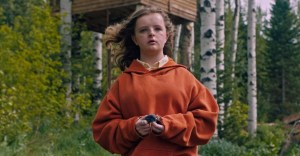
My pal Ben Bailey chided me after seeing Hereditary that I was trying to do the movie’s work for it by looking for deeper connections and foreshadowing clues. Is there some greater meaning for the headless women motif? Is there a larger reason why the dollhouse God imagery is prevalent? Is there a reason, after finding out about the haunting, that the family still leaves their beleaguered son alone? Is there a mental illness connection or is it all a manifestation of hysterical grief? The English teacher discusses the Greek tragedy of Iphigenia (see: a better movie following this model, 2017’s Killing of a Sacred Deer) and whether being predestined for sacrifice is more tragic than choosing your own self-destruction, and is that a glimpse at thematic relevance in a way that seems almost half-hearted? The problem with a long, incoherent story built upon a heaping helping of creepy imagery and atmosphere is that it can often fall into the lazy trap where the filmmaker will just throw up their hands as if to say, “Well, it’s up for interpretation.” I don’t mind a challenging movie experience (I was on the side that enjoyed, if that’s the correct term, Darren Aronofsky’s mother!). I can appreciate a movie that’s trying to be ambiguous and ambitious. However, the pieces have to be there to form a larger, more meaningful picture to analyze and discuss, and Hereditary just doesn’t offer those pieces. It’s an eerie horror movie with its moments of intrigue and dread but it’s also poorly developed, too convoluted, and prone to lazy writing and characterization. I’ll highlight it for you, Hereditary-style: if you’re looking for more than atmosphere and tricks, seek another horror movie.
Nate’s Grade: C
Share this:

The Master (2012)
 Writer/director Paul Thomas Anderson met with great resistance when he was shopping his script around for The Master. It was dubbed the “Scientology movie” and reportedly based upon the controversial religion and its leader, L. Ron Hubbard. It looked like Hollywood was spooked by the prospect of a movie that appeared to take on Scientology. Eventually Anderson got his financing and made the movie he wanted to make. Calling it the “Scientology movie” is misleading. I wish The Master was a Scientology expose because that would be far more interesting than the exasperating film I got, which is one nutty guy who dabbled in a Scientology-like cult. Maybe the resistance Anderson experienced wasn’t an indication of the subject matter. Perhaps it was only an indication that The Master just wasn’t a compelling story, a charge I can agree with wholeheartedly after viewing this disappointing film.
Freddie Quells (Joaquin Phoenix) is struggling to adjust to life after World War II. Fresh out of the Navy, he works as a department store photographer, until his rage and social awkwardness lead to him being fired. He’s drifting about and hops onto a ferry leaving town. Onboard is Lancaster Dodd (Phillip Seymour Hoffman) who describes himself as “a writer, a doctor, a nuclear physicist, a theoretical philosopher, but above all, a man.” Dodd has gathered a revered following. He believes that people can regress to past lives trillions, yes you read that right, of years into the past. Dodd’s own children admit that dear old dad is “making it up as he goes along.” His movement, known as The Cause, has been called a cult by detractors, the will of one man, and the followers don’t take kindly to challenges from the outside. Dodd adopts Freddie as a project. He’s on the verge of completing his second major treatise and Freddie seems to be an inspiration for him. Freddie finds some measure of acceptance within Dodd’s community of followers, but his erratic behavior keeps people on constant edge.
I found The Master to be boring; uncompromisingly boring, hopelessly boring, but worse than all that, pointlessly boring. Was this really a story that needed to be told? I cannot fathom why Anderson chose to tell this story or, in particular, why he chose to tell it through the character of Freddie Quell. A story about a huckster exploiting people with a religion he made up is a fascinating story with or without the Scientology/L. Ron Hubbard connections. That’s a story worthy of being made. Now, instead of this, we have two hours of a guy acting nuts. I would better be able to stomach the Freddie character if I felt like anything of significance was happening to him. He’s a broken man, clearly mentally ill in some capacity, and prone to outbursts that turn violent. Does he change? Does he grow? Does he do anything? Does his life have anything of significance happen to him over the course of 137 minutes? Not really. He’s pretty much the same guy from start to finish; his arc is essentially that he’s crazy at the start, meets Dodd, and then is crazy at the end. We get it, the guy is messed up. He makes a drink out of paint thinner for crying out loud. I didn’t care about him at all. I don’t need to see static scene after static scene of this guy acting out. I wasn’t a There Will Be Blood fan but at least Daniel Plainview was a strong central character with enough dimensions to carry a film. Freddie Quell just isn’t that interesting or entertaining. He’s actually a tiresome character because you get a perfect sense of who he is in just 10 minutes. The rest of the movie just seems to remind you what you already know.
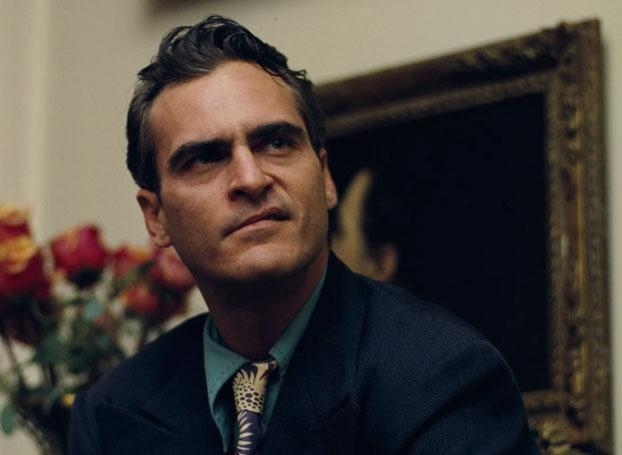 It is a disappointing realization but I feel like the Paul Thomas Anderson I enjoyed is slipping away, as his flashy, propulsive, plot-heavy early work has given way to opaque, reserved, and plotless movies. It’s like I just watched someone with the verve of Martin Scorsese transform into a poetic film somnambulist like Terrence Malick; not a good move. I don’t know what Anderson’s message is or what he was trying to say, and I’m unsure why he decided to use a limited character like Freddy Quells as his prism. It almost feels like Anderson is compensating for his plot-driven films of his early career, like he has to balance the scales in his mind. I shudder where this recompense might take Anderson for his next film. I like to think of myself as an intelligent moviegoer who enjoys being challenged by movies. But that doesn’t mean I’ll accept anything challenging as quality. Case in point: Jean-Luc Godard’s Film Socialism, which was contemptuous of its audience. I don’t mind doing work but you have to give me a reason. There has to be a reward, either with the narrative or with the characters. I found no rewards with The Master and it’s not because I didn’t “get it,” film snobs, it’s because the movie was too opaque to say anything of substance beyond simplistic observations about the abuse of power and influence.
When I say plotless I don’t mean that we’re simply watching paint dry, though there are stretches of The Master where I would feel that could be a suitable test from Dodd. There are events. There are scenes. There are changing relationships. It’s just that none of this seems to matter, or at least it never feels like it does. There’s no build, no increase in urgency, and The Master just sort of drifts along to the detached rhythms of Freddie. The movie can feel interminable, and you may ask yourself, on a loop, “Is this going anywhere?” There are two scenes that stand out because there are so few that seem to matter. One is shortly after Dodd and Freddie have been arrested. The two men are locked in opposing cells and they explode in venomous anger. It feels like Anderson can finally allow his characters to vent out what they’ve truly been feeling. Another memorable scene, just for weirdness, is when we jump inside Freddie’s head. All the women, young and old, at a social gathering suddenly lose their clothing (think: Choke). It’s one of the best scenes at exploring Freddie’s sexual compulsions, plus it’s just peculiar. I wanted more scenes like this where we try and get inside the man’s mind. The rest of the characters are underwritten, especially Amy Adams (Trouble with the Curve) as Dodd’s wife and fierce protector. This is a movie about two strong-willed men and everybody else gets relegated to minimal supporting positions. I miss the sprawling humanism of Boogie Nights and Magnolia.
From a technical standpoint, the movie is very accomplished. The 1950s era setting is lushly recreated, aided by cinematography that seems to present this bygone age in a colorless manner. By this I mean that the world feels muted, repressed, the colors are there but they don’t pop, and I think this look fits the movie marvelously. Anderson shot the film in 70mm, which would offer startling detail to his images. I did not see the film projected this way (as will most) but you could sense the time and effort put into getting the details of his world right. The musical score by Johnny Greenwood is minimalist but effective, with a few key strokes of a guitar to note rising tension.
 The true draw of the film is the performances, which are excellent and at least provide a reason for staying awake. This is Phoenix’s first role since his two-year performance stunt documented in I’m Still Here. It feels like his off-putting, confrontational, bizarre antics for that faux documentary were all just training for playing the character of Freddie. The man has sad, droopy eyes, a fixed sneer that denotes his permanent displeasure and cocksure attitude. He speaks in mumbled sentences, he walks with his arms pinned out, donning the posture and behavior of a chicken. It’s at once an odd and striking performance, and Phoenix does his best to make the character worthy of your attention. He gives it his all, but sadly Freddie just doesn’t merit prominence. Hoffman (Moneyball) is equally alluring as the charming huckster who seems to come alive under a spotlight; the man exudes an oily presence, and yet there are a handful of moments where he lashes out, venting the roiling anger that seems to be barely contained at times. Hoffman’s performance is one of willful self-delusion rather than rampant self-destruction, which makes him far more compelling in my opinion. I would have preferred a Lancaster Dodd movie rather than a Freddie Quells movie.
The Master is a confounding, airless, opaque character study that is far from masterful. The faults of the film and its stilted ambitions lay squarely at the feet of its flawed central character, Freddie Quell. The movie adopts Freddie’s demeanor, managing a distant, standoffish, defiant attitude that thumbs its nose at audience demands. Don’t you know entertainment has no place in art, silly filmgoers?
Anderson is still a vastly talented filmmaker but I lament the path his career has taken. I adored the first four movies of Anderson’s career, but now I wonder if I’ll ever get something along the likes of Boogie Nights or even Punch-Drunk Love again. At this point Anderson has earned enough artistic latitude to tell whatever stories he so chooses. This is why my frustration has mounted because I am at a loss to why he feels compelled to tell this story and in this manner. The Master is an artistically stillborn affair. You want to believe there’s more under the surface but I don’t see it. The main ideas and themes are hammered with little variation, the slight plot drifts aimlessly finding no sense of momentum, and the characters are kept at such distance that the film feels clinical, like we’re observing creatures under glass for study. It just so happens that none of these characters warrant the attention. The Master will be praised by a plethora of film critics. Peter Travers of Rolling Stone said it renews your faith in American cinema. I had the opposite reaction. The Master made me lose faith, mainly that I’ll ever enjoy a Paul Thomas Anderson film from this point on.
Nate’s Grade: C
Share this:

Martha Marcy May Marlene (2011)
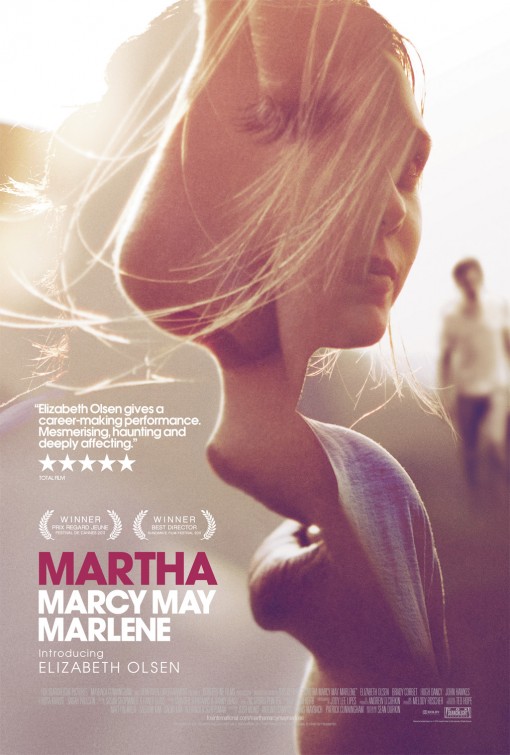 Unsettling but testing, the film Martha Marcy May Marlene is more than a mouthful. It’s about a gal, Martha (Elizabeth Olsen, younger sis to billionaire twins Ashley and Mary-Kate), who enters a creepy cult, and then in due time runs away to live with her detached older sister (Sarah Paulson). Writer/director Sean Durkin cleverly jumbles the timeline, so we follow two parallel storylines: Marcy May (her new identity) entering the cult and Marlene (her identity after fleeing?) adjusting back to the real world. At heart is Olsen, who gives a star-making turn as the troubled heroine fighting back prior programming. We get flashes of what cult life was like under charismatic leader, Patrick (John Hawkes, goin’ country once more). The sections concerning the cult are creepy but not exaggerated to break the film’s fragile realism. It’s uncomfortable stuff with lots of ritualistic raping. The film moves at a slow, deliberate pace, echoing Olsen’s dueling transformations. She’s having trouble readjusting but she can’t open up about her experiences for fear that she’ll endanger others. The film cranks up the paranoia and looks to be coming to a head when … everything just stops. End credits. Martha Marcy May Marlene feels like ¾ of a movie until you stop and think that we’re trapped in her omnipresent paranoia and that she will be essentially broken for life. While I wanted Durkin to find a way to reach that conclusion that felt conclusive and fulfilling, the ending, while abrupt, does feel appropriate. Olsen is terrific and expresses so many complex emotions even through her veneer of emotional reserve and mistrust. She has a bright future ahead of her. She’s no longer “the other Olsen sister.” Now she’ll be the “talented Olsen sister.”
Nate’s Grade: B
Share this:

Red State (2011)
 Kevin Smith, love him or hate him, you can’t deny the man is a natural promoter. Earlier in the year, the indie filmmaker self-distributed his first foray into horror films, Red State, on a nationwide tour of screenings. I first saw Red State way back in March when Smith visited Springfield, Ohio to screen the film and then answer questions afterwards. I’ve been trying to wrestle with my critical opinion in the ensuing months. Fortunately for me, Smith has made it extremely easy to revisit my thoughts. Red State eschewed the traditional theatrical release pattern for a new digital-age model. It was available on demand through cable systems, available for download, and even broadcast in special theaters for a one-night only event. A month later the film hit DVD. In its better moments, Red State is the unholy union of Quentin Tarantino’s love of language, and penchant for jolting violence, and the Coen brothers’ nihilistic, cock-eyed sensibilities. This is strange new territory for the man. I wish I could say Red State is worthy of all the attention, though this sinister, messy, gritty little movie can work its wicked mojo, at least for a while.
The Five Points Church is a notorious family-operated cult. Under the guidance of their shepherd, Abin Cooper (Michael Parks), this fundamentalist Christian group pickets the funerals of dead soldiers, haranguing the grieved that their loved ones are dead because “God hates fags” (excuse me for failing to put two and two together). A group of teenage boys (Michael Angarano, Kyle Gallner, Nicholas Braun) is lured to Sara’s (Melissa Leo) trailer with the promise of sex. The middle-aged woman plies her young bucks with drinks and they are knocked out. The boys awaken to find they are inside the Five Points compound and witness to Abin Cooper’s solution to sinners. Rather than railing with signs, the family has decided to take a more hands-on approach and execute them. While this is going on, a sheriff’s deputy alerts the authorities and the ATF rolls up to the compound. Lead by Agent Keenan (John Goodman), the government agency engages in a firefight with the rightwing cult. Ordered to take down the compound, and all witnesses, the various characters will try and escape with their lives, never knowing when that fateful moment of atonement may drop.
 What Smith does well for a genre novice is to keep his audience constantly upended. Just when we think we’ve settled on a protagonist and a plotline, suddenly Smith switches gears. The surprises are sudden and often merciless, leaving the audience little room to adjust. In a genre usually beholden to formula, the consistency of Smith’s surprises makes for a darkly satisfying viewing. Watching Red State demands due attention. Naturally, not all of these tonal shifts work to the movie’s best interest. The final shift, to all-out action thriller, is the most leaden. The Ruby Ridge/Waco-style standoff allows for a lot of gunfire but very little action. We mostly just cut back and forth between the two sides firing and, inexplicably high numbers, being shot in the face. It can get repetitive and seem like all the mounting tension gets squandered. There is a nice storyline within of one family member, Cheyenne (Kerry Bische), forming a plan to save the compound’s children and escape. Bische (the lead on the last season of TV’s Scrubs) makes fantastic use of her limited screen time to render the anxiety and fear of her character. She’s second only to Parks in the performance department as far as I’m concerned. Then the climax comes along and Smith teases being audacious, going in a fire-and-brimstone angle that would completely obliterate audience expectations. And just when it seems like we’re about to get something radical… Smith falls back to what he knows – dialogue. For the final five minutes, Smith concludes his narrative with two government officials explaining what happened in florid detail. It’s a fairly big letdown.
The setup of luring teens to their doom is an old horror staple, though usually the ones doing the sacrifices are card-carrying Satanists. And when exactly would a Satanist be in a situation needing to prove their validity with a membership card (“I’m sorry Mr. Darkseed, but we can’t give you the ten percent discount on all those goat skulls unless we see some valid photo ID.”)? Smith flips the switch religious allegiance. Instead of Satanists or some other misunderstood fringe religion, the cult is a group of pious Christians. There’s plenty of room to work here and Smith refrains from making easy associations; the Five Points nutjobs aren’t meant to represent Christians as a whole or Christianity. They are extremists, and they will go to extreme measures. Ostensibly based upon the Westboro Baptist Church and Fred Phelps, you keep waiting for Smith to satirically carve up the clan, but this never really occurs beyond the superficial. Smith’s writerly instincts give Abin Cooper a ten-minute sermon/platform where the guy just unloads a hate-filled diatribe against homosexuals and progressives. For many, this will be the make it or break it point of the film. There are some genuinely tense moments to the first half of Red State. There’s one scene where the camera holds on Gallner (The Haunting in Connecticut) inside a wired cage. He rattles and screams and generally comes unglued, and we too piece together what he hears, dreading what is to come. The many escapes and narrow calls are also harrowing and finely edited to ratchet up suspense.
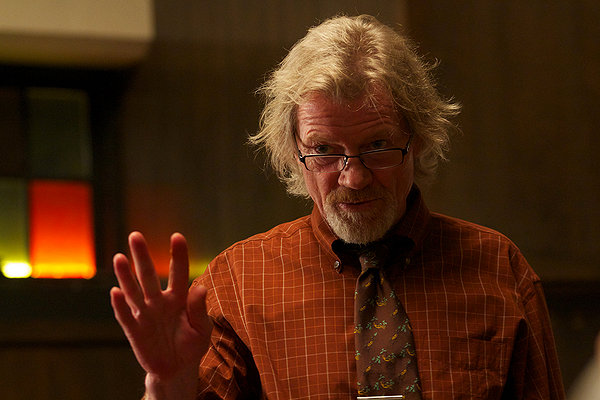 It seems, though, that Smith’s bleak screenplay does not present any characters we can truly root for. Horror has been shifting this way for the past twenty years. Thanks to the rise of the slasher flick, audience empathy has shifted from being with the running/screaming victims to being with the gruesome yet personable killers. Red State has a high body count but you won’t feel much when those bodies hit the floor. You’ll feel a jolt of shock, but from an empathy standpoint the needle barely registers. Sure, we don’t want people to be tortured and we want the abused to escape torment, but that’s not the same as characterization. The closeted sheriff (Stephen Root) feels like the start of an idea more than anything else. The trio of teen boys is presented with as little care as any other throwaway slasher flick. They are but meat for the grinder, our entryway into this hidden and spooky fundamental world. These aren’t so much characters as bodies waiting to be slain. The people are set up so they can be knocked down. This issue can become troubling when Smith wants us to rethink our loyalties, especially once the siege has begun. He wants us, dares us, to start feeling empathy for members of the Five Points Church. The problem is that the plot’s adherence to shock value and the underbelly of human nature has desensitized our empathy. When the ATF starts firing most in the audience will probably just cheer, not reflectively question the moral relativism. I doubt anyone will be switching allegiances midway through.
Cults are usually held together with a charismatic leader, and Red State has that in spades with Parks. The man just dissolves into his twisted character, a preacher that uses the Word of God to indoctrinate and arm for his own holy war. Parks has done fine supporting work before in the stable of Tarantino and Robert Rodriguez movies, but Red State is the actor’s biggest modern showcase yet. The man makes your skin crawl the way he can wrap hate into a honeyed, easily digestible product. Abin holds sway over his flock and likewise Parks commands the screen. He provides grandeur and menace to Smith’s words. It’s not a scenery-chewing performance; Parks doesn’t go for the obvious notes when he can hit something deeper and more unsettling. You get a sense that this man fully believes the dogma he teaches, and that makes him all the more terrifying. The other actors peopling Red State are fine, though Leo (Oscar-winner for The Fighter) seems a bit unrestrained especially in contrast with Parks. Goodman (TV’s Treme) gets to talk on the phone a lot to his unseen superiors. The end of the film just descends into frenzied yelling on everyone’s part.
Credited as a horror movie, though I view it more of a survivalist thriller but I suppose genre specifications are subjective, regardless, Red State is miles away from Smith’s usual output. The movie has its share of creeping dread and menace, thanks to Parks’ transfixing performance. The screenplay is unrepentantly dark, cruelly cutting down lives with shocking acuity. The constant surprises and upheavals are a way to keep the audience guessing, though the shock value starts to wear off by the noisy, repetitive gun battle climax. It’s hard to nail down exactly what kind of commentary Smith is presenting. Obviously he doesn’t side with the hateful fundamentalists (this is probably why he pulls back at the end), but he also shows the government’s reaction to religious zealots to be morally queasy at best. It’s hard to get a read what the commentary is, and with horror, if you don’t take a stab at commentary then you’re just watching high-gloss snuff films. Red State resembles a snuff film in several ways and not just in its grimy aesthetics. You feel a little dirty after it’s over, and you can’t help but question your motives for watching it. Plus you can’t help but think it could have been better done (note: I have never watched an actual snuff film, you sickos, but the point remains).
Nate’s Grade: B-
Share this:

Bless the Child (2000)
 How bad is Bless the Child? How bad does bad get? Kim Basinger somehow forgets she actually won an Oscar for something good and takes up the mantle as a nurse or nun or whatever caring for a “special” child. But aren’t they all special in their own way? The child is deemed “the one” and kidnapped by a religious cult led by better-actor-than-this Rufus Sewell. Jimmy Smits comes in somehow as an FBI agent specialized in the field of Satanism. I guess Mulder and Scully couldn’t make the ride. There’s a point in the film where Smits reveals that he entered the bureau so he could have an easier time stopping Satan and his minions. I dare you not to crack a smile from any of this. Is this the movies Jimmy Smits left NYPD Blue over?
The special effects are lame, the story is knee-high in contrivances and loop holes, and the acting is laughable. Christina Ricci has a small part as a reformed cultist that shouldn’t even register if you pay attention – which requires more skill than you would believe. The dialogue in Bless the Child is laughably bad along the lines of Battlefield Earth smack yourself in the head. It’s not as mind-numbingly horrible to sit through, but it’s pure cheese no matter what sheep’s skin it hides under.
Nate’s Grade: D
Share this:

The Ninth Gate (1999)
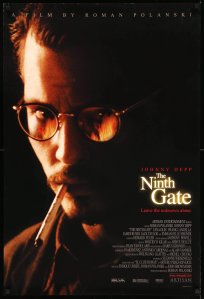 The latest from old school horror pioneer Roman Polanski is a dark and brooding thriller that is… very long and brooding. What begins with noir charm and decadence grows thin by the movie’s over-bloated running time – giving new definition to the term “tedium.” The visuals are grim and noirish, but hang forever. Half of the movie is seeing Johnny Depp walk from Point A to Point B; and then the other half is watching him light up a cigarette usually already with drink safely in hand. Depp plays a librarian that doesn’t play by all the rules, or something or other. He’s set out to authenticate the last three books of a Satanic worshiper only to discover they lead to a path of devilish power. By the time Ninth Gate reaches its climax at an Eyes Wide Shut-style group gathering the audience has already hopelessly lost feeling in their ass. The vague ending is a cop-out after what the viewer is forced to go through to finally find out the secrets of these special 15th century books/doorstops. When it’s not carelessly lingering The Ninth Gate has some interest to it, but too often than not, it just rolls ahead forgetful of the audience that paid to come see it.
Nate’s Grade: C-
Reviewed 20 years later as part of the “Reviews Re-View: 2000” article.
Share this:

Eyes Wide Shut (1999)
 There’s a certain awe one has to this film. It’s Stanley Kubrick’s last movie, took over two years in development, has the big name star couple, and no one knows ANYTHING about it. All I can say Eyes Wide Shut the movie is a challenging and engaging work from a titan of a director that will sorely be missed.
The first movie from Kubrick in over a decade comes sweeping in and I couldn’t take my eyes off it. The steady cinematography is gorgeous, coupled with the dream like lighting that seem glowing about on the frames. The story captured my attention and drew me in quickly as I was enthralled. It’s all about the tale of a husband and wife with sexual inadequacies, fantasies, delusions, and jealousy. It’s about the trust in a marriage, and how sex can be used not only as an intimate showing of feelings but as a weapon and as a tool. Journey with Tommy Cruise as he ventures through the city exploring all the different characters and how sex has influenced, controlled, or manipulated their lives.
 The movie is adult, yes, but not pornographic. Those who argue it’s expensive porn don’t know what they’re saying. Though there are probably more butt shots of Kidman then necessary the movie never becomes exploitative or gratuitous. The sex here is portrayed more like a Victorian era arrangement instead of the hard-core stuff of today. In fact the sex is far more creepy than erotic. The actors all contribute nicely to the ensemble, even though Nicole Kidman is the slowest talker in the world here. But I couldn’t wait to see what she’d say next; she had me. The movie as well had me mostly.
The movie will certainly not go over well with audiences planning to see a Basic Instinct sequel in this. I blame the poor marketing that made it into something it was far from: a sexy and steamy adult thriller with TONS o’ nudity. So when people file in and find out it’s a two and a half hour art movie with depth, symbolism, and layers they are no doubt disappointed. Especially those who show up in raincoats. The movie is a fitting final work to Kubrick’s collection. Rest in peace Stanley.
Nate’s Grade: B


 nathanzoebl
You must be logged in to post a comment.