Blog Archives
The Brutalist (2024)

The indie sensation of the season is an ambitious throwback to meaty movie-going of the auteur 1970s, telling an immigrant’s expansive tale, and at an epic length of 3 hours and 30 minutes, and an attempt to tell The Immigrant Story, and by that we mean The American Story. It’s a lot for any movie to do, and while The Brutalist didn’t quite rise to the capital-M “masterpiece” experience so many of my critical brethren have been singing, it’s still a very handsomely made, thoughtfully reflective, and extremely well-acted movie following one man trying to start his life over. Adrien Brody plays Laszlo Toth, A Jewish-Hungarian survivor of the Holocaust who relocates to Pennsylvania in 1947. He starts work delivering furniture before getting a big break redesigning a rich man’s library as a surprise birthday gift that doesn’t go over well. Years later, that same rich man, Harrison Lee (Guy Pearce), wants to seek out Laszlo because his library has become a celebrated example of modern architecture. He proposes Laszlo design a grandiose assembly that will serve as a community center, chapel, library, gymnasium, and everything to everyone, standing atop a hill like a beacon of twentieth-century civilization. Everything I’ve just written is merely the first half of this massive movie, complete with an old-fashioned fifteen-minute intermission.
The second half is about crises professional and personal for Laszlo; the meddling and compromises and shortfalls of his big architectural project under the thumb of Harrison, and finding and bringing his estranged wife (Felicity Jones) to America and dealing with the aftermath of their mutual trauma. I was never bored with writer/director Brady Crobett’s (Vox Lux) movie, which is saying something considering its significant length. The scenes just breathe at a relaxed pace that feels more like real life captured on film. The confidence and vision of the movie becomes very clear, as Corbett painstakingly takes his time to tell his sprawling story on his terms. I can appreciate that go-for-broke spirit, and The Brutalist has an equal number of moments that are despairing as they are enlightening. I was more interested in Laszlo’s relationship with his wife, now confined to a wheelchair. There are clear emotional chasms between them to work through, having been separated at a concentration camp, but there is a real desire to reconnect, to heal, and to confront one another’s challenges. It’s touching and the real heart of the movie, and it easily could have been the whole movie. The rest, with Laszlo butting heads against moneymen to secure the integrity of his vision, is an obvious allegory for filmmaking or really any artist attempt to realize a dream amidst the naysayers. The acting is terrific across the board, with Brody returning to a form he hasn’t met in decades. Maybe his career struggles since winning the Best Actor Oscar in 2003 have only helped imbue this performance with a lived-in quality of a soul-searching artist. Pearce is commanding and infuriating as the symbol of America’s ego and sense of superiority. The musical score is unorthodox but picks up a real sense of momentum like a locomotive, thrumming along at a building pace of progress. The only real misstep is an unnecessary epilogue that spells out exactly how you should feel about the movie rather than continuing the same respect and trust for its patient audience. The Brutalist is an intimidating movie and one best to chew over or debate its portrayal of the American Dream, and while not all of its artistic swings connect, the sheer ambition, fortitude, and confident execution of the personal and the grandiose is worth celebrating and elevating.
Nate’s Grade: B
Share this:

Vox Lux (2018)
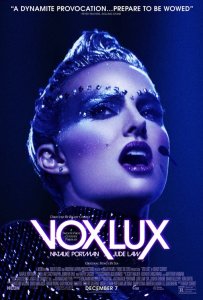
I don’t know what this movie was trying to say about anything. Vox Lux stars Natalie Portman as the adult Celeste, a survivor of a school shooting as a teen who became an international pop star in the months after. Is there something writer/director Brady Corbet wants to say about the transformation of tragedy into mass entertainment? The dulling effect of an entertainment industry to grind up human beings and re-purpose them into shiny, inauthentic, easily marketable figurines? I don’t know. I warily thought as we open on an upsetting school shooting, “I don’t know if the final product will justify this tone,” and it doesn’t. There are decisions that feel like they should mean something, like having the same actress, Raffey Cassidy (Tomorrowland), play both young Celeste and her eventual teen daughter, but what? It feels like an idea looking to attach to an interpretative message. Then there’s a modern terrorist group dressing like one of Celeste’s iconic music videos. She distances herself from the violence and even publicly challenges the perpetrators. This will obviously come back and mean something, drawing upon her own beginning stages of fame derived from the bloodshed of others, right? Or during her big concert the terrorists will invade and attack her, bringing the main character face-to-face with the ramifications of hubris. None of these things happen. Instead, Portman enters the scene at the 45-minute mark and proceeds to lash out at others, lament her parenting deficiencies, gets drunk, and then puts on her show. That’s it. It’s like Vox Lux forgot to be a movie for the final 20 minutes and just becomes a numbing series of EDM pop dance numbers. Portman is actually very good and digging deep into her anxious, entitled, and spiraling pop star, rounding out her dimmed humanity when Corbet cannot. There’s a solid storyline here between the adult Celeste trying to reconnect with her teen daughter who she’s been neglecting. This isn’t it. The pretension level of the pedantic exercise made me think of Lars von Trier as filmed by Darren Aronofsky. Skip it.
Nate’s Grade: C-


 nathanzoebl
You must be logged in to post a comment.