Blog Archives
After the Hunt (2025)
 An unpleasant movie about unpleasant people being unpleasant to one another, After the Hunt is a movie supposedly about ethical dilemmas in academia but it comes across as insufferable people complaining about everything. The framing is about Maggie (Ayo Edebiri), a PhD candidate at Yale, who accuses an older male professor, Hank (Andrew Garfield), of sexual impropriety. He denies it and believes he’s the real victim of a post-Me Too witch hunt, especially after he suspected Maggie of plagiarizing her thesis. Maggie is looking for guidance from her mentor Alma (Julia Roberts) who feels pulled in many directions and unsure whom to believe. Given that premise, you would imagine there would be plenty of scorching drama and intrigue and characters divided by different loyalties and self-interest, especially when all these professors are supposed to be experts on ethics and philosophy too. I found myself so distant and disengaged with the characters because I found them all to be self-involved, cold, and entitled jerks. Worse than all of that, I found them all to be thoroughly boring. Watching After the Hunt feels like you’re trapped at a party with the worst people. That might as well be the moral of the movie: everybody sucks. I wasn’t expecting the characters to be shining examples of heroism, but I wanted them to be a little more interesting and the drama to be more insightful. Alma is our main character and she quietly seethes for most of the movie, that is when she isn’t running to puke into a toilet from her ulcers (symbols!). The movie is replete with characters just whining about “the kids today” and their brittle feelings. You know there’s only so many possibilities given the story; either the assault happened or it didn’t, either Maggie cheated or she didn’t. The score is absurdly discordant and intrusively obnoxious, sounding akin to a rack of instruments falling onto the ground. The abrasive score creates its own unintentionally hilarious jump scares. The more I think about After the Hunt the more I actively dislike it.
Nate’s Grade: C-
Share this:

Opus (2025)
 Ever want to watch a second-rate version of The Menu and be left wondering why you didn’t just watch The Menu? That was my main takeaway watching the indie horror/comedy (?) Opus, a darkly satirical look at the music industry and specifically cults of personality. John Malkovich plays Alfred Moretti, an exalted and reclusive musical genius who has earned numerous awards and built a devoted fandom. He’s invited six special guests to a listening party for his new album, the first since his mysterious retirement. It just so happens that party is at his compound and the guests are tended to by a cult of devotees. From there, people start to go missing and weirdness ensues. I was waiting throughout the entirety of Opus for something, anything to really grab me. These are good actors. It’s a premise that has potential. Alas, the movie is uneven and under developed and I found my interest draining the longer it went. The music satire isn’t specific or sharp enough to draw blood or genuine laughs. The weirdness of life on the compound is pretty bland, with the exception of a museum devoted to Moretti’s childhood home that is explored during the climax. The characters are too stock and boring, not really even succeeding as industry send-ups. The music itself is also pretty lackluster, but the movie doesn’t have the courage to argue that the cult has formed around a hack. In the world of Opus, Moretti is an inarguable musical genius. We needed the main character, played by Ayo Edebiri (The Bear), to be an agnostic, someone who doesn’t get the appeal of this musical maven and can destruct his pomposity. Alas, the obvious horror dread of the followers being a murder cult is never given more thought. It’s fine that Opus has familiar horror/cult elements (The Menu, Midsommar, Blink Twice, etc.) but it doesn’t do anything different or interesting with them. It’s obvious and dull without any specific personality to distinguish itself, and if maybe that was the argument against the cult leader, I might see a larger creative design. Instead, it all feels so listless. When the weird cult movie can’t even work up many weird details about its weird cult, then you’re watching a movie that is confused about themes and genre.
Nate’s Grade: C-
Share this:

Inside Out 2 (2024)

Of all the Pixar hits, 2015’s Inside Out is one of the better movies to develop a sequel for, and thankfully Inside Out 2 is a solid extension from the original. The internal world of Riley’s burgeoning sense of self is so deeply imaginative and creatively rewarding, balancing slapstick and broad humor with a deeper examination of abstract concepts and human psychology (Freud would have loved this movie… or hated it… or just thought about his mother). The unique setting was made so accessible by the nimble screenplay that the viewer was able to learn the rules of this setting and how interconnected the various parts are. While not being as marvelously inventive as its predecessor, nor as poignant (R.I.P. Bing Bong), Inside Out 2 is a heartwarming and reaffirming animated movie that will work for all ages.
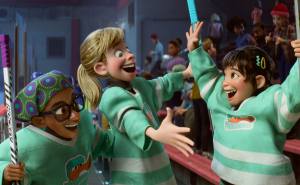
Riley is now turning thirteen years old and in the midst of puberty. That means new emotions, and Joy (voiced by Amy Poehler) has to learn to work well with her co-workers, such as Envy, Embarassment, and Ennui. The biggest new addition is Anxiety (voiced by Maya Hawke) who wants to prepare Riley for her life ahead, which seems especially rocky now that Riley knows her two best friends will be going to a different school. A weekend trip to hockey camp becomes Riley’s opportunity to test drive the “new Riley,” the one who impresses the cool older kids and gains their acceptance. This will force Riley to have to determine which set of friends to prioritize, the new or the old, and whether the goofy, kind version can survive to middle school or needs to be snuffed out.

With the sequel, there aren’t any dramatically new wrinkles to the world building already established. We don’t exactly discover any new portions of Riley’s mind, instead choosing to place most of the plot’s emphasis on another long journey back to home base. This time the other core emotions get to stick around with Joy, each of them proving useful during a key moment on the adventure. The externalization of the emotions invites the viewer to feel something toward feelings themselves. When Joy, at her lowest, laments that maybe a hard realization about growing up is that life will simply have less joy, it really hit me. Part of it was just the sad contemplation that accepting adulthood means accepting a life with less happiness, but a big part was teaching this concept to children and being unable to provide them the joy they deserve. Since the 2015 original, my life has gone through different changes and now I watch these movies not just as an individual viewer recalling life as a former adolescent figuring things out, but now I also come from the perspective of a parent with young children, including one turning thirteen. The development of the mind of this little growing person is a heavy responsibility given to people who are, hopefully, up to that very herculean task. We can all try our best, but recognizing limitations is also key. The kids have to have the freedom to be themselves and not pint-sized facsimiles of a parent.
The emotions inside Riley’s mind are featured like internal surrogate parents, tending to the development of Riley’s emotions, morals, and personality. They presumably want what’s best for her, there just happen to be opposing interpretations of what that exactly means, which leads to the majority of conflict with Anxiety. However, there’s also an understanding that Riley has to do things on her own and be able to make mistakes and learn from them. Inside Out 2 is ultimately about accepting the limitations of providing guidance. Joy and Anxiety are both trying to steer Riley down a deliberate path they think is best, but Riley needs to discover her own path rather than have it programmed for her. I appreciated that Anxiety is not treated as some dangerous one-dimensional villain hijacking Riley’s brain. Much like sadness, there is a real psychological purpose for anxiety, to keep us alert and prepared. Now that can certainly go into overdrive, as demonstrated throughout Inside Out 2, including a realistic depiction of a panic attack. It’s about finding balance, though one person’s balance will be inordinately different from another. The stakes may be intentionally low in this movie, all about making the hockey team and being welcomed by the popular girl she may or may not be crushing over (more on that later), but the focus is on the sense of who Riley chooses to be through her life’s inevitable ups and downs. It’s about our response to change as much as it is our response to the presence of anxiety.
Inside Out 2 also answers a thorny world-building question that the original creators never thought to go into greater detail. It’s established in the 2015 original that even the adults have the same five core emotions manning their brain battle stations: Disgust, Fear, Sadness, Anger, and Joy. So if adults only see these same emotions, what happens to those new puberty emotions? Do they go away? As an adult, do we gradually work through anxiety and embarrassment to the point where they are no longer present (this is where every adult can wryly laugh)? There’s an emotion introduced as Nostalgia, depicted as a kindly grandmother so eager to remember the ways things were. Joy tells Nostalgia to leave, as it’s not time for her to be developed yet until Riley is older. This one moment clears up the world-building question; the emotions don’t leave, they just sit out for periods of time like bench players waiting to be called into the big game. And just like that, it all works and makes sense. I wonder what other new emotions make their appearances later in life. Resentment? Choosing to rather die in authority rather than give up an iota of power to a younger generation? Sorry, that last one was more directed at those stubborn folks clinging to Congressional offices.
There is some sight narrative and thematic redundancy here. The first movie was about learning the importance of accepting sadness as a vital part of the human condition and how we can process our emotional states. It was about Joy learning that not every moment in life can or should be dominated by joy, and that the other emotions are also necessary functions. With the sequel, we have a starting point where Joy is picking and choosing what memories are worthy of being remembered, banishing the “bad moments” to the back of Riley’s mind, forming a cavernous landfill of junked memories. It’s treading some pretty similar ground, prioritizing one set of memories or emotions over others wherein the ultimate lesson is that repression in all forms is unhealthy and robbing one of the necessary tools for self-acceptance and growth. This is further epitomized by a trip to one of these memory vaults where Riley’s Deep Dark Secret is willfully imprisoned. The movie proper never comes back to this self-loathing figure, and the revelation could have really supported the overall message of self-acceptance. Pixar could have done something really special here, like having Riley coming to terms with being bisexual/queer, and that perhaps something we may personally agonize over as a horrifying secret could, once shared, be far from the dreaded life-destroying culprit our minds make it out to be. This would have really worked with the perceived lower stakes of the movie, naturally elevating the ordinary to the profound, as life can often unexpectedly become. Alas, the Deep Dark Secret is just a setup to an underwhelming post-credits joke – womp womp. That’s it? Again, if you’re going to tread the familiar thematic grounds about the dangers of repression, at least give us something bigger to reach than the same lesson that all emotions have a place.

The first Inside Out was a masterpiece. That’s a hard act to follow. This sequel, of which we can all assume there will be more given its billion-dollar box-office, is a solid double to the original’s home run of entertainment. It’s not among their best but it’s one of their better non-Toy Story sequels. Inside Out 2 is a heartwarming winner.
Nate’s Grade: B
Share this:

Bottoms (2023)

I really wanted to like Bottoms, a sex comedy told from the perspective of a marginalized group literally learning how to defend themselves and develop a sisterhood of support and violence. It’s a high school comedy with two very winning leads, Rachel Sennot (also co-writer) and Ayo Edebiri, and it’s from the same director as Sennot’s breakout 2020 indie, Shiva Baby. It’s just that the comedy is working so hard, the energy level is cranked up so high, but the results tipped more into the realm of obnoxious characters overselling lackluster material. The two main characters create a school fight club under the guise of teaching their fellow female students how to defend themselves, though the real reason is to impress and then sleep with the hot cheerleaders that they’re crushing over. This also leads to them soaking up all the physical tumbles and sweaty wrestling contact with their crushes. The sleaze of the premise feels a little too easily excused in a misplaced “girls can do it too” sentiment. The explosions of real violence, including actual literal bloody deaths, doesn’t feel properly integrated into the tone of this heightened universe. There’s so much aggressive exaggeration that it’s hard to find a baseline here. It almost feels one or two jokes away from a spoof movie. There are no straight characters (not hetero-normative) characters to better play off the stilted silliness. I just don’t think the jokes and callbacks are there. The banter is occasionally amusing but it tapers off too often like an improv jag slowly running out of steam. It’s not a good sign during the end credit blooper reels when the outtakes prove that only one or two actors may actually be skilled at improv, one of them perplexingly retired NFL athlete Marshawn Lynch who is actually quite funny as a laid back teacher learning about feminism. The ensemble is filled with good actors having real fun playing such arch spins on high school movie stereotypes, and I applaud reclaiming the high school sex comedy from a modern lesbian perspective, but unfortunately Bottoms didn’t work up that many genuine laughs from me.
Nate’s Grade: C
Share this:

Teenage Mutant Ninja Turtles: Mutant Mayhem (2023)
 As an elder millennial, the Teenage Mutant Ninja Turtles have been a formative franchise for me. I grew up on the cartoon, got the toys for Christmas, died endlessly during the shockingly hard underwater stage of their Nintendo video game, and generally have a soft spot in my 80s nostalgia for the likes of Leonardo, Donatello, Raphael, and Michelangelo, plus their surrogate father, Master Splinter. Apparently Seth Rogen felt the same way, and he and his writing partner Evan Goldberg have spearheaded a new animated variation of TMNT that just so happens to also be co-written and directed by the man behind my favorite film of 2021, The Mitchells vs. The Machines. It was a recipe to guarantee my personal enjoyment, and Mutant Mayhem thusly delivered. The biggest selling point for me was how lovingly realized the “teenage” part of the title was, getting a foursome of actual adolescents to portray our heroes, and using high school experience about acceptance and fitting in as effective and even poignant parallels. I loved just hanging out with these characters, who view their surrogate dad (voied by Jackie Chan) with a mixture of love and embarrassment, and who want to be accepted by a world predisposed to finding them monstrous. Naturally, becoming crime-fighting heroes is their best method for winning over the public, with a young and aspiring journalist April O’Neil (The Bear‘s Ayo Edebiri) hoping to improve her own social standing at school by breaking the existence of these unknown mutants. The comedy is robust and layered while allowing for nice character details and moments, giving each turtle their own satisfying arc. The action is fun and inventively staged while still being thematically relevant. The vocal cast is great, and the young actors are tremendous together, sparking an enviable improvisational energy that made me smile constantly. The art style has an intentional messiness to it, like smeared colored pencil drawings, and the imperfections are themselves part of the vast visual appeal. It’s a family movie that will succeed with old fans and new, and Mutant Mayhem is the best film depiction yet of the famous heroes in a half-shell.
Nate’s Grade: B+


 nathanzoebl
You must be logged in to post a comment.