Category Archives: 2005 Movies
The Sisterhood of the Traveling Pants (2005)
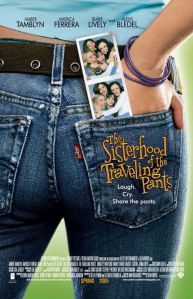 I had no real intention of ever seeing The Sisterhood of the Traveling Pants. It looked to be a competent movie, horrifically clunky title aside, but I really didn’t have any interest in seeing another movie where four young girls become four young women. Then my then-girlfriend says she wants to see it. I think we all know what happens next. Even though I was the only male in my theater (I kind of expected this), I found Sisterhood to be a sweet and heartfelt film I was glad I experienced. It had far more emotional truth to it than I ever would have expected.
Four very close friends are about to depart for the summer. Bridget (Blake Lively) is the confidant sports star and going off to soccer camp in Mexico. Lana (Alexis Bledel) is the demure artist and is going to visit her grandparents in Greece. Carmen (America Ferrera), a bigger girl with big ambitions, is traveling to South Carolina to spend time with her long-absent father (Bradley Whitford). It seems the only one staying put is Tibby (Amber Tamblyn), an angsty nonconformist stuck stocking shelves at a Wal-Mart-esque store and working on her documentary, which she has deemed a “suckumentary.”
Before they set off on their adventures the girls discover a magical pair of pants. It seems that this one pair of jeans fits each to a T, even the curvier Carmen. The girls form a sisterhood around these magically one-size-fits-all pants. They promise to send them back and forth to each other all summer and write down any luck the jeans have imbued them with.
 In Mexico, Bridget sets her sights on a hunky soccer coach (Mike Vogel). She’s brimming with confidence and flirts like a champ. Overseas in Greece, Lana meets Kostas (Michael Rady), a hunky fisherman attending university in Greece. Sparks fly but Lana’s grandmother forbids her to see Kostas. Carmen is shocked to discover that her father is planning on getting remarried to Wasp-y Lydia (Nancy Travis). It seems dear old dad has not told her everything. And Tibby is befriended by a dogged and precocious 12-year-old, Bailey (Jenna Boyd), who wants to be her assistant on the “suckumentary.”
The best part of Sisterhood is the excellence of the lead actresses. All four give well-rounded, warm, enlightened, and exquisitely affecting performances. They each get a good weepy scene and each actress nails it. Bledel has mastered the nervous stammer. She’s adorable as we witness her wallflower character coming out of her shell. Tamblyn mopes and sneers but grows the most thanks to the intervention of Bailey (Boyd is a scene-stealer if ever there were one). Ferrera was a terrific find in Real Women Have Curves, yet another intelligent and charming teen movie. In Sisterhood she gets to display tremendous anger and heartache and she sells every second of it. She is going to be a lovely actress to watch in the future. Lively is a newcomer to film even though she looks like Kate Hudson’s lankier cousin. She’s a girl that knows what she wants but doesn’t necessarily know why she wants it.
One of the smartest things director Ken Kwapis does is to keep the different story threads together. I first thought that Sisterhood would become a vignette movie, meaning that we’d get like a half hour of each girl’s adventure and then we’d travel to the next. It would have worked. But by keeping the girls’ stories intertwined we’re reminded of their bond and we can connect with them all. Kwapis even fits in some nifty scene transitions in his mostly unobtrusive direction. He lets the film’s focus rest on the characters and the performances, which are the strengths of Sisterhood.
The film seems to diverge into two storylines: the summer romances (Bridget and Lana) and the more dramatic (Carmen and Tibby). The summer romances are fun but the real meat of the movie is in Carmen and Tibby’s teary adventures. Carmen is devastated to feel that she’s been replaced and forgotten by her father. It all comes to head in a marvelous scene where Carmen cannot fit into a bridesmaid dress that fits Lydia’s rail thin daughter. She explodes in anger and pain against her father’s new family and runs off. Tibby, on the other hand, is your typical dour and rebellious teen (though in PG-land that means nose ring, colored hair, and thrift store attire). Her relationship with Bailey opens her up and the audience falls in love with both of them. The last half hour of Sisterhood hits an emotional crescendo with both storylines that will leave plenty reaching for the Kleenex.
 Sisterhood sure doesn’t lack melodrama but the film is played so earnestly that you really won’t mind. In other teen girl films, the inclusion of dramatic elements like suicide, abandonment, and even leukemia might cause the casual rolling of eyes. The difference is that Sisterhood respects both its characters and its audience. This is a sincere, unpretentious movie that has a genuine sweetness that won?t give you a toothache. In fact, the most unbelievable moment of the movie is that a pair of pants would fit them all. Again, pretty good for a flick rife with melodrama.
Sisterhood is unabashedly sentimental but it walks a fine line without ever getting truly sappy like some Nicholas Sparks tale (A Walk to Remember). Usually movies of this ilk whitewash over reality and oversimplify complex issues and emotions. Not so with Sisterhood, which deals with tough issues in an admittedly soap operish way but also forces its characters to endure tough resolutions. I am clearly not the intended audience for The Sisterhood of the Traveling Pants (I do by all accounts have a Y chromosome) but I enjoyed it all the same.
The Sisterhood of the Traveling Pants is an old fashioned, good-hearted family film that won?t make you cringe. It’s respectful of its audience and doesn’t take easy shortcuts with its story. It’s also respectful of teenagers and their experiences. The acting by our four leading ladies is uniformly outstanding. In a summer fueled by male-driven high-octane action flicks, something a little low key and sweet is always appealing when done right. This won’t exactly be a movie that will appeal to everyone, but Sisterhood is an above average and earnest take at all-too-familiar territory. Despite the clunky title, this teen-targeted weepie is a good fit for any audience wanting to feel good.
Nate’s Grade: B
Share this:

The Hitchhiker’s Guide to the Galaxy (2005)
 I’m a big fan of the late Douglas Adams’ series, so going in I had a slate of expectations but also a working knowledge of this kooky universe. I really don’t think this film will work for anyone but the fans. The movie isn’t even structured like a screenplay, it has more of the novel’s loose loopy feel. Some things work wonderful, like the Vogons, giant marvelous looking puppets made by Jim Henson’s studio. The cast is mostly excellent (Alan Rickman steals the show as the voice of Marvin, a very depressed robot). The animated guide entries in the Hitchhiker’s book are colorful, stylistic, and witty. Somethings, however, don’t work at all. The additions to the story, an increased romantic angle between our lead Arthur Dent (Martin Freeman) and Trillian (Zooey Descehanel) as well as a flat happy ending that rewrites all the opening danger. The Hitchhiker’s Guide to the Galaxy occasionally serves up some juicy bits of wacky humor or visual fantasy (John Malkovich’s bit part is weird) but unless you were a fan of the book series, you’re really not going to be able to follow along or have any interest in keeping up.
Nate’s Grade: C+
Share this:

The Interpreter (2005)
 This is a polished political thriller that hearkens back to the day of the 1970s, where Hollywood was willing to put out smart, complicated, involving political intrigue and have faith that adults would enjoy. The premise is sound and director Sydney Pollack sure knows how to add layers of complication and mystery as well as make you doubt everyone’s involvement. A scene where all the film’s major players somehow get on the same down town bus is a masterpiece of nuanced suspense. The ending, not so much. Nicole Kidman, as the white African U.N. interpreter that hears a planned assassination one night, is credible but a bit weightless in her part. It’s not enough the pretty girls are taking the ugly girl parts (Monster,The Hours), but now they’re taking African parts? Granted, the idea of a white African allows for a new insight into the struggle for ethnic and cultural identity. Sean Penn gives a nicely rattled performance, giving his character more edge then it even deserves. The Interpreter is a geo-political thriller that trusts its audience and mostly delivers a good time.
Nate’s Grade: B
Share this:

Hitch (2005)
 Isn’t it peculiar that most romantic comedies are written or directed by men? Sure you’ll have your occasional Nora Ephron or Nancy Myers, but it seems that the vast majority of people behind these popular, simplistic, romantic fantasies are men. Is it all a conspiracy? Is Hollywood keeping a nation of women docile with a slew of movies aimed at their soft, gooey middles (no, not the love handles)? We may never know. Hitch is written and directed by men too. Will it be any different from other rom-coms?
Alex “Hitch” Hitchens (Will Smith) is New York City’s most popular love guru. He’s got the methods and the advice to turn any zero to a hero in the dating world. His latest client is Albert (Kevin James), a mild-mannered attorney lacking the confidence to ask the beautiful Allegra (super model Amber Valletta) on a date. Hitch agrees to assist Albert in learning the fine art of impressing women, behavioral signs, and the proper steps to insure a fantastic first kiss (Hitch believes 80% of women can tell all they want from that first kiss). Meanwhile, Hitch is also trying to woo Sara (Eva Mendes), a prickly gossip columnist distrustful of most men, especially the ones that show interest in her. Hitch persists and sets up elaborate dates that seem to misfire one after the other. His sure-fire rules and methods aren’t working on Sara, so Hitch will have to dig deep to discover the true meaning of love.
 Will Smith the actor was put on Earth to do two things, save the world and woo the ladies. Hitch focuses more on the later. Smith oozes charisma and is a natural charmer. He’s all but tailor-maid for the romantic comedy genre as an affable, sly, and lovable lead. He’s an actor that can truly connect with an audience, for better or worse.
James (TV’s The King of Queens) gives the film its biggest laughs and its best moments of heart. His geek chic dance sequence (involving Q-tip wiping, spinning a pizza, and hiney shaking) is a gut-buster, and James plays it with bravado. He’s the doughy everyman and his courtship of Allegra provides some tender moments, like that first awkward kiss. James doesn’t overplay the nervous tics or the low self-esteem but lets Albert feel like a real schmo coming alive.
The lone sour note in this well-cast fable comes from Eva Mendes. I’ve never been impressed with Mendes as an actress so far. What almost kills Hitch is that Mendes is stuck playing a wholly unlikable character. Sara is whiny, mean-spirited, and short-sighted in her actions. When she tries to get revenge against Hitch she ends up rashly destroying innocent lives. She’s supposed to be guarded, the one nut Hitch can’t crack with his dating axioms, but instead she comes off as a rather terrible human being. After a while I started rooting for Hitch to lose because he’d be far happier without being saddled to this insufferable, egotistical, close-minded, bitter human being.
What saves Hitch is that the film wisely decides to put more time and energy on Albert dating Allegra. Albert serves as the underdog, the rooting point for the audience, and he’s true to what he believes. This is quite a contrast to a gossip columnist unafraid to rip people on unsubstantiated assumptions.
 Another element that can make a romantic comedy sink or swim is the chemistry of its stars. Here Hitch presents an intriguing dilemma. You see, Mendes and Smith have no connection whatsoever, which is fine because Hitch is just as much a buddy film as it is a rom-com. Smith and James have terrific chemistry and play off of each other with an excellent comedic give and take. This is where Hitch separates itself from the usual rom-com fluff. It’s a tale of three couples, Albert and Allegra, Hitch and Sara, and Albert and Hitch. The film’s about male relationships as much as male-female relations (and the pursuit of male-female relations), and there are hints of truth behind the comic desperation. There is something romantic to Hitch but it cannot be found whenever Mendes steps onscreen.
Hitch has appeal but it can’t help but get caught in the clichés of romantic comedies. As always, misunderstandings loom and push people away when one good level-headed conversation could clear everything up. The climax even involves people chasing after their loved one to stop them from getting on that bus/train/boat/plane/you name it. The climax to Hitch feels way too drawn out, like the film is stubborn to tie up its characters despite a horrendously long running time of two hours. And am I alone on this, or are the majority of romantic comedies now built around some premise of deceit? That doesn’t sound like a good way to start a relationship to me.
Romantic comedies play on our love of the familiar. What makes Hitch work are the characters and the performances. Smith and James make an excellent mismatched team and both men are charismatic, funny, and relatable. Hitch is sweet but not too sappy. This isn’t anything groundbreaking but it is pleasant and good-natured. Hitch is your typical rom-com, a fine buddy flick, and a showcase for the near irresistible charms of Smith. It’s hard not to fall under Hitch‘s spell despite Mendes’ character’s best efforts to sabotage your viewing pleasure. This is one date movie not to dread.
Nate’s Grade: B
Share this:

Hostage (2005)
 A tense thriller that turns the hostage genre on its ear with a brilliant personal twist. Not only must the sheriff (Bruce Willis) try and talk a group of disturbed kids (led by the freaky Ben Foster) out of holding a mob accountant and his family hostage, but he must also try and recover soemthing inside the barricaded house because HIS family is being held hostage by the mob. It makes for some gripping decisions, as every move has two to three intentions, and Willis looks like he’s being put through the wringer. The movie is a great modern turn on the genre, until, that is, it all goes to crap in a preposterously violent showdown. Still, Hostage is a nice turn for Willis and a smart turn for the thriller genre.
Nate’s Grade: B
Share this:

Sin City (2005)
 Like film noir on steroids. Director Robert Rodriguez has made the most faithful comics adaptation ever; giving life to Frank Miller’s striking black and white art. The visuals are sumptuous but the storytelling is just as involving, a perfect mix of noir/detective elements and subversive, highly memorable characters. Sin City may be the most violent studio film … ever, but the over-the-top tone keeps the proceedings from becoming too nauseating, even after limbs are lost, heads roll (and talk), and dogs pick away at living bodies. This is a very ball-unfriendly movie; lots of castrations. The blood even looks like fluorescent bird crap. The stories become somewhat repetitious (anti-hero saves distressed woman), but Miller and Rodriguez keep their tales tight, pulpy, comic, and unpredictable. My friend turned to me after it was done and said, “That was a great movie.” I could not argue.
Nate’s Grade: B+
Share this:

Miss Congeniality 2: Armed and Fabulous (2005)
 Sandra Bullock is the nation’s most famous tomboy. She began in action flicks but soon settled under the familiar road traveled by so many winsome, likeable young actresses: romantic comedies. She even turned down the role in Million Dollar Baby that Hilary Swank would later ride to Oscar gold. Bullock has now publicly stated that she wants to step away from romantic comedies and challenge herself as an actress. She of course must have felt this way before agreeing to Miss Congeniality 2: Armed and Fabulous.
Just weeks after foiling a beauty pageant tragedy, Gracie Hart (Bullock) is returning back to the FBI undercover field. Her newfound celebrity makes her stick out in a crowd of autograph-seekers. She cannot work undercover anymore so the FBI, in a stroke of public relations, wants Gracie to be the new face of the bureau. She gets a makeover (again) and a hot-tempered bodyguard (Regina King) to shadow her on talk show circuits, book signings, and other public appearances. Just when things are looking rosy, the reigning Miss United States, Cheryl, and the pageant host (William Shatner, gleefully hammy) are kidnapped. The kidnappers want millions or else they?ll kill them both. Gracie regroups from her makeover madness and jumps on the case to save her friend.
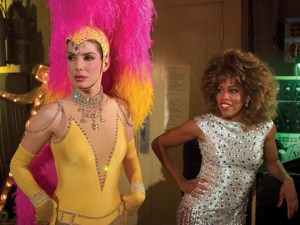 Bullock is a very likeable actress but seems prone to more pratfalls than Buster Keaton combined with two of the Three Stooges. The physical comedy comes off being tired this go-round. Watching Bullock be clumsy can be funny, but the comedy of Miss Congeniality 2 is too forced to crack a smile. The friction between Gracie and her bodyguard is one conversation away from evaporating. The girls have to pose as Vegas entertainers to get backstage, when they just could have used their “oh I don’t know?” FBI status. When Gracie goes undercover Bullock becomes unhinged and flounders around in rubbery ethnic stereotypes. Miss Congeniality 2 isn’t funny because the film doesn’t know what to do.
The finer moments of Miss Congeniality involved the dry wit of Michael Caine, and he is sorely missed in this sequel. The strangely necessary role of gay makeover artist is passed to Deidrech Bader (The Drew Carey Show). He amps up the sass but can’t really replace Caine. King is a greatly underrated actress (Jerry Maguire should have made her a star), but she suffers from the constraints of a rough-around-the-edges loner character. She mainly scowls and grumbles.
What made Miss Congeniality appealing was the fish-out-of-water conceit of an ugly ducking in a world of swans. Even though I didn’t like the film, it could at least muster up broad humor from its comic premise. Miss Congeniality 2 is a lot like Austin Powers 2, in that the sequel puts the fish back into the water. As a result the film loses whatever comic firepower it might have had. Miss Congeniality 2 attempts to be a female-buddy-cop caper, but the butting heads rarely produce any comedy. This film didn’t make me laugh until after 20 minutes in, and the ratio of screen time to laughs didn’t improve much afterwards (and that includes jokes about bad breath and tampons!).
 Miss Congeniality 2 has some of the dumbest police work ever. Characters go to extreme lengths for basic information, make wild assessments on little to go with, and key clues are tripped over with the subtlety of a jackhammer. The idiotic police work syncs up with the preposterous nature of the crooks? scheme. They are ex-employees of the Treasure Island casino, so to take revenge they?re going to trap their prey inside the pirate ship display, which is set to sink as part of the attraction’s script. Yes, death by casino attraction.
There are also some wildly brainless moments. Gracie is about to flee the sinking pirate ship, when her elaborate showgirl costume gets trapped under a heavy canon. Now, with time and air running out, any normal person would quickly strip out of the costume and swim away. Instead, Gracie tugs at her costume trying to yank it out, and she does this until she nearly drowns. I don’t care who you are, if you’re about to drown then modesty isn’t going to get in the way. Better to be alive and naked than dead and soggy. For that matter, when Gracie discovers that the pirate ship has her friends she runs to get inside. Wouldn’t it be infinitely easier to find someone at the casino that could stop the animatronic attraction? I’m sure something that organized doesn’t just run without safety controls.
Miss Congeniality 2: Armed and Fabulous is clumsy and riddled with contrivances and inanities. The jokes are forced and dead on arrival, and Bullock falls into what she does best, which is falling down. There is no reason for this film to exist other than that the original made money. Die-hard fans of Miss Congeniality may be the only ones to get some enjoyment out of this tepid sequel. Even casual fans of Bullock’s romantic comedies will likely be disappointed. You know you’re watching a tired comedy when they make Dolly Parton boob jokes in the year 2005. Miss Congeniality 2 is a film that doesn’t make the cut.
Nate’s Grade: C-
Share this:

The Ring Two (2005)
 I loved The Ring. Loved it. So I had some trepidation when I found out they were making a sequel. Surely it wouldn’t have the punch of the first film. To see Ring Two I went to a theater frequented by somewhat affluent teenagers and pre-teens. Big. Mistake. People were chattering away the entire time, laughing stupidly, and shouting ridiculously lame jokes: (on seeing a damp bed: “Oops, somebody wet the bed”). There were two managers that had to patrol the theater to keep order. Worst of all was a team of easily riled prepubescent girls that sat behind me, shrieking like banshees even during movie trailers. The same thing happened to me when I went to see The Village at the same theater. I must attract the most annoying people in the crowd. The sound quality in my theater was also very poor. Now, I can’t help but think that this was some divine act to warn me how bad Ring Two was going to be.
Rachel (Naomi Watts) has taken her son Aidan (the creepy David Dorfman) to a new town to start a new life. It’s been years since the incident with the videotape, and Rachel feels guilt about her role in spreading the killer tape. She’s got a new job at a small town newspaper but yet she can’t escape her past. A teen has been found with a contorted face, soggy floor, and a certain videotape. Rachel finds the tape and burns it. Samara, the evil young girl who started the evil tape, is none too pleased. Seems the evil tyke wants to be a real girl with a real mommy, and is slowly taking over Aidan. His temperature is dropping, he’s not sleeping, and bad things are happening. Rachel confronts more of Samara’s history to learn what it takes to stop her and get her son back.
 Everything that worked in the first film feels forced and meaningless when rehashed in Ring Two. In the previous film, there was context for the image of a tree on fire and Rachel yanking a fly right out of a TV screen. In Ring Two, these plot points are now reduced to being contrived signs of doom. There’s a scene where we’re supposed to be scared because a single fly comes out of a faucet. Huh? The fly and the tree made sense in The Ring, but in the sequel they are stripped of their context and seem alien. And dumb. After everything fit so tightly together in The Ring, it’s disappointing that little makes sense in the sequel.
Watts is such an enormously appealing actress that even in dreck like this she can come off as luminescent. With the two Ring films and Peter Jackson’s upcoming King Kong, Watts could establish herself as the scream queen of her generation. She’s a gifted actress and melts into whatever role she plays.
Ring Two‘s director, Hideo Nakata, knows a thing or two about the territory. He did direct the original Japanese Ringu films, which the American remakes are based upon. Nakata generates a fun sense of anticipatory dread. He also lucks into the occasional eye-opener like a bathtub whose water flows up and fills the ceiling. Nakata has a confidant touch but I miss the sheen of Gore Verbinsky’s direction.
What’s sorely missing is a killer premise like in The Ring. The premise was razor sharp, presenting a videotape as a virus and human nature’s willingness to taste forbidden fruit as the vehicle for its spreading. There was a sense of urgency because of the looming seven-day death deadline. In Ring Two there is no sense of urgency at all. In fact, the film takes an overly leisurely pace. It’s quite awfully boring. Samara wants a mommy and can?t really be stopped until a late revelation. This leads to a lot of impotent pacing and waiting. Except for a snappy opening, Ring Two completely ditches the videotape virus storyline that made its predecessor so compelling. As a result, it also ditches suspense and most of its intelligence.
 The Ring had a strong central mystery and a sense of urgency, which both blended to create tightly wound tension. Ring Two sputters around and relies on gimmicky jump scares as its main source of spooks. We see a character look into a mirror, look away, and then look back and something else is right there! Does this really work for anyone still? I just assume when a character ducks out of the way of a mirror that something’s coming. It’s these kinds of creaky, transparent tricks that Ring Two goes back to over and over to goose an audience. Because the story isn’t engaging the filmmakers have to resort to gimmicks. Since we’ve seen the results of Samara’s murders (the grotesque facial distortion) is it even scary to see it again when we know exactly what we’re about to see? The essence of horror is the unexpected. Finding the expected is about as scary as looking at leftovers in the fridge.
There’s a great moment early in Ring Two. Rachel and Aidan are driving through a forest and are followed and then attacked by a horde of deer. It’s the lone sequence in this sequel that feels different and exciting. It’s somewhat crazy, somewhat marvelous, and very weird. Too bad Ring Two relapses from there on into a turgid horror flick.
The Ring was a smart, tense, expertly crafted film that rose beyond genre conventions. Ring Two is nothing but genre conventions and repeatedly goes back to the well to drub up scares that aren’t there anymore (unless you’re the prepubescent girls that sat behind me). Watts is still in fine form and there are some visually striking moments. However, Ring Two is bereft of excitement and scares and has become just another tired, languished sequel. When I walk out of a horror moving saying, “I guess the best thing about that film was either Sissy Spaceck’s crazy cameo or deer,” then you are in a world of bad. Ring Two is meek, dumb, and boring. Let this one go straight to video.
Nate’s Grade: C-
Share this:

The Jacket (2005)
 In The Jacket, Adrien Brody plays a mentally disturbed soldier sentenced to spend his days in a treatment facility. He gets strapped into a straight jacket and locked inside a morgue drawer as part of his “therapy.” Inside these closed quarters, for whatever unexplained reason, Brody has the ability to travel through time. This got me thinking about some other weird/lame ways people travel through time in films. In 2004’s The Butterfly Effect a bearded Ashton Kutcher is able to jump through time by reading his childhood journals. Sure this is weird, and may give false hope to a nation of gloomy journal-scribbling teenagers, but when it comes to incompetent time travel techniques, 1980’s Somewhere in Time is number one with a bullet. Christopher Reeve’s character desperately wants to travel back to 1912. So he removed all modern furniture, clothing, and anything post-1912. Then he lies down on his hotel bed and keeps repeating to himself that he’s living in 1912. Somehow this works and Reeve gets to embark on romance, 1912-style y’all.
Jack Starks (Brody) is a helpful and well-meaning guy that just can’t catch a break. As a soldier in the 1991 Gulf War, an Iraqi kid he was trying to befriend shoots him in the head. When he returns home he starts a long trek through the Northeast. Starks helps out a mother and daughter whose car has stalled. He befriends the non-gun wielding little girl, Jackie, but her drunken mom nearly accosts Starks and they drive away. Then he gets a ride with a drifter (Brad Renfro). They get pulled over by a cop. The drifter kills the cop; Starks gets knocked out and framed for the murder. He’s sentenced to spend the rest of his days in a clinic for the mentally disturbed. And you thought you were having a bad day.
 The operator of the clinic (Kris Kristofferson) has some unconventional methods of therapy, like locking Starks in a straight jacket and sliding him into a morgue drawer. Inside this confined space Starks can zip through time to 2007. In the future he goes home with an angsty young woman (Keira Knightley) who, surprise, ends up being an adult Jackie, the girl he helped at the side of the road. They’re both confused and freaked out, but what spooks Starks even more is the knowledge that he dies on New Year’s Day, 1993. Starks must now get into that jacket so he can visit 2007 some more, fall in love with Jackie, and piece together clues to prevent his soon-to-be death.
Brody seems to be having as much bad luck post-Oscar as Halle Berry and Nicole Kidman. He’s in some funk playing glum character after glum character. Brody and his gaunt figure do have a natural haunted quality and he does excel at emoting grief and horror (hence the 2002 Best Actor Oscar for The Pianist). Brody gives the film more intensity than it deserves.
Knightley is a decent actress but has little to work with. Her role is wrapped in a slab of Gothic traits posing as characterization. When she talks it sounds like she has a cold. I don’t know if this is because of her attempted American accent, the glum character, or maybe she just had a cold from all that outdoor shooting in the snow.
Director John Maybury has the irritating habit of filming scenes entirely in jagged close-ups. Two people will be talking and then -WAM!- huge close-up of an eyeball. Then -POW!- giant mouth filling up the screen. Then -WAM! (again)- more of the same. This editing decision is a distraction but it also lacks purpose. It doesn’t effectively communicate character emotion or scene tension; it just annoys the crap out of you.
 The Jacket is fairly interesting for a good while. The premise is almost ingenious: a man must travel to the future to collect information to prevent his mysterious death in the past. The Jacket adds further intrigue with the question of whether Starks really is traveling through time. Maybe he truly is disturbed and this is all in his head. Sadly, but as expected, The Jacket disproves this tantalizing possibility after an hour of tease.
When the film does transition into its final half, the possibility it showcased seems to go slack. The answers seem either overly tidy or simply anticlimactic, like the truth behind Starks’ death. The Jacket opens strong and strings us along with some intriguing prospects but the end results merely peter out the film’s potential until The Jacket seems completely drained of blood.
Their relationship also has some unexpected creepy moments. Starks, in 1992, visits the little girl he will eventually have sex with in 2007. Yes she’s an adult when they take their tussle in the sheets, but having him later visit her when she’s a child is just plain cre-eeeee-py.
For a while, The Jacket aims to be an intelligent mind-bender but the film squanders its potential. The answers don’t seem nearly as thought-out as the film’s initially intriguing questions. Brody gives the movie more brooding intensity than it deserves. The Jacket is irritatingly directed, alternating between pale shots of white wilderness, extreme close-ups, and overkill on style. The Jacket seems like a nice fit for a while but becomes too frayed to be memorable.
Nate’s Grade: C+
Share this:

Constantine (2005)
 I’ll admit it; I’m a sucker for Christian mythology played against thriller and action settings. I may be the only person to have watched all of The Prophecy flicks, and probably the only person that eagerly chows down on the cheesy sequels to The Substitute, yet shy away from seeing the first film. I’m captivated by the imagery, the discussion of Heaven and Hell and its mythical logistics, and just the psychology of supernatural biblical beings. With this in mind, I was strongly anticipating the release of Constantine. What I got wasn’t exactly what I expected but I’d be lying if I said I wasn’t entertained.
John Constantine (Keanu Reeves) is a very troubled man. Since his youth he’s had to live with his gift that allows him to see through earthy disguises and witness angels and monstrous demons walking among us. He’s parlayed this ability into a modest side job of exorcising demons and sending them back to Hell. Constantine figures his loyal service should grant him passage into the pearly gates, but Archangel Gabriel (Tilda Swinton) reminds him that that’s not how it works. Constantine is doomed to go to Hell because he tried taking his own life, and if that’s not enough he also has terminal lung cancer from smoking like a chimney. “In other words, you’re f***ed,” Gabriel confides to Constantine.
 Police detective Angela Dodson (Rachel Weisz) is investigating the suicide of her twin sister (also Weisz). She swears her mentally disturbed sis wouldn’t do such a thing, and she seeks out the help of Constantine. He challenges her beliefs, stating that God and the Devil (Peter Stormare) have a wager over the souls of mankind but cannot directly interfere. But now something is breaking this rule and it looks like demons may be getting closer to entering our plane, and it looks like Angela’s dead sister may have known more than people would have thought.
The plot of Constantine is rife with contrivances, aborted subplots, underwritten and nearly forgotten supporting characters, and sketchy logic (staring at a cat can transport you to Hell? No wonder I’m a dog person). Often the film feels overwhelmed by good special effects, as they seem to be the crux of the film?s purpose of being and not, on the other hand, a theological playground of ideas. Constantine gives veiled glimpses of something smart, but routinely shuts that door to focus more on annoying jump scares.
In fact, Constantine seems rather old-fashioned with its theology, still clinging to the Roman Catholic belief that suicide is a one-way ticket to the fiery abyss. I understand its use as motivation for our lead, but will progressive audiences accept something they may find archaic? I suppose it could be worse. Constantine could have briefly gone to Hell for eating meat on a Friday.
It’s interesting that after spending two years making The Matrix sequels, Reeves would choose to attach himself to another big-budget theological action flick. His acting never really rises beyond morose loner but somehow he does make for a satisfying, brooding hero. Reeves? low-key monotone speaking voice allows him to spout cheesy dialogue with a straight face and mercifully keeps the audience grounded.
 The true stars of Constantine are the memorable supporting players in this celestial smack down. Swinton uses her androgynous looks to forge what David Bowie might be like as an angel: angular, mysterious, waif, and somewhat creepy. Stormare delivers a performance so kooky and tic-heavy, that it could only be compared to the weirder moments of Christopher Walken. Both actors liven up the film and seem to be having the most fun by far with their cheeky roles.
The genius of Constantine is in its one-upsmanship game it holds with the audience. Granted, suspension of disbelief is needed to even go along for the ride, but when we start learning that Hell has its own line of bibles (and they’re longer) we’ve gone beyond suspension of disbelief and into wacky Anne-Heche-speaks-to-aliens land. While sitting through Constantine, we the audience think, “There’s no way this movie could get any sillier.” And then it does! We think, “Alright, that was crazy. Now there’s no way after that this film could get any sillier.” And then it does! Constantine is an amazing ascent into movie madness. After a while, I became drunk from the film’s insanity and wanted it to get even crazier, if possible. It almost seems like there’s a drinking contest between the movie and the audience, and Constantine isn’t afraid to piss its pants to win.
By the time Lucifer shows up, clad in all white like Tom Wolfe, and the Dark Lord appears to have Tourette’s Syndrome and/or a speech impediment, Constantine has hit the bottom of its Kool-Aid cup. Sure the film’s cinematography is slick, and the premise is intriguing, but the real draw of Constantine and the real enjoyment of the flick is how bat-shit crazy it is. I cannot even think of comparable films. I hope David Lynch was taking notes if he saw this.
For a while there, it seems director Francis Lawrence wanted Constantine to be a companion to Wesley Snipe’s Blade character. Maybe the two of them can set up a play date and go destroy otherworldly creatures. There’s a visually striking sequence late in the film involving Constantine in a room full of demons. He’s “contaminated” the water system by placing a giant cross inside, thus holy-fying the water before he can bottle it and sell it to the masses. He holds a lighter to the sprinkler system, demons growling all around him ready for their kill, and then water sprays down across the room. “Holy water?” one female demon says in a stunned voice, watching her flesh sizzle away. Then Constantine marches through the wet room blowing away demons into splashes of ash with his comically unwieldy cross-shotgun. It’s filmed wonderfully with dark hues and is a great idea; however, it’s a bit of a rip-off of the opening sequence in the first Blade.
 This seems to be a repeated sentiment in Lawrence’s direction. He has a sharp visual eye and several camera angles come from odd yet exotic places, but his film is borrowing so heavily from so many other films. What you’re left with is the impression of a stylish if very derivative looking action film. One exception is when Lawrence shows us glimpses of the blistering burnt orange world of Hell. It seems Hell is an exact model resemblance of Earth, only with the fire, brimstone, and crawling demons with their heads sliced open (there is a scary level beneath the surface where we witness a sea of people being tortured). The second or third time we traveled to Hell, I began to wonder what my house would look like and the logistics of upkeep for the homeowner in Hell. Surely the heating bills wouldn’t be the same.
Constantine is funny, frustrating, confusing, gorgeous, and just plain insane in the ole membrane. The film exhibits a rare and engaging form of insanity that may glue audience eyeballs to the screen to see what happens next. I’ve seen Constantine twice (don’t ask why) and even though I knew all the weird plot turns I still found myself getting an enjoyable contact buzz from the film. Who knows how long such a novelty can sustain itself, though. Comic book fans, especially those with a spiritual bent, should get a kick out of Constantine as will anyone else searching for a pristine example of how wonderfully out of control Hollywood moviemaking can be. Sometimes in a good way.
Nate’s Grade: B-


 nathanzoebl
You must be logged in to post a comment.