Monthly Archives: October 2011
The Help (2011)
 Kathryn Stockett’s bestselling publishing phenomenon has now become a box-office smash. In 1963, Jackson, Mississippi, Eugenia “Skeeter” Phelan (Emma Stone) is coming home after graduating from college. Her ailing mother (Allison Janney) is convinced that she will die without any grandchildren and pressures Skeeter to find herself a man. Instead, she finds herself a job writing for the city newspaper. She answers reader household and cleaning questions as “Miss Mryna.” She seeks help from Aibileen Clark (Viola Davis), a middle-aged woman who’s worked as a maid to rich white people her whole life. Skeeter soon changes her focus and wants to interview other maids about the indignities they experience. She wants to get their story out there. This is a time where it was actual Mississippi law that anyone working against segregation could be imprisoned. They try reaching out to Minnie (Octavia Spencer), a maid recently fired from the services of Mrs. Hilly Holbrook (Bryce Dallas Howard), the queen bee of the Southern belles. Minnie is much more outspoken and her mouth causes her to get into trouble. The only job she can find is in the household of Celia Foote (Jessica Chastain, The Debt), a woman ostracized by Hilly’s forces. Skeeter transcribes the life stories of a dozen maids and the results become an anonymous bestseller that sets Jackson tongues a waggin’.
The Help enlists a colorful cast of characters (no pun intended) and tells a familiar story about people taking a stand during a tumultuous time in history. This is traditional classic Hollywood storytelling with the respective characters banding together, leaning upon one another, building camaraderie and victory, and then finally able to stand up to their antagonists, which in this case is really just Howard’s snooty racist character. It’s well told, well directed (both credits to Terry Tate, childhood friend of the author), very well acted by every member of the cast, and watching all 145 minutes is like being fed a heaping helping of home cooking. You leave feeling full and sated, and some may even feel nourished. You feel good about yourself. I tried to resist but resistance was futile. I can’t help but enjoy The Help. And even though I walked away liking the film, something stuck in my craw. It felt a little too prefabricated, too eager to be liked, to go down easy, gentle, a sweet Southern story about women taking a moral stand and finding their voices. But what is the film’s real focus when it comes to race relations?
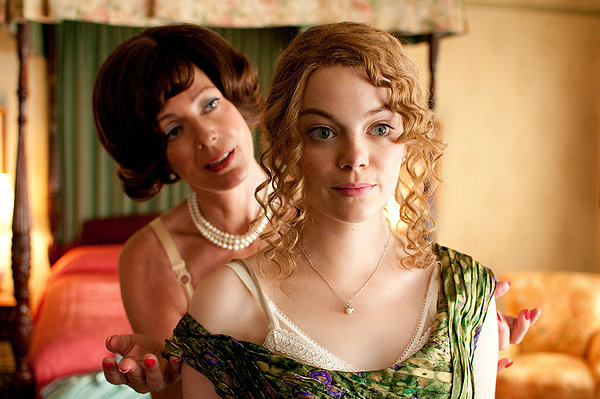 Naturally nobody is going to look as The Help as an exhaustive document of the Civil Rights era, but the movie seems to seriously downplay the intensity of that struggle. Sure it pays lip service to Medgar Evans assassination but by this time there were riots, churches being bombed, children being killed, open collusion between law enforcement and the Ku Klux Klan, and the Freedom Riders were being met by violent mobs. There are a lot of bigger things going on than black maids sitting down for interviews with a college girl. Come on, this is Mississippi we’re talking about here, the home of racism. I understand that the Civil Rights movement had thousands of anonymous acts of courage and the actions of these (fictional) women should not be out rightly discounted. However, the parting message of the film seems to be not about the courage of the black maids but the tenacity of Skeeter, a middleclass white woman who herself grew up with “help.” The Help’s mixed message on race relations reminds me of a similar situation with 2009’s beloved The Blind Side. That movie wasn’t so much about the triumph of a black athlete so much as a glowing picture to how great rich white people can be. And Sandra Bullock got an Oscar for it; that’s how great a white lady she was. The Help is another example of Hollywood taking a story primarily about minorities and having white people necessary to tell that story. Why are white people always necessary to tell some other race’s stories? Skeeter is an open-minded gal that speaks her mind and stands up to the Jim Crow South. That’s how she starts. By the film’s end, she’s now… an open-minded gal that speaks her mind and stands up to the Jim Crow South and now she has a publishing career. Good for her! Good for heroic white people! They had so much to lose back then.
I guess my main fault is that this is not Skeeter’s movie. I don’t even think she’s needed. Yes she provides the outlet for the stories and secrets of an undervalued class of people. But did she need to be the co-lead? Does she need her own storyline where she stands up to her mother cowing to racist social norms? She had her own maid (Cicely Tyson) unceremoniously dumped while she was at school. Surprisingly this does not give too many insights to Skeeter’s character. Do we need any scenes of her going out on dates so that we can forever be reminded how ahead of her time she was, how liberal and progressive she was and destined to be unappreciated by a pool of men who were looking for only pretty housewives? As my friend China Gentry said, we’d all like to think we’d be the forward-thinking progressive voice of change in these historical dramas, to make ourselves feel better, but we’d most likely just be another silent face in the background. The boyfriend storyline is a complete waste of time. Skeeter goes out with a drunk jerk, he comes back and apologizes, they go out again, then after she gets published he freaks out and storms out. And that is the last we see of this guy. That’s the end of his story. He apparently puts his foot down when it comes to dating a female author. This storyline adds nothing to the overall narrative or to the character of Skeeter. There’s entirely too much Skeeter in the movie, and I say this as a gigantic fan of Emma Stone (Easy A). It’s not the actress’ fault either because she performs well in her first dramatic film role. This is just not her movie. This is not a movie about heroic white people; at least it shouldn’t be. This is a movie about the help, so let’s devote more time to them, notably Minnie and Aibileen. The movie opens and closes with Aibileen’s voice over. She is the star of this story. Why do I need another character just to coax out her story? Yes, I understand the limitations to a woman in Aibileen’s position in those days, but that’s no excuse. She deserves to be the focus.
Davis crushes in this movie. She is a one-woman force of devastation. You can just see the wear on her face, the tremor in her eyes, the sadness etched into her face. This is a woman beaten down by her position, and Davis is excellent. How good is this woman? She’s so good she got nominated for an Oscar for a single eight-minute scene in 2008’s Doubt. That’s Judi Dench territory right there (Dench famously won a Best Supporting Actress trophy despite only appearing onscreen for about nine minutes in Shakespeare in Love). She has a few big acting moments but mostly she’s not an outspoken woman. She’s more a downtrodden woman used to the many disappointments of her lot in life. She raises other people’s children while seeing very little of her own son. She develops close relationships with those kids, and the kids feel more attached to their maids than their mommies. And there’s the shattering disillusionment that these children, who once loved their maids, will transform into spitting images of their parents. The help gets treated less like family and more like a disposable, impersonal employee. The ease of severing ties can be heartbreaking. And Davis lets you feel all that without even having to speak. Spencer (Dinner for Schmucks), in easily her biggest role of her career, is enjoyable with the more outspoken role. She’s more the mouthpiece for the audience.
 As I admitted in my review of 50/50, I don’t think there’s any role that Howard (fun fact: both Howard and Stone will play film versions of Gwen Stacy) can play where I won’t fall in love with her somewhat. This is more a hypothesis than a theory at this point. Hilly is a social queen, the Southern belle who likes things just the way they are. She has influence over the other middleclass wives in Jackson, but she does make for a pretty marginal main antagonist given the time period. She can threaten the livelihoods of the maids, so she is a threat, and her worldview is decidedly racist (she thinks using the same toilets will spread “black diseases”). She’s built up enough to be a threat but not enough to be unstoppable. She’s defeatable, unlike the intolerant ideology so prevalent in the South. We can’t defeat racism but we can topple one racist white lady. Well, we can laugh at her and bring up the fact that she ate something very gross once. I won’t go into spoilers, but this plot point where Minnie gets wreaks personal vengeance on Hilly via baked goods feels out of place for the tone of the film. It doesn’t fit.
I resisted seeing The Help for so long, believing it would be a painful experience with mushy emotions and many life lessons served up on an easy platter. And to some degree, the movie is exactly that. But it’s also hard to dislike the sweep of the old fashioned storytelling. The Help is a nice movie, extremely well acted, and filled with period details that will make the audience sense its authenticity. It’s easy to get caught up in the writing and the acting, so it’s easy to ignore the otherwise somewhat questionable examination on race relations. I don’t know why we still need white people to tell “their story.” The Help is a well-crafted movie but it fails to move the conversation forward. Perhaps that’s an unfair expectation. Not every Civil Rights era story is required to properly educate the public, let alone a work of historical fiction. Maybe I should just sit back and enjoy the story like so many million readers have. But the power of Davis’ performance claws at my memory, telling me she deserves a better movie focused on her character. For once, I’d like to see a Hollywood movie about race relations that doesn’t require white people as a framing device. Let’s let the right people tell “their story” for once.
Nate’s Grade: B
Share this:

Rango (2011)
 It’s Chinatown remade with anthropomorphic desert creatures. It’s a Western by way of Hunter S. Thompson. It’s a loving parody of cinema’s wide canvas. It’s one of the most wild, anarchic, oddball animated films to ever be released by a major studio, and it is stupendous. Steeped in weirdness and bravado, Rango has a playful and occasionally macabre sense of humor that kept me in stitches. Director Gore Verbinski (the Pirates of the Caribbean flicks) translates his visual verve into a animated movie that dazzles the eyes with its magnificently drawn features as well as the pointed personality in every stroke. This is a movie with character, not to mention some pretty entertaining characters (including talking road kill). Johnny Depp delivers an idiosyncratic vocal performance for a household lizard that finds himself pretending to play sheriff for a town in need of a hero. When you think Rango will fade into familiar territory, or easy moral messages, the film keeps surprising, forging its own unique path. This is a lively, peculiar, and overall enchanting animated film that’s suitable for families but may well play better for adults with eccentric tastes. I’m still scratching my head, and celebrating, how something like this slipped through the system.
Nate’s Grade: A
Share this:

Conan O’Brien Can’t Stop (2011)
 You’d think that a behind-the-scenes documentary in the immediate aftermath of Conan O’Brien being paid $30 million to walk away from his dream job hosting The Tonight Show would have plenty of drama and revelations. It doesn’t. This thin documentary mostly just tags along on O’Brien’s multi-city comedy tour during the time he was contractually obligated to not appear on TV. O’Brien doesn’t go into much detail about the Tonight Show brouhaha, making only vague references to his ouster in conversations about confronting his anger. Fans of the gawky comedian will be put off by O’Brien’s often hurtful, prickly behavior toward his subordinates and co-workers. He has a biting wit but often that wit has a discernible edge, making everyone feel uncomfortable, and now you too at home. His bitterness always seems to be bubbling. He’s a conflicted man, bemoaning meeting and greeting fans, citing the exhaustive nature of always being “on,” but then in the next moment he’ll charge into a crowd to feel alive again. Conan O’Brien Can’t Stop is a lackluster documentary that has a few laughs since it does chronicle a road show about funny people, but it’s not too long before even O’Brien fans might wish that he’d just stop.
Nate’s Grade: C
Share this:

Attack the Block (2011)
 Attack the Block is the hip new sci-fi comedy/thriller from across the pond. The Brtis know a thing or two about elevating genre movies to an art form. While not rising to the same level of executive producer Edgar Wright’s oeuvre, this is one of the most fun experiences I’ve had in a movie theater all year.
On New Year’s Eve in a South London ghetto, a very different kid of firework is lighting the moonlit sky. An alien race is crashing to Earth as fiery meteorites, which the kids of the neighborhood term “Gollums.” Moses (John Boyega) is the leader of a group of teenage wannabe hoodlums. Their crazy night begins with mugging Sam (Jodie Whitaker), a nurse who lives in the boys’ apartment complex. Moses and his crew later run into Sam and need her help when one of their own is injured. The alien monsters have descended upon their block, scaling the apartment building looking for easy prey. Moses and other block residents band together to battle a common foe, the outer space monsters, which have the misfortune of trying to invade the wrong neighborhood.
Attack the Block is a refreshing spin on a genre that seemingly had covered every ground. But lo, it never covered the modern urban landscape, or, as the tagline succinctly puts it: inner city vs. outer space. It’s not long before you realize that writer/director Joe Cornish (writer of the upcoming Tin Tin flick) is the real deal. The camera angles are lively and inventive, without crossing over into self-infatuation for style’s sake. The cinematography by Thomas Townend is delightful to look at, often making our own home feel like an alien landscape with harsh color tones. The movie has the slick look we associate with music videos and commercials, but never does the movie let the visuals overwhelm the story. The edits are crisp and quick, packing a lot of material into a small 99 minutes and doing well to quicken your pulse during several iterations of the alien attacks. But most of all, the film is completely, unabashedly fun with a capital F. It has a swagger to it, adopting the same cocksure attitude of its main characters. The accents and the breathless jargon take some adjusting, but by the time we’re running from aliens you’re pretty much at the same pace of astonishment with the characters, forgetting the language barrier. I was quickly sucked into the world of this movie, able to enjoy the depth of skill by the invisible technicians. There’s an immense sense of satisfaction watching this crew band together to take out superior numbers of baddies, some of them even Earthlings. Cornish confines his narrative focus to one apartment building over the course of one night, setting up our orientation to the building so that when we have characters running back and forth, and various storylines criss-crossing, we are kept in the loop. As people start becoming monster chow, the stakes get even higher.
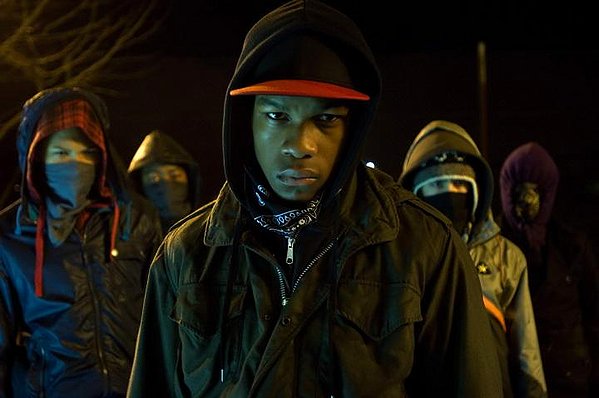 The dialogue is regularly clever without having to stoop for self-aware gags. This is not a genre spoof. This is played relatively straight, just with amusing characters (“You’d be better off calling the Ghostbusters, love.”). One of the kids, who is on a pay-as-you-go cell plan, breathlessly says, “I only got one text left. This is just too much madness for one text!” Attack the Block is the right combination of scary and funny, the same fine line that its forebear, Shaun of the Dead, so successfully walked. This is the kind of movie that genre fans tell their pals about in breathless declarations of awesome before falling over dizzy. Nick Frost, star of Hot Fuzz and Shaun of the Dead, even has a minor roll as the neighborhood pot supplier. While Block doesn’t approach Shaun’s utter genre-spoofing greatness, there is enough of squandered potential in Cornish’s script, particularly how the various pieces ultimately stack together for its standard but effective fist-pumping climax, to keep Block from being crowned an instant genre classic. The characters remain little more than types, distinguishable by the few traits thrown to the actors like meager breadcrumbs (kid with glasses, angrier kid, white kid, etc.). If you’re a fan of Shaun of the Dead, and witty, bloody sci-fi, then you already know that Attack of the Block is destined to beam into your home.
The aliens themselves deserve a special mention since they break away from the traditional mold of cosmic movie monster we’re familiar with. These minimalist aliens look more like giant yeti creatures that run on all fours. They’re all black, like inky black hole light-cannot-penetrate black, which is scary but also a clever way to hide the shortages of a limited budget and the reality of people in suits. The only thing that stands out is a set of fluorescent blue jaws that snap wildly. It’s like the monsters ate a can of glow sticks. This aspect is smartly used at points to pump up suspense. It’s a novel approach that veers away from the H.R. Geiger (Alien) stuff that’s been copied and recopied to death for the last 30 years. These aren’t smart aliens. They’re more like rabid beasts overwhelmed by their biological impulses. These aliens don’t come across as organized as other movie aliens. It seems like they’re just floating around through the void of space waiting to land on the right rock and multiply.
The musical score is greatly enhanced through the talents of Felix Buxton and Simon Ratcliffe, better known to big beat electronica fans as Basement Jaxx. The musical duo provide a score tinged with their famous electronic mélange of sound, including pieces that sound like retro video game sound effects (Space Invaders?), 1950s sci-fi movie scores thick with Theremin use, and an ongoing sludgy beat that weaves in and out of the picture. Working with Steven Price (Scott Pilgrim vs. the World), traditional rousing musical pieces are enhanced with the Basement brothers’ dubsetp influenced bass and drum lines. The score perfectly matches the frenzy of what’s happening onscreen, evoking a fuzzy mood. I have been listening to clips of the Attack the Block score for days. It’s not as integrated and essential to the film as Run Lola Run’s famously kinetic electronica score (the standard bearer of all electronica-enhanced scores), but I was delighted every time it remerged. With the Chemical Brothers score for Hanna and Oscar-winner Trent Reznor’s score for the Girl with the Dragon Tattoo later this year, this may be the best time yet for film lovers that enjoy toe tapping to some electronic beats. These kinds of scores age so much better than synth scores, one of the absolute worst things ever to happen in the history of movies (Apocalypse Now is almost unmatchable thanks to its dreadful synth score).
 Of course your level of enjoyment is going to severely rest upon whether you want the main characters to survive or get eaten. Attack the Block begins with an empathy deficit, meaning it puts its hoodlums immediately in a hole that they might not get out of. Our first introduction to Moses and the gang is watching them mug Sam. Later on one of the guys says the knife that was bared was just for show, and that the boys were just as scared as she was. I doubt that. When you’re on the receiving end of a weapon, and outnumbered, and surprised, it sure seems like you got it worse. The movie then spends the rest of its running time with these wannabe ruffians, and we do get to know them slightly better but really only slightly. Some of the kids have absentee parenting situations, which isn’t too shocking, and occasionally a character will take a moment to reflect, thinking beyond the situation, blaming the government in a fit of paranoia for being behind the alien nasties. One kid even makes a curt remark when he finds out Sam’s boyfriend helps impoverished kids in Africa. “We don’t got poor kids here that could use some help?” he comments. Well, kid, I wouldn’t dismiss the magnitude of systemic poverty in the African continent, but you could have made your point without seeming like a dick. And these are our characters. They blather a lot; in fact they rarely stop talking. Eventually they do apologize to Sam for mugging her and Moses does take the mantle of hero to redeem himself. However, by that time some audience members may have checked out. Attack of the Block is decidedly less fun if you don’t give a fig for its wannabe thug figures.
Attack the Block is like a delirious head rush, witty, full of energy and style to spare, and an infectious attitude that washes over you. The movie delivers what Super 8 promised, namely the bond of kids coming together to thwart an alien invasion on their home turf. This is a high-energy flick that succeeds as a comedy and a thriller, with a few nasty splashes of gore thrown in for good measure. It has some issues that keep it from the pantheon of genre greatness, but I won’t quibble the movie to death. Not when I get something as deliriously entertaining as Attack the Block.
Nate’s Grade: A-
Share this:

50/50 (2011)
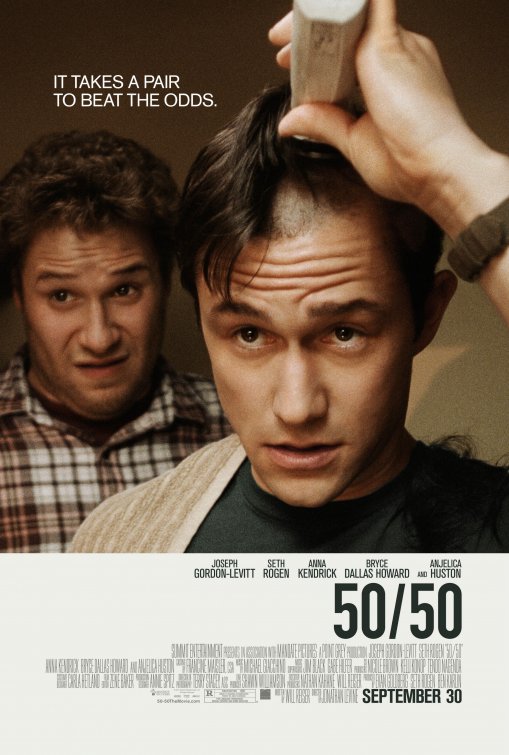 50/50 is based upon the experience of screenwriter Will Reiser, a writer for HBO’s Da Ali G Show who contracted cancer before his 30th birthday. Reiser’s real-life travails with his buddy Seth Rogen (who serves as executive producer) through the good times and bad. I guess when you get cancer it helps to have an established movie star as your good friend. It also helps when you write a terrific script, which Reiser has accomplished. Originally titled I’m With Cancer, I guess the studio felt that a movie with “cancer” in the title was a hard sell to mass audiences (On a related note, Showtime’s comedy-drama The Big C, about Laura Linney finding the humor through cancer treatment, was previously titled The C Word. I don’t know about you, but when I heard “the c word” the first thing that comes to mind is not “cancer.”). Even with a more oblique title, 50/50 manages to walk between comedy and drama with flair. It’s probably the funniest movie you’ll ever see about cancer. Definitely funnier than My Sister’s Keeper.
Adam (Joseph Gordon-Levitt) is a relatively healthy 27-year-old. He likes his job writing for a Seattle National Public Radio station. He likes his girlfriend, Rachel (Bryce Dallas Howard), an aspiring painter. He likes his best friend, Kyle (Rogen), a dude prone to speaking whatever is on his mind. Then one doctor’s visit changes everything. Adam has a very serious form of spinal cancer. He begins chemotherapy to try and stop the tumor’s growth. Rachel drives him to his hospital treatments, helps him during his long nights of nausea, but ultimately it proves too much to bear. She leaves him. Luckily, Adam has a young therapist, Katherine (Anna Kendrick), helping him put his life in order. Adam’s chances of surviving this rare cancer are exactly as the title proclaims, 50/50. As he comes to grips with the measures needed to survive, Adam finds himself growing closer to his therapist in a completely unprofessional degree.
50/50 may be the least sentimental movie I can recall about the realities of living with cancer, and that is its greatest attribute. That doesn’t mean that the movie doesn’t cover serious issues in a flippant manner. Instead of hitting cheap sentiment and milking cancer for easy tears, the movie, thanks to Reiser’s sharp script, forgoes false feelings and finds something more rare and true. There’s no real playbook for something as unexpected as a person in their 20s being diagnosed with terminal cancer. It seems like a cruel irony to be stricken with an illness so young. Adam doesn’t drink, doesn’t smoke, and doesn’t even drive due to the danger. He’s pretty mild-mannered and a bit of a pushover. Adam tries to not let cancer get to him, to shrug off the heavy implications, and to just make it seem like any other personal setback. If he doesn’t treat it like a big deal, maybe it won’t be and his friends and family can follow his lead. This kind of self-manufactured blasé attitude, even in the face of cancer, seems like an apt approach for a younger relaxed generation. Naturally, this denial-heavy approach doesn’t exactly work. It’s too easy to confuse numbness with acceptance. Fortunately, Reiser does not let his story slip into easy maudlin theatrics. We don’t need anybody reminding us, or Adam, how serious his situation is. On the other hand, we also don’t need anybody moralizing about any self-help slogans. Not everyone sees adversity as a blessing into Discovering Who You Truly Are. Reiser refrains from his characters making anything approximating Big Life Statements. Cancer does not lead to automatic personal epiphanies. If it did, we’d have a lot more people inhaling carcinogens and volunteering to work in the Chernobyl ruins.
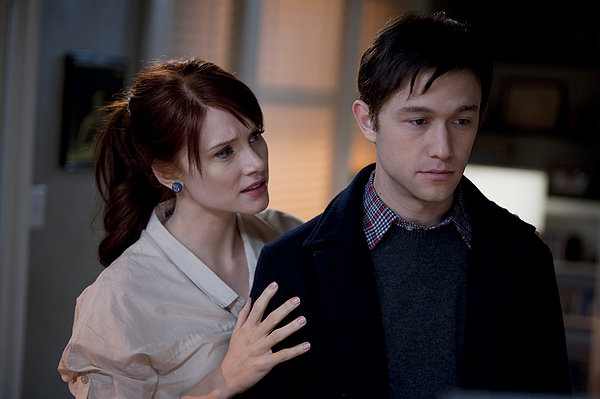 50/50 doesn’t ignore the sometimes odd and dark humor that arises from life’s predicaments. That means this is the only cancer movie where the guys try and use the disease as a way to convince girls to sleep with them. At no point do I remember this occurring with Terms of Endearment or Beaches. And this opportunistic babe hunting doesn’t make the boys come across as sleazy. Adam can’t even enjoy the one-night-stand as his back pain robs him of the pleasure of his nubile well-wisher. The tone is very controlled. The raunchy comedy is not a distraction; at no point does any situation feel like a comedic setup. The comedy comes from the characters being genuine to who they even through the trying circumstances. If your friends are funny, chances are they’ll still be funny talking about cancer. The humor doesn’t make light of things nor does it just play everything for laughs. Humor is how we humanize, how we make the insurmountable digestible.
50/50 also treats its characters with a bittersweet sense of reality; these people are flawed and relatable. They are not instantly made into self-actualized saints thanks to cancer. Adam’s girlfriend actually breaks down because she cannot handle the extra responsibilities and emotional wear and tear. Their relationship fizzles. This seems far more realistic considering many people will feel like they did not sign-up for sleepless nights, 24-hour care, and watching their loved one waste away. It’s a strong individual that can endure that kind of collateral pain, but the movies make it seem like every romantic partner is unnaturally selfless. They become ideal partners, but really most of us would just bail. Reiser easily could have easily written his ex-girlfriend as an insensitive shrew. While she does cheat on the guy, thus making her easy to dispel, Howard makes her vulnerability relatable. She even comes back trying to make amends, forcing kisses upon him to weaken Adam’s resolve. Kyle relishes the opportunity to finally be able to tell off Rachael, a girl he admits to disliking from the start. I don’t get the instant hate, but maybe it’s my complete adoration for Howard even when she’s playing a bad girl that blinds me to her offenses. To dismiss her as a “bitch” seems unfair. How would you react if your boyfriend/girlfriend were suddenly diagnosed with cancer? Could you last?
I found all of the characters to be empathetic and relatable (though a lead who waxes about the glory days of radio and works for NPR seems a bit hipsterish), especially in their personal struggles surrounding Adam’s illness. Adam’s mother, Diane (Anjelica Huston), can be overbearing and would have easily been kept as a caricature in other movies. In 50/50, the film examines her own struggle – a husband with Alzheimer’s who can’t talk to her and a son with cancer who chooses not to talk to her. The isolation she feels, the loneliness, always putting other people’s needs ahead of her own, this is culmination of the caregiver, a role as I’ve stated that too often gets canonized. In 50/50, the reality of living with illness is dealt with in a meaningful manner. The people surrounding you are also affected by your illness. You cannot shut them out to spare them from pain. Adam realizes this too as the film progresses to its moving conclusion.
 The heart of 50/50 concerns two sets of relationships. The one that will catch the most attention is Adam’s budding romantic relationship with his therapist. Their romance feels like it emerges naturally, albeit in a slightly hurried up pace for our small timetable. It’s a romance built upon the chemistry of the two actors, the strength of their individual performances, and the fact that Reiser forgoes anything obviously romantic. He cleans out her car. She gives him a ride home. It’s little things that seem like they matter on a personal level, not the outsized theatrics of romantic gestures. The movements are small but they add up, and we can feel it too. So when Adam, at his lowest point, calls her and says, filter down and radiating in emotion, “I bet you’d be a good girlfriend,” it’s a moment that feels earned. I also greatly appreciated Katherine’s own insecurity about being a therapist. Too often movies depict therapists as omniscient beings that have a fortune cookie answer for all of life’s mysteries. Kendrick hides behind evaporating smiles as her character’s defense mechanism. In 50/50, we get to see a character that is honest about her insecurities about a job that advises others. It’s refreshing. The other main relationship is between Adam and his best friend, Kyle. His best buddy is his spark, the guy who gets him out, who shakes him from moping around. He cares but goes through unorthodox methods to show that care, including trash talking and ball busting. He remains likable to his shaggy core because he has Adam’s best interests in mind, even if that means scoring with girls.
Director Jonathon Levine (The Wackness) gives the movie an improbably beautiful look. This is one cancer comedy that is simply pleasing to watch for the cinematography alone. He doesn’t overpower the narrative with self-aware visual touches, though there is one that stands out. When Adam receives the news from his doctor, the audio becomes distorted after the shocking word “cancer” is uttered. The picture becomes blurred. The world seems to have been swept away. I imagine this sonic body blow is pretty much how Reiser recalls receiving the news, and if not it still feels authentic. The score by Michael Giacchino (Up, Super 8) is subtle and doesn’t intrude too often, ably assisting the drama instead of smothering it.
50/50 is an unsentimental film that manages to be moving and genuinely entertaining on its own terms. It can be rude but that doesn’t mean it lacks sincerity. The characters and their dilemmas feel all too relatable, even the ones we hope don’t become us. The 50/50 production has followed a subdued edict, forgoing sappy melodrama and easy pathos. These emotions are earned the old fashioned way, through characters we care about and drama that feels truthful. The mixture of the course and sweet gives the film a decidedly Judd Apatow (Knocked Up) flavor even though his name is nowhere to be seen. Gordon-Levitt, who at this point can do no wrong in my eyes, gives one of the best performances of his already accomplished career. The comedy, lead by Rogen’s obnoxious best friend, keeps the movie from being bogged down in melodrama. It’s the only way to stay sane, and 50/50 recognizes this and delivers a film that earns its tears and laughs.
Nate’s Grade: A-


 nathanzoebl
You must be logged in to post a comment.