The Brothers Bloom (2009)
 Con movies work thanks to P.T. Barnum’s belief that the audience wants to be fooled. We all enjoy being conned to some degree. The excitement of con movies is being outsmarted and figuring out how it was accomplished. The Brothers Bloom, by writer/director Rian Johnson, one of the more exciting new filmmakers in Hollywood, is a con artist caper that understands the rules of the game and then aspires to transcend the game. Whether or not it succeeds depends on how much whimsy you can stomach in a two-hour duration.
Stephen (Mark Ruffalo) and Bloom (Adrien Brody) are a pair of con artist brothers. Stephen has been drawing up elaborate schemes ever since childhood, and he always uses his brother as the face of the operations. The brothers have a third member to their team, the mysterious and mute Bang Bang (Rinko Kikuchi), who, we’re told, just appeared out of thin air one day and they expect she’ll leave in the same style. Bloom is tired of playing characters and roles and wants out, but his big bro comes back with one last con in the works. Penelope Stamp (Rachel Weisz) is rich, peculiar, and lonely, ripe for the taking. Bloom snares her with the exciting prospect of being apart of an adventure. There’s a globetrotting plot to profit from selling a book to some shady characters (Robbie Coltrane, Maximilian Schell), and it’s just what Penelope needs to feel alive and leave the confines of her large cage-like home. Naturally, Bloom falls for the “mark” and feels conflicted, but was this part of Stephen’s plan all along? Is he setting up some form of a happy ending for his little brother? Is Penelope in on the con? Who’s conning whom?
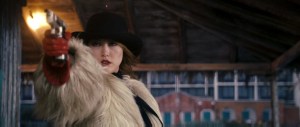 The Brothers Bloom is steeped in whimsy and at times runs dangerously close to falling into the inescapable gravitational pull of “cutsey.” Some have compared the film’s quirky, precocious style to Wes Anderson, but the movie reminds me more of the style of Barry Sonnenfeld, a filmmaker who made outsized whimsy seem like everyday reality; Anderson’s movies seem to exist in their own impeccably handcrafted worlds. I loved the opening 10-minute prologue which explores the childhood history of Stephen and Bloom, examining their first con on local rich kids. It’s quick-witted, snappy, and even has Ricky Jay provide narration, reminiscent of Magnolia or the David Mamet con movies. The Brothers Bloom has a sunny disposition that doesn’t come across as smug. Stylistically, the movie never crosses the line into feeling overly mannered. The Brothers Bloom exists in some unknown time period. The cars are modern, the clothes are from the 1930s (everyone wears a bowler hat with such flourish), and the sets look like they’re from the 1960s. There is no dependence on technology, just good old-fashioned brains and charm.
And yet this is more than an exercise in style. Just as he did with the adroit, neo-noir movie Brick, Johnson takes a genre and subverts its expectations. The Brothers Bloom treats cons more as storytelling, and it positions the film and its characters in an interesting new light. Bloom yearns for an “unwritten life” because all he’s known have been roles in his older brother’s games and cons, and the poor sap doesn’t even know if he has an identity beyond fabrication. Stephen has also begun to blur the lines between reality and his cons, and his life’s ambition is to stage the perfect con where “everybody gets what they want.” Get that? The Brothers Bloom aims for deception that gives everyone, including the deceived, a happy ending. It almost sounds like a charitable goal. Johnson has injected the con artist genre with some pathos and self-reflection. Too many con artist movies are only good for one viewing; once you know the particulars of the con, do you feel invested in watching it play out again? Johnson puts some melancholy into the mix and it gives the film more weight than being the sum of its many quirky parts.
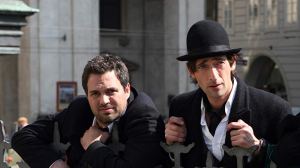 The acting across the board is superb. Ruffalo is his typically low-key yet engaging self, and he seems sincere even when you know he isn’t. His love and concern for his little brother is touching. His schemes are all for his brother to get out of his shell and experience some level of happiness. Brody embraces the weariness of his character. He is confused and tired and feels like he cannot trust human connections; he’s paranoid that all roads lead back to some machination from his brother. His affection for Penelope is like an awakening for his character, and yet he cannot fully give into it because is it genuine? This incredible level of uncertainty with every aspect of life casts a heavy toll, and Brody convinces you of that toll. Kikuchi (Babel) makes great use of physical comedy and has a lot of fun with her mysterious character. She’s mute for practically the entire film yet manages to communicate plenty. But it is Weisz (The Fountain) that steals the movie and steals your heart. Her screwy eccentric is deeply lonely but radiates a ditzy glow. She fully embraces the prospects of adventure and bounces in glee. This woman is powerfully adorable.
There are a handful of missteps in the narrative. The movie likely lasts twenty minutes longer than it needs to, with false endings and even a false third act. Audiences are used to con movies revealing the larger scope by the end after a bevy of last-minute twists. This is not the case with Bloom. The movie gets more muddled and introduces new conflict that isn’t ever really resolved. Audiences expect clarity by the end of the third act, not confusion. I feel like I’m missing something with the duplicitous Diamond Dog character (Schell), and maybe that’s the point; perhaps I’m supposed to be in the dark about his connection to the brothers Bloom. I won’t get into spoilers, but I was expecting more reveals at the end of the movie, perhaps Stephen showing one last final box, and the movie gives you nothing. I suppose the purpose is to play against con movie conventions and the surprise is that there is no real surprise by the end, no “I was in on it” or “It was all part of the plan” a-ha moments of ironic revelation. That’s nice but it doesn’t always make a movie more satisfying. The ending would be more moving if the audience didn’t already feel spent by the time they have to process something more emotional.
Johnson’s follow-up to his immensely entertaining debut is a solid winner, though it leaves you hanging and wanting at the end. The movie is quirky and heavy on the whimsy, and yet it also squeezes in some pathos. Yet the movie falls short of its ambitions and the talent of Johnson. The Brothers Bloom will seem enchanting to some and insufferable to others; it defies expectations and genre conventions, and sometimes would be better off adhering to them. It’s an amusing caper comedy but it could have been something even more special. It just needed a little less narrative sleight-of-hand.
Nate’s Grade: B+
Share this:


Posted on June 11, 2009, in 2009 Movies and tagged adrien brody, crime, mark ruffalo, quirky, rachel weisz, rian johnson, rinko kikuchi, robbie coltrane. Bookmark the permalink. Leave a comment.


 nathanzoebl
Leave a comment
Comments 0