Daily Archives: January 6, 2008
Untraceable (2008)
 The Internet can be a scary place, no question. There’s plenty of weird crap in wide-open world of the World Wide Web. There are sites devoted to teaching people how to make bombs in the privacy of their own kitchen. If you can name a fetish, chances are there’s a pay sex site already built for it (I tried “clown porn” and was not disappointed, and by that I mean that I found a site for it and WAS deeply creeped out). According to the ongoing Dateline specials, everyone wants to “talk” to adolescent girls while they’re home alone. In short, the Internet can be a scary place. Untraceable, a barrel-scrapping genre movie, taps into our fears of the unknown in cyber space.
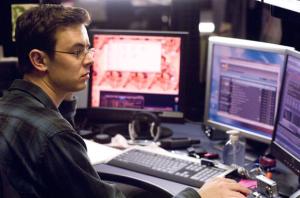
Agent Jennifer Marsh (Diane Lane) is a member of the Portland, Oregon office of the FBI. She specializes in tracking down cyber criminals and bringing them to real-world justice. There’s a new Web site called “Kill With Me.com” that invites anonymous users to serve as executioners. The site creator creates death traps that increase in deadliness the more users click onto the site; so a man bleeds out faster the more people that want to catch a glimpse of it. Lucky for the FBI, the cyber killer is doing all this nasty business in Portland. Marsh and her cyber assistant (Colin Hanks) try finding the location of the IP site but, somehow, it skips around the world and cannot be pinpointed. The victims of the site are specifically chosen, and Marsh is struggling to put it all together. Then the cyber killer begins stalking her and lets others join in on the fun.
 Untraceable is rather hypocritical in nature. It wants to titillate an audience but then shame them for embracing the titillation; the movie is purveying the same crap that it derides. The premise of a digital age serial killer that transforms murder into an online democratic act sounds nifty. Plenty of insightful questions generated by this premise like the nature of exploitation, media, and the culpability on the account of the insatiable viewing public. It’s too bad, then that Untraceable just uses the premise as a jumping off point to create a half-assed Saw. The movie is mostly concerned with reworking the familiar tropes of the serial killer genre, this time with some extra dashes of torture and Saw-style death traps. But the movie doesn’t fully commit to horror so much of the gore is implied. The extra attention to torture seems timidly tacked on to the framework of a thriller, likely grossing out the older folk that came to the movies thinking they were going to watch Diane Lane assert justice on this new fangled Internets thing. The movie has a vague fear of technology and computers and seems programmed to scare people that don’t know any better, namely the people who think computers are bigger toasters.
The script by relative neophytes is where the movie treads water. The villain is revealed fairly early, like a half hour in, and this revelation does nothing to help build tension. The culprit responsible for the laughably implausible death traps is a gangly eighteen-year-old twerp (Running with Scissors‘ Joseph Cross; yes that kid). I understand that in serial killer movies the villain usually takes on some form of supernatural abilities, like the ability to be everywhere and never be seen, or the ability to draw super strength at opportune times. When Untraceable apathetically reveals its villain the movie seems like it’s already giving up and conceding, “Okay, this is the big bad dude and he weighs about 110 pounds soaking wet. We know he could never outmatch anyone that is over five feet tall.” Marsh’s home life is also given obligatory screen time, including Marsh’s mother keeping watch of the home, but it never matters. In this world, birthday parties just get in the way of FBI manhunts.
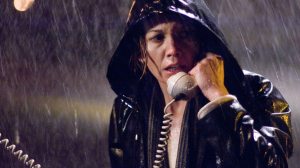
The film also requires character to act inexplicably stupid at a moment’s notice in order for the plot to hum along. Marsh is such an expert on cyber crime, and yet she doesn’t bat an eyelash when her young daughter downloads a mysterious computer program sent to her by a “friend”? Never mind that this FBI expert logs onto the “Kill With Me” site on her home computer, allowing the killer to hack into her computer and look through all her personal information and cyber dirty laundry. The worst lapse occurs after our tech-savvy killer has effectively hacked into Marsh’s OnStar computer system in her car. The engine shits down and the car slows to a halt. Marsh leaves her car to use a roadside telephone to tell another cop that the killer has hijacked her car. The cop on the phone advises her to be on alert. Right after she hangs up, the car’s engine and lights become operational once again. Marsh trots over to her car, whose door had been open since she left, and simply hops back inside without checking the vehicle at all. She is swiftly tazed and kidnapped by the killer who was routinely hiding in the back seat. It’s not like a trained FBI agent would be able to miss the inescapable sight of somebody hiding in a tiny backseat with little room to crouch. I can excuse smart people making stupid decisions, but when a movie like Untraceable has experts not following through on situations that require their expertise, then it comes across as contrived. Really, a cop wouldn’t even peek in the backseat?
 Lane holds her own, and even that is an accomplishment for something so rote. She’s an actress easing into her forties and finding a new tap of talent. Frankly, she should have won the Best Actress Oscar for 2002 with her fabulous work in Unfaithful. That movie came out five years ago, and yet the Diane Lane in Untraceable looks so much older. I think the filmmakers were trying to make her look more harried by not applying makeup or utilizing soft focus. You can see her wrinkles and her age, and these are all well earned for a great actress, and Untraceable wants to maker her look her age in a time where Hollywood seems to dump out an actress’ business card once she hits 40. I just thought that was interesting, but the most interesting facet of this entire movie is that the actor who plays the head of the FBI team (Peter Lewis) looks remarkably close to 2008 Republican presidential candidate Mike Huckabee. It’s uncanny. If Huckabee ever plans on contributing to a filmed biopic of his life, then Peter Lewis should be on his shortlist.
Untraceable scrapes the serial killer genre for some form of life. The novel premise gives way to predictably lackluster thrills and gaping plot holes. Lane saunters around with a gun for two hours, mixed in with some extended sequences of torture, including one that involves hundreds of heat lamps. Look, I know I’m no cop, but couldn’t someone simply trace the massive electric bill this guy is generating? It’s just sloppy police work all around. Why? Because the movie requires giant lapses in judgment so that it can continue. The world can be a sick place, but has it always been this way? A better movie would dig deeper; this movie just wants to fry a cat and call it a day.
Nate’s Grade: C
Share this:

Cloverfield (2008)
 I can think of no movie that has come out of virtually nowhere to build tremendous hype like Cloverfield. Before the summer of 2007 this movie didn’t appear on anyone’s radar whatsoever, and then came a teaser trailer before Transformers. The tease was nothing but party footage of well-wishers when, all of a sudden, explosions are in the distance, people are fleeing, and the Statue of Liberty’s severed head rolls to a stop in a street. Bam. Release date. Nothing else, not even a title. All of a sudden the world had an insatiable appetite for everything Cloverfield. Mega-producer J.J. Abrams had done it again. In one fell swoop he took control of geek nation. I never expected Cloverfield to live up to the massive hype, but this modern monster movie delivers more bangs than whimpers.
The first twenty minutes of the film introduce us to our cadre of yuppy characters. Rob Hawkins (Michael Stahl-David) is leaving for Japan to take a business promotion. His friends throw him a surprise going away party to celebrate and wish him the best. Rob’s brother Jason (Mike Vogel) and his girlfriend, Lily (Jessica Lucas), start videotaping the party. Jason hands off the taping duties to Hud (T.J. Miller) who, thankfully, has a much steadier hand. Hud walks around the party gathering interviews and he zeroes in on Marlena (Lizzy Caplan), a gal he’s been nursing a crush on. Rob is nervous to see if Beth (Odette Yustman) will come to the party. Beth and Rob are long-standing friends that took the plunge and had sex a couple weeks prior. Now Rob is hoping for something more but Beth isn’t on the same page; she brings a date to the party. Interrupting all this twenty-something relationship drama is a giant monster attacking New York City and dropping little baby monsters to scurry the streets and feed.
 While not entirely unique, Cloverfield is certainly a reinvention of the dormant monster movie. By seeing its gimmick through to the very end, the film gives a perspective rarely seen in movies that involve cataclysmic disasters. Usually films that involve space aliens, monsters, or some form of incredible destruction follow the people in power, the Army generals, the politicians, the President of the United States as he solemnly looks out his office window and says “God help us,” under his presidential breath. Cloverfield, however, eschews all of that. This movie is all about people caught on the peripheral of a disaster and just trying to survive. They have no idea what’s happening, they have no idea when they will be in danger, they have no idea where to go, they have no idea how long they have, and they definitely have no idea what it is that’s obliterating the city. The film dares to place us in the shoes of ordinary civilians as they document the fantastic. The “found footage” concept and the ordinary perspective are interesting though some will quibble that staying inside one point of view is too limiting for the scale of Cloverfield. This film is more than The Blair Witch Project meets Godzilla; this movie is a collective manifestation of the nation’s 9/11 anxieties. Cloverfield is the first 9/11 disaster movie. The shock and confusion of the situation take on even more resonance by triggering some of the same emotions many experienced on that fateful day in 2001. And yet Cloverfield doesn’t feel exploitative or disrespectful as it draws upon our 9/11 memories and fears, which is saying something substantial about the filmmakers’ skill and the remarkable healing power of time. Some images are unmistakable, like a white cloud of dust that blows through the city and also helps to shroud the monster. People scamper around the city yelling for some kind of explanation when some character, offhandedly, says, “Do you think it’s another terrorist attack?”
The film is also got some fabulously frightening moments that are not related to 9/11 anxiety. Cloverfield is a great, old school horror movie on top of a subversive social experiment. Talented writer Drew Goddard has had experience building tension on some of TV’s finest shows, like Buffy, Angel, and Lost. Now with his debut screenplay, Goddard cranks up the suspense and creepiness to maximum effect. Part of the horror is trying to find meaning in the madness but another equally enjoyable part is walking into perfectly executed classic horror moments. You will be on edge about what could possibly be around a corner. Our band of survivors decide to walk through the subway tunnels and discover that Hud’s camcorder has night vision; sure enough, you are waiting with baited breath for the second that night vision is shifted on and something pops out in view. There’s a distinct difference between cheap jump scares and spooks that, as I say, earn their boo. This tunnel scare is catapulted to frightening from the ominous buildup that comes from seeing hundreds of rats running away. When I saw the fleeing rats, I knew something very bad was coming from behind. The structure is clever as Goddard gives us back-story on Beth and Rob via the original footage of them canoodling that cuts in here and there. Goddard earns his stripes with a script swiftly paced, filled with genuine scares, and smart enough to keep an audience laughing with gallows humor at key moments (“Okay, so our options are… die here, die in the tunnels, or die in the streets.”).
 You the viewer are in the middle of the action with this film and there’s no getting out, no distancing yourself from the chaos, no watching men in lab coats and military uniforms dissect the situation over large boards. The gimmick of Cloverfield is flawlessly executed thanks to director Matt Reeves, who spectacularly resurfaces from movie jail after writing duds like The Pallbearer and Under Siege 2: Dark Territory. Reeves explores some dark territory of his own but never breaks the tenuous tone needed for the movie to succeed. The movie is constructed with many long takes and it never exposes its secrets. I watched spellbound by the artistry of maintaining the illusion from beginning to end. Watching the Brooklyn bridge collapse from the inside is exciting and terrifyingly real. Reeves and Goddard smartly decide not to show their monster for as long as possible. Catching glimpses of a shadow or the flash of a tentacle-like appendage are enough to register goose bumps; the human imagination will always be more capable of engineering horror. Eventually the film does give its monster the proverbial close-up and the giant, skyscraper-sized beast looks a little familiar in design (think Vin Diesel sci-fi movie).
Cloverfield is a well-executed genre movie with a clever concept that is fully realized. The constantly bouncing and roving handheld camera might make an audience queasy, but the perspective of the end of New York City as brought to you via YouTube is stimulating and a comment on our self-absorbed culture. The film works as a finely tuned fright film elevated by its stylistic concept and the filmmaking skill to pull it off. Cloverfield being “found footage” and evidence from the Department of Defense doesn’t exactly bode well for the characters onscreen, and the film dispatches them with cool malice. No one is safe and no one can stop what’s coming. If that doesn’t sound like the perfect summation of 9/11 fears, then I don’t know what else is.
Nate’s Grade: B+


 nathanzoebl
You must be logged in to post a comment.