Blog Archives
Mad Max: Fury Road (2015)
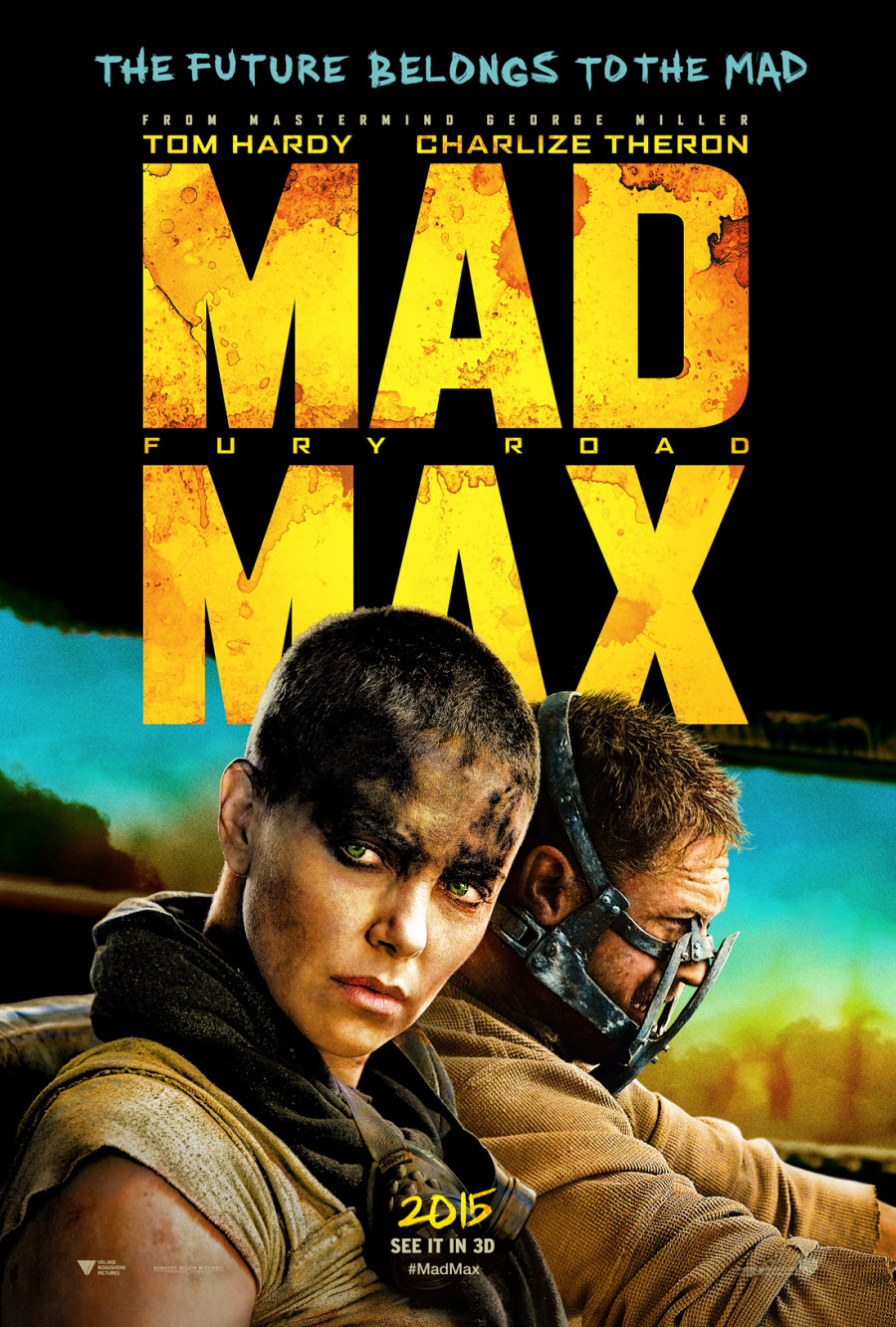 Allow me to begin with a confession. I had to see Mad Max: Fury Road again. I knew minutes into the film that my appetite would not be quenched and I needed to see it again, which I did less than 12 hours later. A week later I saw it a third time in the theater. The reason I did this is obvious in one regard – it’s a highly enjoyable, pulse-pounding, amazing spectacle of first-class stuntwork and mad genius so rarely accomplished on such a large, splendid scale of destruction. The other reason, from a writing standpoint, is that I needed to see the movie again or else my review of Fury Road was going to consist of nothing but an unending stream of positive adjectives vomited upon the page in excitement. And for you, dear reader, I wanted to do better. Also, I wanted to see Mad Max: Fury Road again and I honestly wouldn’t mind in the slightest seeing it again.
In the post-apocalyptic future, Immortan Joe (Hugh Keays-Byrne) is an aging warlord with his own fiefdom. He controls the water supply and has an army of gearhead warriors to enforce his rule. His trusted driver, Imperator Furiosa (Charlize Theron), is leading a caravan for supplies when she goes rogue, driving off into the desert. Furiosa has taken Immortan Joe’s “property,” namely his five wives. Enraged, Immortan Joe gathers a posse of death vehicles and riders and heads off to reclaim his “property.” Max (Tom Hardy) is a drifter thrust into the middle of this conflict when he’s strapped to a car and driven out into the desert, part of the Immortan Joe rapid response forces.
 There are few things more exhilarating in the realm of motion pictures than a well-executed, well-developed action sequence, and Mad Max: Fury Road is a blistering, awe-inspiring masterpiece of brilliant carnage. What director George Miller has achieved onscreen is visionary. The level of execution is so rarely seen at such a large scale, and with so many moving parts, that I was delighted and curious how something this extraordinary could escape the risk-averse studio system. I’m trying my best to restrain myself from sheer hyperbole, but this is an instant classic in the world of action cinema and a definite top five all-time action film (for those keeping track, I would say last year’s Raid sequel would also qualify for that status). The movie provided me a font of joy that did not let up until the end credits ushered me out of the theater. The action sequences are epic in their scale, with dozens of different vehicles in hot pursuit, and yet Miller brilliantly orients his audience to every moment of his symphony of demolition. There are so many different parts to the action but the audience knows everything that happens. The sheer sense of momentum and pacing is overwhelming and giddy. The action sequences develop organically, with new consequences throwing our characters into different and dire directions. There’s also a startling amount of variety with the action sequences. Fury Road has been described as a two-hour chase film, and that’s accurate to a degree, but there are breaks in between the sequences, small moments to catch your breath and learn more about our characters and their hostile world. Each sequence is different enough that the action doesn’t ever feel redundant, even when the third act literally requires the characters to backtrack. The adrenaline just doesn’t turn off from the get-go, and Miller keeps throwing out new tricks, new stunts, and new cars to astound and amaze. Simply put, Fury Road shames other American film releases.
The stuntwork is another facet that just raises the bar when it comes to action movies. Miller emphasized practical effects whenever possible, and the emphasis pay off with a heightened sense of realism onscreen. It’s real cars being smashed to real bits, real stuntmen being tossed around. In an age of CGI over saturation, it’s all too easy to become numb to big screen spectacle because of how hollow it all comes across visually. Just this past month with the Avengers sequel, I knew that all the fight scenes were mostly CGI or actors against green screens, and it eases off the enjoyment of the moment. Don’t even get me started on the deluge of CGI carnage in the last Hobbit film. Real physical objects and physical interaction offer so much more believability in an age of increasing disbelief with special effects. With Miller’s focus on practical effects first and foremost, it brings that sense of crazy excitement back and it ensures that Fury Road will hold up better over time.
 I also appreciated just how much thought Miller and his team put into crafting their world. Every detail feels like it adds to the overall richness of Miller’s vision. The designs of the cars, the use of scrap, the fact that a pulley system is operated with children running up giant wheels, it all contributes to making the world better realized and more alive. The level of thought put into weird and deadly concepts in this movie is fantastic. Once the main characters pass through a bog of land, we see people dressed in cloaks traversing the land on stilts, and it’s little passing details such as this that make the movie feel more complete. I enjoyed that one of Max’s heroic attributes is that he’s specified for his blood type, being O the universal donor. The fact that Miller finds a satisfying way to bring this attribute back as a payoff is also appreciated. I also enjoyed how Miller expands upon the family of Immortan Joe, with his bevy of freakish sons and brothers and peculiarities. I enjoyed the fact that Miller isn’t afraid to embrace the weird of his dystopia, symbolized best by a blind guitar player attached to a roaming wall of speakers who can shoot flames out of his instrument. Every time the movie cut back to this guitar playing pace setter, I smiled, and I smiled a lot during this movie.
Some have grumbled that Max is a supporting player in a movie that bears his name, but I would argue he is a co-lead and the real star is rightfully Imperator Furiosa. Max is not replaced with Furiosa, rather they have an inter-dependant relationship where they’re both vulnerable and they both come to trust the other but without a romantic mingling. These are both wounded, shaken, mistrusting, and volatile people, and to watch their shared sense of teamwork and the gradual opening and reliance upon one another, it is itself an affecting and emotionally satisfying relationship. But back to Furiosa, it’s really her story because she is the one with the personal connection to the mission. Max has always kind of been a wandering warrior who finds himself in other people’s battles. Consider him a post-apocalyptic Man with No Name. Furiosa is the leader who has planned and implemented the escape from Immortan Joe, and it’s she that deserves our attention. I enjoyed the fact that Miller doesn’t even have to explain her past. We know she’s suffered trauma, physical and likely sexual, and he assumes the audience does not need Furiosa’s past abuse spelled out specifically for them, or seen in grisly flashback. She’s a strong woman who is far from helpless with one arm. This is a story about women liberating themselves from sexual slavery under a corrupt patriarchy (more on the thematic relevance below). Theron is our leader and the ferocity in her eyes is all you need to believe that this woman will do whatever it takes for freedom.
The other aspect that’s very clear is that Fury Road is a decidedly feminist film but it never stoops to preaching or even directly calling attention to its efforts. It’s a ruined world where men with unchecked power have exploited the vulnerable, where women are treated as “property” and valued for breeding purposes. Our heroes are by and large women who have rejected their roles in this society or are fleeing their impositions. And with Furiosa as lead, it paints a more than convincing picture of women being just as capable and badass in the post-apocalypse (I want to go as Furiosa for Halloween). It’s a movie that portrays women struggling against an unjust system that devalues them but Fury Road doesn’t wallow in their suffering. It doesn’t have to in order to get its points across. It also treats the wives in a manner that lacks being sexualized. Immortan Joe has treated them as property but Miller treats them as human beings, even going as far as to give them distinguished personalities. They play a role in the action rather than damsels in need of saving. I’m not saying they approach three-dimensional characters but they’re certainly not just eye candy. There’s a sequence where they wash each other with a hose, and you could see the myriad ways this moment would go tawdry for some cheap titillation, but the film steers clear of that and moves on to the bigger picture. What the Men’s Rights Activists (sadly this is actually a thing) seem to have lost in their caterwauling is that feminism is not a zero-sum game; one person gaining stature and opportunity does not mean it’s taken away from another. Just because Furiosa is strong it doesn’t make Max weak. Furiosa being a compelling lead character does not diminish Max. It makes him an even better character because he recognizes her value and his own limitations, like a scene where he voluntarily hands over a rifle because he knows she’s the better marksman. No one has to explicitly point and say, “Girls can do it too.”
 There’s also a fascinating commentary on the danger of religious fundamentalism with the war boys. These powder-white young men are Immortan Joe’s armed forces and they are promised a swift appearance at the gates of their paradise if they die in battle (“Witness me!” is their exclamation before sacrifice). They spray paint their faces chrome (“Eternal, shiny and chrome”) and then go in for the kamikaze kill. Again, the theme is ripe and obvious but without requiring characters to comment. Nux (Nicholas Hoult, wonderfully deranged and then sincere) actually has the closest thing to a character arc, going from hopeful martyr to independent thinker. He begins as a clumsy yet determined antagonist and becomes a resourceful and unexpected ally.
This is practically a flawless film on a technical level. The cinematography by John Seale (Cold Mountain) is bright with lush colors that pop on the big screen. We’ve been treated to far too many color degraded films, so it’s nice to view a movie that wants to use all the colors at its disposal. The musical score by Junkie XL (300: Rise of an Empire) is stirring and pulse-pounding with its heavy percussion, but there’s a languid melody that returns again and again that is emotionally resonant. It’s surprising how the score will punctuate the bombast and wailing guitars with a lovely string arrangement, like when we rush into the sandstorm and a car is blown into the sky. The editing is outstanding by Margaret Sixel (Happy Feet) and she keeps the audience informed with every new twist and turn, and with so many moving parts and changing dynamics, that is a miracle itself. The production design by Colin Gibson beautifully expands and informs this strange world. There isn’t a department in Fury Road that wasn’t at the top of their game.
If I had to quibble, I could accept the argument that Mad Max: Fury Road lacks the substance to be considerably more than an exhilarating action ride. The dialogue can be a bit on-the-nose, Hardy mumbles through a majority of his miniscule lines, and the characters aren’t as fleshed out as they could be and the plot is rather bare bones. However, I view its narrative economy as a virtue, as there isn’t a moment or scene wasted in telling this breakneck tour de force of post-apocalyptic demolition. Rarely does an artist get to work at this level in the studio system let alone succeed with a final product that still manages to be strange, mordant, uncompromising, and completely riveting. This is a near-perfect action movie and a thrilling high-wire act of practical filmmaking bravado. Mad Max: Fury Road is the standard I am going to judge all summer movies by for the rest of the year, and I imagine many will be found wanting. I could continue to heap praise on the movie but the most persuasive stance I can make is that if you fail to see Fury Road on the big screen, you will always regret this decision. I am a disciple of Fury Road and witness my brethren and me. This movie was made for the biggest screen, the loudest sound system, and an endless bucket of popcorn.
Nate’s Grade: A
Share this:

A Million Ways to Die in the West (2014)
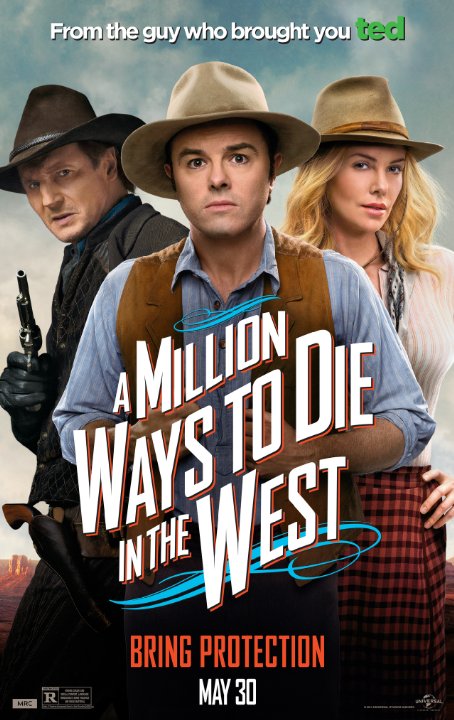 I was no fan of Seth MacFarlane’s first big-screen effort Ted, but I had my hopes up for his Western comedy after some genuinely funny trailers and the reported promise of a lack of anachronistic jokes. A Million Ways to Die in the West lands about half of its jokes, which is a definite improvement though still has enough dead spots that left me shifting around in my seat. The main conceit, a self-aware individual explaining all the myriad ways the Wild West is horrible and will kill you, is a fun operating principal that is also weirdly educational. And MacFarlane actually makes a pretty good comedic leading man, enough so that he could get gigs in other people’s movies. He plays a coward roped into fighting an outlaw (Liam Neeson) after unknowingly falling for the outlaw’s wife (Charlize Theron). The meta jokes critiquing the romanticized living conditions of the West have the highest percentage of laughs, and there are some great sequences like a trip at the local fair which turns deadly so easily. Theron and MacFaralane make a good pair and the supporting cast, with Giovanni Ribisi and Sarah Silverman, are funny and don’t overstay their welcome. Neil Patrick Harris is also amusing as ever and even gets a song-and-dance number about the virtues of mustaches that, honestly, should have been better. But every so often MacFarlane can’t help himself. There are some gross-out jokes that go a little too far. Then there’s the fact that the movie forgets to be a comedy for long stretches, morphing into an action thriller or budding romance. The scenery is nice but I would have liked more jokes. The movie is also far longer than it needs to be, dragging out the climax. I’m also somewhat disappointed that MacFaralne and his writers missed out on an obvious payoff, namely the myriad ways the West can kill you. It only seems natural for Neeson and his gang to be foiled by the West itself, which would present a fun guessing game for the audience to anticipate what deadly condition would strike next. Alas, a missed opportunity. A Million Ways to Die in the West is a hit-or-miss affair with just enough hits to warrant a casual viewing.
Nate’s Grade: B-
Share this:

Prometheus (2012)
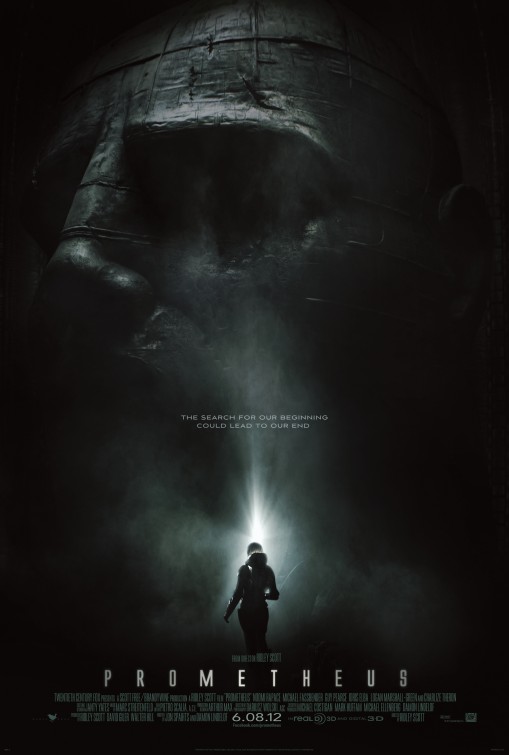 Ridley Scott has always wanted to go back to the Alien franchise that began with his 1979 sci-fi staple. There have been a lot of coy discussions over whether his big-budget sci-fi spectacle Prometheus is indeed an Alien prequel or not. Scott keeps hinting it has the DNA of the franchise but exists on its own. This movie has some Big Questions on its mind, like where did we come from, but the biggest question out there is whether it really is an Alien prequel or not. Well rest assured, that question will be sufficiently answered. Now if you have more than that, you will be left empty-handed with this gorgeous but ultimately confounding sci-fi thriller.
In 2089, a team of archeologists, lead by Elizabeth Shaw (Noomi Rapace), discover an ancient star map from 30,000 years in mankind’s past. This is not the only ancient illustration displaying the same constellation. Sure enough, in every ancient civilization across the globe, the same star pattern. Shaw believes it is an invitation and th key to finding the “engineers” who may be responsible for life on Earth. Four years later, the wealthy Peter Weyland (Guy Pearce) has funded a trip to that exact point in space, which harbors a moon that seems extraordinarily like Earth and capable of sustaining life. The ship is run by Meredith Vickers (Charlize Theron). who keeps asserting her company’s authority on this mission. Along for the ride is a cocksure pilot (Idris Elba), an android named David (Michael Fassbender), and Shaw’s own lover, a scientist in his own right, Charlie Halloway (Logan Marshall-Green). When the gang gets to that moon, they uncover large buried structure with some nasty surprises inside. Suffice to say, they should have stayed home.
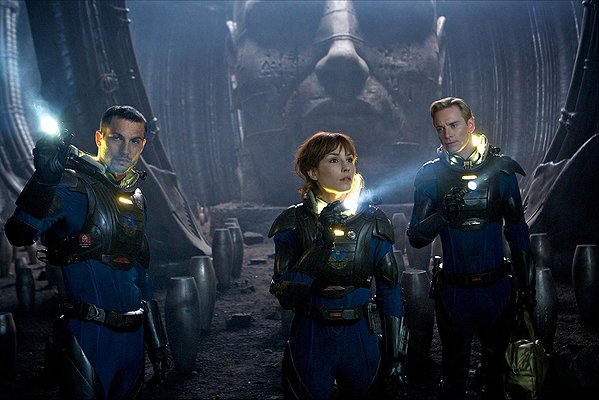 You can always count on Scott to deliver a visually extravagant picture, and Prometheus is packed with stunning, arresting visuals that fill up the big screen with lovely detail. The scale of some of these sets is massive, and your eyes just want to soak up every detail. The alien world is vast and eerie and you just want the characters to spend the rest of their lives exploring it (Scott shot in Iceland but it looks remarkably like a whole different world). The interior sets on the space ship are also sleek and cool. There’s a terrific sense of immersion in the movie. Scott has always done a great job at building worlds that feel completely lived-in, and Prometheus is another example of his talents. The special effects are astonishing but best when not dealing with the biological life forms. The giant spaceship is incredible; its inhabitants? Not so much. Apparently our DNA grandfathers looked like giant Michelin men (thankfully we take more after our mother’s side). Prometheus demands to be seen on the biggest screen possible.
Prometheus harkens back to the original Alien in its suspenseful “haunted house in space” setup. The movie has some terrifically taut moments and a great overwhelming sense of dread. The scientists let curiosity get the better of them, so they poke their heads in dark corners, touch unknown alien material, and get up close and personal with things better left unmolested. If slasher movies elicit a “Don’t go in there” audience response, then Prometheus certainly elicits a “Why are you touching that?” reaction. And yet, deep down, we want them to keep pushing further because like the best suspense films, we can’t stand the tension but we really want it to keep going. Probably the most memorable scene of them all involves Shaw performing her own hurried abdominal surgery to remove an alien from inside her. It’s creepy and caused me to wince repeatedly, but man is it fun and gruesome and a nice payoff to an earlier setup. The rest of the movie is pretty standard with its thrills, including the canon fodder supporting characters getting picked off unceremoniously, and the large-scale devastation climax. The movie delivers the goods when it comes to entertainment and suspense, though mostly in the first half. It’s almost like the movie is awed by the visuals as well, and then halfway in remembers, “Oh yeah, we got to do more than just poke at things,” and then it’s a rush to the end with a cascade of conflicts that don’t seem properly developed.
The film lays out a very essential question about the origins of mankind and plays around with theological concepts but it only plays in the shallow end of the philosophical pool. The screenplay by Jon Spaihts (The Darkest Hour) and Damon Lindelof (co-creator of TV’s Lost) deals with the conflicting origin stories via religion and observable science but never goes into specifics. “Religion” is always symbolized as a cross necklace that Shaw wears and her falling back point upon what she “chooses to believe.” The discovery that our alien forefathers have a similar appearance would be a huge revelation, except the movie spoils it with a clumsy prologue that shows us right off the bat what the “engineers” look like. Prometheus actually posits an Intelligent Design argument for human existence, albeit one the Raelians have been promoting for years, the idea that intelligent life outside our galaxy seeded Earth. Yet the one scientists on the crew, the one who objects to 300 years of evolutionary evidence, remains mum on the matter. I suppose the filmmakers didn’t want their monsters-in-space movie to be bogged down with that much pithy philosophy, but I would have appreciated some meatier conversations other than, “Should we touch this?” It’s not nearly as thought provoking or as compelling as it thinks it is.
As I sit here and I write this, the plot becomes a wispy memory of strong set pieces and eerie mood, but I cannot connect the story. It makes little sense and by the end of its 124 minutes we’re left with hardly any more answers than we started with (some spoilers to follow). Our genetic “engineers,” as they call them, remain pretty nebulous. I suppose one could argue that it would be impossible to fully understand an alien race’s habits and purposes without resorting to pandering, but that strikes me as a cop out (I’m reminded of Spielberg’s similar approach in Kingdom of the Crystal Skull, where the characters that wanted to know were punished for their intellectual curiosity by alien forces). Why did these super aliens create life on Earth and leave maps to a planet that was little more than a weapons depot? Why would these superior beings create life hundreds of thousands of years ago and then leave clues 35,000 years ago that would lead to the destruction of their little experiment? The motivation seems rather hazy. It’s not like the aliens created life on all these planets and waited to be contacted so that they knew their little biological Easy Bake oven was done and then they could reclaim a new planet. It’s not some imperialist empire or colonization scheme; it appears to just be wanton destruction. That seems like a waste of effort. Did these aliens keep checking back, see our ancestors hunting and gathering and go, “Oh my Space Deity, I can’t believe we created life on this planet? We were so wasted. Well, just wait until they conquer space travel and then we’ll kill them with a weird biological weapon.” If your desire is to destroy life, why even have a waiting period? If these “engineers” wanted to destroy Earth why not do it when there was far less clean up? Is there some kind of parent-child relationship I’m just not getting here?
 Fassbender (X-Men: First Class) makes the biggest impression as the fastidious android, David. He’s by far the most interesting character and he’s not even human. It doesn’t take long to figure out that David has his own agenda, and Fassbender plays the character with this eerie passive-aggressive arrogance. You get the sensation that he looks down on his human clientele, but you don’t know what lengths he will go. “How far will you go to get your answers?” he asks before doing something very not nice. He makes statements like, “Who doesn’t want to kill their parents?” and there’s an icy placidity to him; he’s just off enough to be menacing and unsettling without going overboard. Fassbender is excellent.
The rest of the cast cannot be at fault for failing to measure up to Fassbender (is that a Shame joke I stumbled upon?). Rapace (Sherlock Holmes: A Game of Shadows) is given top billing and does an admirable job of being a kickass heroine, which we already knew she was fully capable of in the Swedish Girl with the Dragon Tattoo trilogy. She even has a Ripley-esque haircut, which I doubt is a coincidence. Theron (Snow White & the Huntsman) gets to once again practice her ice queen routine, but I wish she had more to do than occasionally glower and bark orders. Her character’s secret background should be obvious to anyone well versed in the film economy of characters. Elba (TV’s superior Luther) tries to stick it out with some twangy Texas accent but can’t make his way through. His natural British accent pokes through routinely. Then there’s Guy Pearce (Lockout) as the wealthy benefactor who bankrolled the whole project. Apparently he was hired to film viral videos as himself, because in the movie he’s like a 100-year-old man in some pretty poor makeup (he resembles old Biff in Back to the Future: Part 2). Why hire an actor of Pearce’s caliber if you’re just going to hide him under a veil of old-age makeup? The actors do what they can but the film doesn’t give them much to work with. They’re stock roles and absent development. You don’t notice for a long while because you’re so caught up in the exploration and the gorgeous visuals, but when the end comes you realize that you hardly knew these people.
After all the pre-release coyness about whether this belonged in the Alien universe, Prometheus seems to be a victim of its own sky-high hype. The movie is moody and dark and intriguing and visually magnificent, but the plot does not hang together at all. The central mystery of the origins of mankind is given a face to start with, but that’s about it. The confusing story tries to mask its plot holes but eventually they just overtake the movie. It’s an entertaining movie in the moment but Prometheus pretty much evaporates as soon as you leave the theater and start thinking, “Hey wait a minute, that didn’t make any sense.” Why are mankind’s “engineers” a regretful bunch of jerks? Scott’s visuals are impressive, the film has a killer mood that’s hard to shake, but the plot is pretty shaky and reliant on supposedly smart people making pretty dumb decisions (why yes, I’ll try and touch the alien snake monster thing). That’s fine for basic thrills but it doesn’t elevate the movie into something headier, meatier, and more satisfying, like the original Alien. Prometheus was never going to meet the unattainably high expectations of fans stoked by tremendous trailers and the promise of Scott’s triumphant return to sci-fi, but much like the characters in the film, I was glad to go on this journey but wished I had more to take home with me.
Nate’s Grade: B
Share this:

Snow White & the Huntsman (2012)
 Snow White & the Huntsman is meant to be a darker, splashier, more action-packed retelling of the classic story, and when compared with the earlier 2012 Snow White venture, Mirror, Mirror, it certainly merits all those descriptions. With Twilight star Kristen Stewart at the helm, this movie seems tailored for teens looking for some girl power. I have no problem with reworking fairy tales to suit our modern-day cultural interest, but just giving a person a shield and a sword does not instantly make them a warrior. And just plopping Snow White into a medieval war does not instantly make this a movie worth watching.
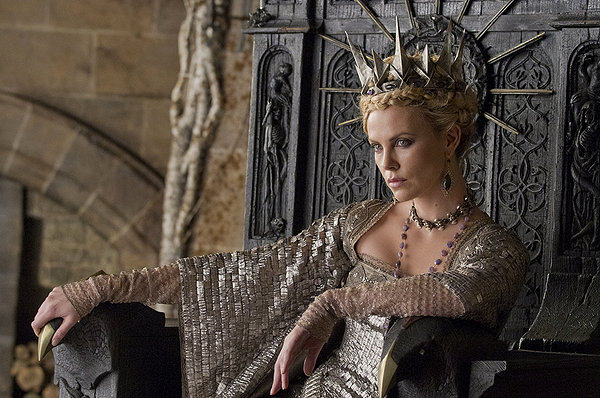
The wicked Queen Ravenna (Charlize Theron) killed the king and installed herself on the throne. She sucks the youth directly from ingénues to keep those good Theron looks of hers. She is the fairest of them all but she is warned that one day the king’s daughter, Snow White (Stewart), will overtake her in fairness. Snow’s been living in a prison cell for about ten years since her evil step-mom took power. She escapes her imprisonment and flees to the Dark Forrest beyond the castle grounds. The Queen’s powers will not carry over into the Dark Forrest (for whatever unexplained reason), so she hires the Huntsman (Chris Hemsworth) to retrieve Snow White. The Huntsman changes sides, allies himself with Snow, and some dwarves, and then everyone bands together to retake the kingdom under Snow’s stout leadership.
 Snow White & the Huntsman falls victim to that age-old screenwriting curse of failing to show us its work. I get so sick of movies, or any narrative really, that heaps praise upon some person and then never shows us any convincing evidence. If somebody is said to be a great poet, I want to hear one of his or her great poems. If somebody is said to be a great leader, then I want to see him or her inspire. To make up for the plot shortcomings, the screenplay reminds us at every moment of downtime how special Snow White is, how glorious she is, how different she is, how she is the only one to bring down the tyrannical rule of Ravenna. At no point did I believe any of this. Just because I have characters tell me, ad naseum, that someone is special doesn’t make it so. I need to see the evidence, and from what Snow White has to show, it is not that impressive. She’s somewhat resourceful, escaping from captivity, but she’s not exactly a figure of compelling strength, magnetism, or inspiration. She gives one “rally the troops” speech that gets the townspeople all fired up to go to war; it’s no St. Crispin’s Day speech, but even if we’re grading on a curve, it’s a pretty weak motivational speech. There’s no reason these people would line up behind this displaced damsel other than the fact that the plot requires them to do so. This Snow lady has, much like the infamous Bella Swan, the personality of a dead plant, and all the proclamations to the contrary will not change that fact. Snow White is just not an interesting of compelling person, period.
There are two reasons why Stewart is completely wrong for this part. First off, when we’re objectively talking about one who is “fairest of them all,” and Charlize Theron is in your movie, you’re going to lose every time. I’m not saying Stewart is wretched looking; quite the contrary. Debut director Rupert Sanders finds ways to film her that make her look lush and vibrant. Some would argue “fairest of them all” is not in references to physical beauty, which it has always been, but to the fact that Snow’s heart is so pure and good. If that’s the case, that’s just stupid. Then why even make it Snow White if the nemesis to the evil queen is simply somebody who is morally just? You could have had a commoner play the role and that would have brought about more interesting class conflicts. Secondly, Stewart is such a modern era actress, someone who has so effectively channeled the rhythms of a blasé generation of young people, that dropping her into a medieval time period is jarring. She doesn’t fit. Everything about her aloof acting style screams modern times. Maybe that’s why her speaking is kept to a minimum. She can ride on horseback, dress in Joan of Arc armor, but she’ll never strike anyone as a fitting Epic Heroine. I feel that her acting has blended with the sullen nature of Bella Swan to the point that it’s hard to separate the two. I’m not a Stewart hater at all. I actually think she can be quite a capable actress (see: Speak, Adventureland, the upcoming adaptation of Kerouac’s On the Road) when paired with the proper material. Snow White & the Huntsman is not the proper material.
Aside from casting errors, this dark fairy tale doesn’t find any time to settle down and develop anything that could approximate characterization. Case in point: all we know about Snow is that she is a princess, everyone tells us how beautiful she has always been, she runs away, and then leads a rebellion, then she become queen (don’t pester me about spoilers). What else do we know about her? She’s defined entirely by outside forces, especially the charitable words of others. Snow White is not a character but a symbol, the prophetic Chosen One. She’s really a placeholder for every lazy archetype needed for epic fantasy. Stewart cannot connect with the material, so she seems to wander around, mouth agape, almost like she’s stumbling drunk through the whole movie. It seems that Snow White & the Huntsman just provides us the familiar elements of the story (evil stepmother, huntsman, dwarves) and expects us to fill in the rest with our own wealth of knowledge over the famous fairy tale. The rote insertion of a long-lost childhood friend/eventual love interest (Sam Claffin) is made tolerable only by the fact that he does not eventually become a love interest. This Snow doesn’t need a man, and good for her.
Sanders’ background in commercials definitely shows in his superb visual palate. The man knows how to frame a beautiful shot, and the visual highpoint is Snow’s hallucinogenic shamble through the Dark Forrest. Without the narrative traction, though, the movie starts to resemble one very long, very excruciating perfume ad, particularly when Snow comes across a white horse just laying down in the surf. Some of Sanders’ “ain’t nature great” creations deeper into the forest reminded me very strongly of Miyazaki’s Princess Mononoke, especially with the godly stag. Despite its considerable faults, Snow White & the Huntsman is a great looking movie. Sanders’ crisp visuals are further enhanced by wonderfully theatrical costumes from multiple Oscar-winner Colleen Atwood (expect another award on that mantle come 2013). Queen Ravenna has more eye-catching outfits than Cher in her heyday. They seem to be made out of interesting organic elements, like a gown accented with diminutive bird skulls. She may be a ruthless tyrant, but man does that lady know how to dress. The fashion choices became so exotic and intriguing that it provided another reason for me to hope we’d get more time with the queen. The production design by Dominic Watkins (United 93) is fittingly medieval. At least there’s always something nice to look at with this monotonous bore.
I don’t really get the geography of this kingdom. By all accounts, it looks like one poorly guarded castle, one poor mud town, and a deep expanse of forest. The fact that it’s labeled as the Dark Forrest seems shortsighted, since it takes a few hours continued walking to come across all sorts of other civilizations, including our scarred matriarchal society. And then there are dwarves too. It all feels so listless, lacking any sort of connective tissue to help round out this magical world. After a while, it just becomes an assortment of cool stuff just put into a movie because it’s cool. The fact that none of these magical creatures or assorted villagers ever pop back again, except for our coronation in the resolution, means they were meaningless to this story other than being a rest stop.
 The screenplay is surprisingly rushed; rarely do we spend more than five minutes in any location. I was interested in a city of women with self-inflicted facial scars to protect themselves from Ravenna coming for them. Just as things start to get interesting, it’s like the movie gets antsy and has to keep moving, and we’re off again. It’s hard to work up any sort of emotional engagement for anyone when we just spend a few minutes with these characters. The brisk pacing also gives the impression that the characters really don’t matter in the end. If it weren’t for a scene where the Huntsman blatantly explains every feeling he has to a comatose Snow White, we’d know nothing about him. The Huntsman is grieving over the loss of his wife, and oh she just happens to have been killed by Ravenna’s creepy albino brother (Sam Spruell). The pigment-challenged dolt confesses this convenient bit of information at a strange time. Why confess to killing a man’s wife when you’re battling to the death? Confess afterwards. It’s another example of lame screenwriting and nascent characterization. Even the queen gets a bizarre throwaway bit of characterization. For whatever reason, we have a flashback to when she was a child and her mother forced her to drink the magic immortality elixir. Why did we see this? It’s too late to make her sympathetic. And yet, even this brief glimpse at Ravenna’s back-story makes her more interesting than our feckless Snow White.
The bleakly brilliant Young Adult renewed my fondness for Theron as an actress. For a while, she seems to really sink her teeth into the role, lapping up the villainy in a satisfyingly menacing manner. It’s at this lower level of burn, the quiet intensity, where Theron is most enjoyable. When the movie requires her to raise her voice is when things start to go bad. She shrieks in such a campy, over-the-top, weird overly enunciated style. Any hope of secretly enjoying this movie died with Theron’s stagy agitation. Hemsworth (The Avengers) adopts a thick Scottish brogue but does little else. At times I found that he looked remarkably like a cartoon tough guy; just something about his face lends itself to clean, burly definitions. The best actor in the movie is Bob Hoskins (Mrs. Henderson Presents) as a blind dwarf, and perhaps that sentence alone should say all that needs saying.
This film is more Lord of the Rings than fairy tale. It’s got some battles and some siege action to pacify the men folk, but this is obviously aimed at the ladies. It’s a feminist, Robin Hood-esque reworking of the Snow White tale, recasting the damsel as action heroine, and I’d have no problem with this revision if: 1) the film made her an actual character, 2) it had been played by anyone other than Kristen Stewart. It’s got all the familial elements but they have no context in this reworking; it lacks internal logic. If I did not have sufficient background knowledge about this tale, I’d be left wondering why any of this should make sense (apples are poisonous now?). At every turn, the movie has to tell us why things should matter rather than showing us. There’s no evidence onscreen why this Snow White lady deserves any fuss. Snow White & the Huntsman is a movie obsessed with appearance and precious little else. Snow White & the Huntsman is one boring, truculent, dreary chore of a movie that goes on far too long. Just because it’s darker doesn’t make it more mature or exciting. Fairest of them all, my ass.
Nate’s Grade: C
Share this:

Young Adult (2011)
 The basis for the movie Young Adult sounds like writer Diablo Cody settling a few sore scores. You’d think winning an Oscar for Best Original Screenplay for 2007’s Juno would have sufficed. Reteaming with her Juno director, fellow Oscar-nominee Jason Reitman (Up in the Air), the duo takes aim at the bitchy, stuck-up, popular girl that seemed to rule the school. Young Adult is much more than a vicarious act of vengeance on mean high school adversaries. It’s a revealing, awkward yet compelling dark comedy about the perils and pitfalls of arrested development.
Life hasn’t turned out exactly the way Mavis Gary (Charlize Theron) would have thought. The former high school queen bee has left her small town for life in Minneapolis. She’s the ghostwriter for a successful series of young adult books, a series that is coming to an end. She’s divorced form her husband, facing financial ruin, and living alone with her tiny Pomeranian, Dolce, her only friend. Mavis decides to forgo writing the last book in the cancelled series and instead return to her hometown the triumphant mini-celebrity she knows herself to be. She’s determined to find her old boyfriend, Buddy Slade (Patrick Wilson), and win him back. The fact that Buddy is married and has a newborn baby is no real impediment to Mavis’s crazy plan (“Hey, I’ve got baggage too,” she reasons). Once home, she runs into Matt Freehauf (Patton Oswalt) in a bar. Matt and Mavis went to high school together, though she has long forgotten the likes of him. Matt’s claim to fame was that a bunch of jocks in high school savagely beat him thinking he was gay. Matt sees right through Mavis and the two of them become an unlikely pair as Mavis plots and schemes her way to victory.
 Young Adult is one of the most enjoyable squirmiest times you can have at the theater. Much of its humor, and it is very funny, is built around the pained awkwardness of Mavis’ self-involved, self-destructive mission. My friend was nervously fidgeting in his seat the entire time (he may have just had to go to the bathroom). The sense of dread is palatable; we’re watching a slow-moving car crash, waiting for the inevitable to hit. Every scene carries the apprehension of, “What is she going to say/do next? Is this it?” And yet Cody’s sharp, pointed writing makes the film compulsively watchable. We dislike Mavis, an irredeemable character who doesn’t even try to be likeable, and yet by the film’s conclusion most audience members will likely feel more pity for Mavis than outright hatred. I’ve had some friends ask me if Young Adult was anything like Bad Teacher, another movie about an abrasive, selfish, unlikeable bad apple. This movie is different. This movie is actually good. Mavis is not some wacky cartoon character, and Reitman has kept his reaction shots to a minimum, abstaining from having to remind us via public reaction how inappropriate Mavis can be. Unlike Bad Teacher, this grown-up meanie feels all too real, and her actions come across as believably threatening. This woman could do some serious damage on her way to massage her damaged ego. The movie never condones her actions, though Reitman and Cody make a point of piling on against Mavis. This woman is an ugly wreck, and Cody’s writing and Theron’s gutsy performance speaks volumes. Cody’s writing isn’t the hyper-literate, stylized dialogue we’re accustomed to from Juno. The dialogue and characters are eerily recognizable, miles away from the cuteness of Juno’s sunny, optimistic fairy tale inhabitants. Young Adult is a more nuanced, droll, mature work that deserves as much recognition as Juno and cements Cody, in my mind, as one of the most thrilling writers today (I can almost forgive her for Jennifer’s Body. Almost).
Along with all the bleak comedy, Young Adult lands a surprising number of poignant dramatic blows. Cody has crafted an exacting character study on a severe case of arrested development. Many of us can relate to knowing that one gal in high school, the pretty, popular one who had everything in life handed to her. In Young Adult, Cody shows the devastating consequences of a lifetime of entitlement and zero introspection. Mavis secretly knows that she’s past her prime, that all the people she left in her Podunk town have moved on to richer lives while she’s stayed in the same holding pattern her whole life. Some part of her has never left high school. She’s an emotionally stunted woman trying to live out the fantasy of one of her undervalued books (her misreading of the end of The Graduate into a love-conquers-all message is rather telling). Mavis’ life is hardly the stuff of Champaign wishes and caviar dreams, but to the people of her hometown, life in the “Mini-apple” is the Big Time. There’s a fabulous scene where Mavis goes into a bookstore and sees her series on a clearance stack. The bookstore employee tells her they don’t sell and will be most likely sent back to the publisher. Mavis takes out her pen and autographs one, informing this minimum-wage peon that she is the fabled author of the series. She’s expecting fawning admiration. The employee flatly tells her, “If you sign them, we can’t send them back to the publisher.” In her disgust, she tries to sign as many as she can as an act of defiance. Later in the movie, Cody sheds light on Mavis’ family life, offering intriguing clues for how this woman became so broken. Her parents just seem to shrug off Mavis’ admission of alcoholism, like they’re used to their daughter acting out, even if she might really be crying out for help. She’s a fascinating character to watch crash and burn.
What gives the film its most potent sense of heart (Grinch-sized though it may be) is the unlikely yet compelling relationship between Mavis and Matt. Unlike Mavis’ perceived slings and arrows, Matt has suffered real trauma from high school. His bones were shattered from that brutal beat down and he’s left to limp with a crutch. He hasn’t been able to mentally leave high school behind completely himself, but then again he has a constant reminder. Mavis is strangely her most open with Matt, possibly because she doesn’t view him as a threat or a credible alternative (the joys of high school revisited – the pretty gal ignoring the existence of the lower classes). He’s portrayed as the film’s voice of reason, voicing concern over Mavis’ kamikaze narcissism. Together they form what could charitably be described as a friendship. She seeks him out to talk at odd hours of the night and he’s straightforward with her. He thinks her plan is nuts, but he’s also secretly enjoying his unexpected friendship with the queen bee of high school, albeit twenty years later. “Guys like me are made to love girls like you,” he confides to Mavis. Oswalt has shown some dramatic skills in the underappreciated sports fanatic flick, Big Fan. With this movie, Oswalt gives an achingly felt performance, the most empathetic character in the whole movie and a joy to watch onscreen in a high-profile role that fits him like a glove.
 But the true star of the film is Theron, who gives a fully formed and entrancing performance as someone who is as ugly on the inside as she is beautiful on the outside. Her character could have easily slipped into being an unsympathetic monster; someone the audience wants punished (like Cameron Diaz’ character in Bad Teacher). But the actress finds her own twisted, tricky way to center the character. Every detestable glance, every pained inhalation, every rigorous attempt at seduction, it feels like the character coming alive before our eyes. Theron has dissolved into the abhorrent mess that is Mavis Gary. She’s convinced that Buddy could never be happy with such a mundane life in a mundane town (“There’s a restaurant that’s a Pizza Hut, Taco Bell, and KFC in one building” she says incredulously). Her perspective is so deluded that you start to see the manufactured world Mavis has so cautiously built around herself as a defense from reality. She watches wall-to-wall reality TV, the perfect metaphor of our times concerning the idolization of idiocy and self-absorption. She may not be likeable but she’s definitely compelling, and Theron is so good as that-girl-from-high-school all grown up, that she might even win over some slight sympathy by the film’s end. At one point, the inner fear of Mavis reveals itself, and she expresses her confusion about the attainability of happiness. Why can others find happiness with so little, and she cannot find it with everything that she has?
Young Adult is a dark comedy of squirm-inducing, uncomfortable bleakness and a drama of surprising poignancy and depth. It’s the good kind of uncomfortable, the kind where you can’t look away or leave the vicinity of your seat. Theron and Oswalt are fantastic. Cody’s gift with words, teamed up with Reitman’s gift with actors, makes a beautiful combination even when the end product is charting the misery or a miserable person. The measured tone is kept from start ot finish, meaning even when the movie appears on the precipice of life-lessons and Mavis might turn her life around, it pulls back. There will be no hugs and gained wisdom with this movie, a crackling comedy that’s also one of the best pictures of the year. Take that, popular girls who never gave me the time of day.
Nate’s Grade: A
Share this:

Hancock (2008)
 Hancock is perhaps the first movie that looks at the consequences of being a super-powered do-gooder. I’m not talking the self-doubt or placing your loved ones in danger. I’m talking about money. A super hero can rack up super amounts of damage to a city, and the titular character often causes millions of dollars in destruction as he sloppily combats crime. In some ways, the super hero is more costly than the criminals. As you can imagine, the public at large isn’t too taken with Hancock (the film misses the opportunity to have neighbors worry their property values will plummet if Hancock moves into town). It’s too bad that Hancock, the film, doesn’t stay as original.
John Hancock (Will Smith) is a disgruntled man. He likes to drink, sleep, and keep to himself. Unfortunately, people keep bugging him for help. This may have something to do with the fact that Hancock is a man with the abilities of a super hero. He can fly, has incredible strength, and appears to be physically impervious, but that doesn’t stop criminals from emptying their guns at him. One gang learns firsthand the anger of Hancock when they destroy his whisky bottle. The city doesn’t know what to do with the world’s lone super being because he causes so much destruction. Ray (Jason Bateman) is a PR man fighting a losing battle to convince major corporations to donate supplies to needy countries for free. Hancock saves his life one afternoon and Ray decides to use his skills to give the irritable super hero an image makeover. He’s going to use Hancock to help change the world for the better. The plan to reform Hancock involves sending him to prison and waiting until the city begs for his assistance with rising crime. Ray’s wife, Mary (Charlize Theron), is wary of her husband’s super hero project. She just wants to live a quiet life with regular meatball madness dinners with her family.
 I think I’m already starting to get sick of super heroes and there’s still more to come this summer. There are several good ideas rolling around inside Hancock, but at a scant 92 minutes there’s little time to develop them. The movie takes off in a mildly satisfying manner but then botches the landing.
Smith’s considerable charms at put at odds with a character that resembles an ornery bastard. It’s a bit of a wink to the audience because no Hollywood studio would let the most popular international movie star release a super expensive summer movie where he begins and ends as a total jackass. The film seems to be tailor-made to Smith’s strengths, which still include his ability to naturally command attention and likeability. The idea of a lone super hero who drinks heavily, destroys personal property, and whom the public vocally dislikes is a sound idea and allows Smith and the filmmakers to explore certain realities not seen in other super hero flicks. The public griping over the methods Hancock chooses to save the day seems rather believable, especially when those methods usually involve heavy-duty collateral damage consequences. I like the idea that every time Hancock lands from flying he takes chunks of concrete or tar with him. There are several interesting ideas that come from the conflict between society and a super hero who would rather sleep off a hangover. I think the idea of paring a disgruntled super hero with an idealistic PR man is a great concept, benefited by Bateman’s sterling comic abilities fine-tuned from Arrested Development (where he also romanced Theron). I really enjoyed the interaction between Hancock and Ray. For a decent 60 minutes, Hancock is a passable super hero excursion lifted by Smith and Bateman’s chemistry.
Hancock starts with some promise but then goes in a completely different direction for its third act (let me just say this: there’s a reason they’ve been hiding Theron from any advertisement). The film also overplays its hand early. When Hancock and Mary first meet they hang on to each other, then she looks at him suspiciously and continues to, then she says some very leading dialogue that is a bit on-the-nose. All an audience needs is one award, penetrating look to understand that something is up. Hancock ends up feeling pulled in too many directions. It begins as a sly satire on super heroes and is mostly confined to jaunty comedy, but then the movie gets dramatic and grim and a bit hard to follow. The film begins as a jokey riff and then gets gritty, finding room to fit in mythology, religious questions, age-old racism about interracial dating, and a terribly clunky villain (Eddie Marsan) who breaks out of jail so that he can seek improbable vengeance against an immortal. Hancock’s origin is muddled and as preposterous as most other super heroes. The third act shift seems to drain all the fun out of the movie and it gets too serious, too confusing, and too convoluted (what’s the distance rule here between super people?). Hancock ultimately has too many chefs in the kitchen and becomes a mess.
 I’m sad to say but director Peter Berg really whiffs with this movie. His visual style is a hindrance to the film. I recently re-watched his first action film, 2003’s The Rundown, and Berg was able to craft stylish, highly playful action sequences without shaking the camera all over the place. A tripod served the film’s best interest and Berg tailored his visual style to the material. I expressed worry with his previous film, 2007’s The Kingdom, that Berg has become locked in to his handheld docu-drama style that bobs and weaves around his actors and employs numerous quick cuts and odd angles. His erratic style can improve and assist narratives but it can also hamper the storytelling. Nothing is really gained by Berg filming his tender moments at obtuse angles, extreme asymmetrical close-ups, and a hovering camera. It feels like a style completely unsuited for the material. I would have liked to fully watch the action sequences and enjoy the clever tweaks on the genre. Berg is an imaginative and underrated director, but his jittery docu-drama style he has embraced can also make his films seem cobbled together and overly rushed and, potentially, half-assed.
Hancock is much like the title character. It means well and wants to help but an audience can’t help but grumble about its methods. The concept of a super hero that is rejected by the people he saves is a subject ripe with subtext that could explore meaningful and insightful glimpses about guilt, the weight of expectation, the desire for human affection and acceptance, the frustration to be understood, the questions of personal responsibility and loyalty, and rejecting or heeding the call to do better. Hancock does not delve into any of these potent psychological areas. That’s fine, as long as the film delivers top-notch popcorn thrills and makes me forget about its wasted potential. Sadly, Hancock fails to deliver. The special effects are generally sub-par, the story misfires, and the whole film begins with promise but ends up turning into a mundane mess. Berg’s aesthetic doesn’t square with the material. Smith is still as charming as ever and will always be a genial presence onscreen, but Hancock turns into a movie that feels like a super hero hangover itself.
Nate’s Grade: C+
Share this:

In the Valley of Elah (2007)
 Is anyone more polarizing in the film world at this moment than writer/director Paul Haggis? He takes a far subtler approach to exploring difficult subject matter this time, and the lack of histrionics makes the message far more serviceable. The film begins as a mystery, with Tommy Lee Jones investigating the disappearance of his son who was supposed to return from Iraq. Then the film transforms into an examination on the hidden, psychological costs of a war that continues to backslide into incivility and chaos. Jones gives a terrific taciturn performance, expressing so much sorrow with his hangdog expressions and sad, soulful eyes. There isn’t a moment in the movie that feels trite or contrived, and its conclusion is surprising in how subdued it plays out, which makes it far more emotionally troublesome. The title is in reference to the location of the famous biblical battle between David and Goliath. Is America Goliath? Are we David? I can’t honestly decode all the metaphors in this solid slow burn anti-war flick. Haggis is bristling with things to say but effectively buries them below the surface so that the viewer is not beaten over the head but yet left with many significant questions. And what police investigation, even in a war away from home flick, would be complete without a visit to a strip club?
Nate’s Grade: B+
Share this:

Monster (2003)
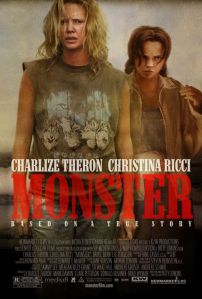 Monster follows the life of Aileen Wuornos (Charlize Theron, now nominated for a Best Actress Oscar), Americas only known female serial killer. In the late 1980s, Wueros was a roadside prostitute flexing her muscles with Florida motorists. She describes hookin’ as the only things shes ever been good at. One day Wuornos has the full intention of taking her own life, but she meets 18-year-old Selby (Christina Ricci) at a lesbian bar and finds a companion. Driven by a growing hatred of men from sexual abuse, Wuorno’s starts killing her johns to try and establish a comfortable life for her and Selby.
Let’s not mince words; Theron gives one of the best performances I have ever seen in my life. Yes, that’s right. One of. The. Best. Performances. Ever. This is no exaggeration. I’m not just throwing out niceties. Theron is completely unrecognizable under a mass of facial prosthetics, 30 extra pounds, fake teeth and a total lack of eyebrows. But this is more than a hollow ploy to attract serious attention to the acting of a pretty face. Theron does more than simple imitation; she fully inhabits the skin of Aileen Wuornos. The closest comparison I can think of is Val Kilmer playing Jim Morrison in The Doors.
Theron is commanding, brave, distressing, ferocious, terrifying, brutal, stirring, mesmerizing and always captivating. It may be a cliché, but you really cannot take your eyes off of her. Her performance is that amazing. To say that Theron in Monster is an acting revelation is perhaps the understatement of the year.
With previous acting roles in Reindeer Games and The Cider House Rules, Theron is usually delegated to pretty girlfriend roles (who occasionally shows her breasts). Who in the world thought she had this kind of acting capability? I certainly did not. If Nicole Kidman can win an Oscar for putting on a fake nose and a so-so performance, surely Theron should win an Oscar for her absolute transformation of character and giving the performance of a lifetime.
With this being said, and most likely over said, Monster is by no means a perfect film. Minus the terrific central performance, Monster is more of an everyday profile of a grotesque personality. The film weakly tries to portray Wuornos more as a victim, but by the end of the film, and six murdered men later, sympathy is eradicated as Wuornos transforms into the titular monster. Some supporting characters, like Ricci’s narrow-minded Christian up bringers, are flat characters bordering on parody. The supporting characters are generally underwritten, especially the male roles that serve as mere cameos in a film dominated by Sapphic love.
Monster is proof positive that human beings will never be phased out by advancing machinery when it comes to acting. Monster boasts one of the greatest acting achievements in recent cinematic history, but it also coasts on sharp cinematography and a moody and ambient score by BT (Go). Monster is a haunting film that you wont want to blink for fear of taking your eyes off of Theron. She gives an unforgettable tour de force performance that will become legendary.
Nate’s Grade: B
Share this:

The Italian Job (2003)
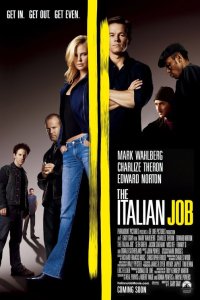 The Italian Job is equal parts dumb and equal parts entertaining, which makes for fine breezy summertainment. The cast is agreeable, the heist is interesting, the action is full of sexy cars and explosions; I call into question how in the world Jerry Bruckheimer’s name is absent from this. Maybe he’s too busy with his TV work.
The film opens up on a nifty heist in, of all places, Venice. Grizzled old-timer John Bridger (Donald Sutherland) leads his crew for, say it with me now everyone, one last heist. Charlie (Mark Wahlberg) is his second in command and the heir to the thievery throne. The crew steals a safe full of gold bars by applying explosive paint to specific levels of ceilings, causing the safe to drop two floors into the awaiting arms of our scoundrels. The Venice police believe the safe to be riding off in a boat, driven by the crew’s getaway man Handsome Rob (the always good to have Jason Statham). But no the real safe has fallen into the canal and Charlie and John are scuba-safe-crackin’. The crew gets away with their misdeed and toast about their thievery atop a mountainside.
 Everything is good. But wait, Steve (Edward Norton) double-crosses his peers and hijacks the gold and kills John. Heres what I dont get. Everyone in the crew is shocked, especially an overactive and whiny Wahlberg (and there’s no worse kind than a whiny Wahlberg). “How could you do this?” whines Whiney Wahlberg. Let me think here. Maybe its because … YOU’RE ALL THIEVES, JACKASS! What was that old saying, no honor among thieves or something. To paraphrase Go, you guys aren’t exactly in a highly ethical industry. There aren’t good thieves and bad thieves; this ain’t no Errol Flynn pic. I would also like to note that everyone in the crew should have known of Steves predestined treachery just by the fact that Norton has a mustache. C’mon, do you need any bigger a sign? Anyway, the van the crew is in drives off a bridge into subzero water. Steve fires some round into the water and believes hes killed his former crew. They of course are not dead and instead are using the scuba gear to breathe. Of course, it’s still subzero temperatures but what does that matter?
We then flash to one year later. Dead John’s not-so-dead daughter, Stella (Theron), conveniently works as a professional safe-cracker to tests security systems. Hmm, I wonder if that will come in handy later. Charlie approaches her with a plan to re-re-re-steal the gold from Steve, the man who, dramatic pause, killed her father. She agrees to help because she wants to see the look on Steve’s face when he finds his money gone. Its probably something very similar to many people over 40 I see now that the stock market is full of price-inflated charlatans.
 What follows is Charlie reassembling his crew; Seth Green as the geeky tech dude, Handsome Rob, and Mos Def as the demolitions expert. Together they work out a plan that is part elaborate and part ludicrous, but still entertaining. This is where The Italian Job gets the rules of heist cinema right: 1) Efficient amount of time must be made to plan the heist so the audience knows the steps and every role of importance. 2) The heist must go off for an extended period of time for the audience to enjoy the payoff of watching all the rehearsal proceedings. 3) The heist has got to be done in an interesting way. 4) Not everything has to go according to plan. The only real action sequences in The Italian Job bookend the film, with the opening Venice heists and the later and extended Steve steal. With this said, the end still carries a good sense of payoff for the audience, and watching all of the different elements of the team work together with their own responsibilities builds a sense of attachment to these otherwise undeveloped characters.
I am convinced Mark Wahlberg is a black hole of acting. Sure, he can do Affable Lug fine and dandy as evidenced by Boogie Nights, but when Wahlberg attempts (and that is the operative word) to emote he looks like his leg is caught in a bear trap. His whole bland handsome understatedness isn’t fooling me. Theron is a pretty face but I still havent seen anything shes done to convince me shes anything more. Green is very funny in his geeky role, complaining that he had the original idea for Napster and it was stolen from him by his roommate. Statham and Mos Def round out a likable if slightly one-note crew.
Director F. Gary Gray (The Negotiator) has graduated from the world of music videos but still knows how to stage some exciting scenes. The slick ending heist, with the L.A. gridlock, three trucks to chase after, and fleet of patriotic Minis is a great popcorn action set piece all the more appreciated because of the patient setup the movie has given.
In the days of summer, where some people wrongly consider a bloated and pretentious action film to be entertaining, even if they dont get a lick of it, it’s especially nice to have something like The Italian Job remind us the escapist fun summer flicks can offer. Just don’t worry if Wahlberg looks to be in pain.
Nate’s Grade: B-
Share this:

Reindeer Games (2000)
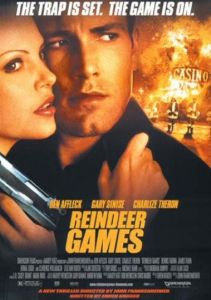 John Frankenheimer comes off from the heels of the incredibly exciting ‘Ronin’ with one of the best car chases ever to direct a muddled holiday thriller that should’ve checked its release date sooner on the calendar. Affleck plays a car thief mistaken for his prison cell mate and hijacked to teach a band of greasy diner clowns the ins and outs or casino theivin’. The performances are all adequate, though Gary Sinise as the bad trucker seems a little too Deliverance to me at times. The movie permeates with the feeling all the way through that something interesting is building and will pay off, and then it just gives up and goes for a ridiculous and cheap twist ending. Ehren Kruger, the man who threw pot holes of twists in Arlington Road and less effectively in Scream 3, writes like someone finishing a deadline paper for a college class – less about characters and conflicts and more about topsy-turvy twists and double crossings. There are some brief encounters with suspense and excitement (and forgive me but the Santa imagery is kinda’ nifty) but Reindeer Games can never build toward whatever potential it flashed.
Nate’s Grade: C


 nathanzoebl
You must be logged in to post a comment.