The Matrix Revolutions (2003)
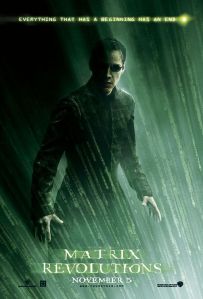 Four years ago the Wachowskis revolutionized the world of cinema, with their surprise sci-fi opus, The Matrix. Their mixture of philosophy, kinetic visuals, and inventive action with style to spare laid waste to all inferior action movies and gave birth to a cult of fan boys. Now six months after the second installment, The Matrix: Reloaded, were left to supposedly close the chapter on Matrix land.
Neo (Keanu Reeves) is caught in a strange limbo between the machine world and the real world. The only passage back to either is through the Merovingians chief hobo, the Trainman (seriously, he’s a hobo with teeth like a jack-o-lantern). Trinity (Carrie-Anne Moss) and Morpheus (Laurence Fishburne) travel to the most spastic fetish club imaginable for negotiations with the Merovingian. He agrees to give them back Neo if they will bring him the eyes of the Oracle, the prophet of the Matrix.
The rest of Revolutions takes place within two storylines. The first involves Morpheus and his former flame Niobe (Jada Pinkett Smith, finally getting a sizeable role she deserves) flying the last remaining ship of the human fleet back to Zion, the last remaining free human city, before the tunneling army of the machines breach the city walls. The other storyline involves Neo and Trinity flying a ship to the heart of Machine Town to have a face-to-face with The Wizard. They want to negotiate a peace between the two factions and put a stop to the increasingly uncontrollable rogue program, Agent Smith (Hugo Weaving), who, left unchecked, could destroy both the human and machine world.
 Reeves has never been confused with a serious actor, or even much of an actor for that matter. And sure, he has a penchant for being out-acted by inanimate objects, but his stint in Revolutions is stiff and wooden, like he’s just punching the clock to get through another day. It doesn’t help his case that half of his scenes involve the woefully inept romance between him and Moss.
The only person that seems to be having any fun in this overly serious melodrama with guns is Weaving. His Agent Smith character has morphed into the true star of the Matrix trilogy. Hes charming and even more likable than the dull-witted Neo. Weaving seems to love the drawn out line delivery, so much so he might be accused of abusing anti-depressants. His insidious cackles are a delight.
The plot of The Matrix: Revolutions has several head-scratching moments. Like the kid who yearns to be in the fight but is too young and clumsy. Anyone who’s ever seen any movie ever will know how that plot point turns out. Then there are questions like, why do people far in the future still use wheelbarrows to lug ammo around? Why, during a shoot-out at the fetish clubs gun check room, do people jump on the ceiling? Why would being on the ceiling make you any more difficult to shoot? The whole sequence comes off like a poorly done rip-off of the Wachowskis’ own bank lobby shoot-out from the original Matrix.
Revolutions is the least densely plotted of the three films. Now, one would think this would be a godsend, especially after the pretensions and bloated mess that was The Matrix: Reloaded. But theres nothing at all memorable in this third installment, and perhaps this is because everything but ten minutes of it takes place in the dingy real world. Who cares about a post-apocalyptic universe where the surviving subterranean humans wear rags and pull all-night raves? I’ve seen that stuff in a thousand other movies (maybe not the raves part, though). Everything is better within the virtual reality Matrix world; from the clothes to the gravity-defying cool acrobatics to the cinematography to, God help me for saying it, the acting and dialogue. At least Reloaded gave us the stylish goods when it came to that heart-thumping freeway chase.
Although Revolutions is a slight improvement over the tedious Reloaded, this is only because after seeing the third and final leg of this trilogy, it makes the second film look worse. The intriguing new elements of Reloaded, like the French Merovingian and his wife (the lovely Monica Bellucci), are now seen to be nothing more than dropped subplots. Even the coolest additions to the Matrix universe the ghostly twins- don’t even show up. Sigh. Now that I know where the story ends, the loose ends of Reloaded don’t justify themselves nearly as much as I would have liked.
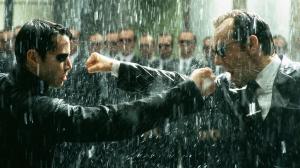
 The showpieces of Revolutions are two long battles in its final act. The first is a near-20 minute assault by the Sentinels, resembling flying mechanical octopi, against the defenses of Zion. It’s exciting for a while but battle fatigue settles in quickly. You can only watch so many CGI robo-exoskeletons shooting CGI machine guns at CGI flying machines as they explode in CGI explosions and CGI shrapnel. The effects are nice, and seem more polished than Reloaded, but the sense of imagination seems to be entirely absent. The second battle is the final fist-fight between Neo and Agent Smith in the pouring rain. Smith has duplicated himself enough to cover miles upon miles of high rises. The fight sequence is impressive and beautifully filmed, but it amounts to a big shoulder shrug after watching Neo battle 100 Smiths in Reloaded. The final confrontation in Revolutions is adequately satisfying if a bit under whelming and unmemorable.
The need for corporate coffers to ring has turned what was a great stand alone film into a mediocre franchise, one whose diminished hopes and lowered expectations can only be judged on par with the Star Wars prequels. My friend Colin equated watching The Matrix: Revolutions to a wet dream: momentarily satisfying but leaving one with nothing but pangs of emptiness. The Matrix trilogy doesn’t end with any sense of urgency; instead it draws to a close with a half-baked artificial fulfillment. The journey of Neo and Trinity and all the rest has come to a whimpering end.
Nate’s Grade: C
Share this:

Brother Bear (2003)
 Kenai (voiced by Joaquin Phoenix) is the impulsive younger brother in a tribe of Native Americans living in Northern America. Where exactly? Well, I don’t know but someplace where Kenai and his brothers can surf wicked glaciers dude. Kenai wants to be accepted into his people more than anything. Too bad hes a screw-up. Some fish he leaves out attracts a bear that inadvertently kills Kenai’s older, wiser brother. Kenai swears revenge against the bear and kills it. But lo, this upsets the spirits of nature and they turn Kenai into a bear himself. Oh the irony. Kenai must learn all about coping in the animal kingdom while looking after a young cub Koda, whose looking for his lost mother. Take a guess what happened to his mother. No, seriously, go on and guess. I’ll sit here and wait. Done? Okay then.
The story of Brother Bear has as much life as a bearskin rug. Once again we have a hotheaded jerk that walks a mile in someone else’s paws and learns valuable life lessons through their bizarre transformation. The only thing this movie is missing is Rob Schneider in the main role.
I don’t know what the makers of Brother Bear were intending. Is this for young kids? Well there is endless slapstick and cutesy woodland creatures. However, the first part of the story is quite dark and all about family loss. Great way to start a family film huh? With some family killings? If this is also intended for kids I’m pretty sure they’ll be bored at the preachier moments talking about animal cruelty and tolerance.
Disney once again plays it too safe and by trying to please everybody they end up likely pleasing nobody. This is 20,000 leagues below the artful Finding Nemo. Why does it seem like when the Diz does things in-house theyre so adverse to risk? What the audience is left with is a formulaic piece of fluff thats only memorable attribute is being extraordinarily ordinary.
 The ending is so bad that its beyond belief, so allow me to spoil it. Kenai transforms back into a human after hes learned his valuable lesson. He then chooses to remain a bear to watch after Koda. What? Why dont they turn Koda into a boy? Or turn everyone into bears? Or why not turn everyone in the audience into people watching a different, better movie?
The animation of Brother Bear is clunky and awkward amidst a crayola-colored backdrop. The visuals often seem drab or like the templates for a better movie. The human characters appear so stocky. The best element of Brother Bear is the voice work of Dave Thomas and Rick Moranis doing a moose variation on their McKenzie brothers.
Phil Collins provides the painfully monotonous pop claptrap thats cued whenever a montage is needed. How the hell did this man win an Oscar for Best Song over the likes of Aimee Mann, Sarah McLachlan, and the creators of South Park? The best way to describe Collins collection of unmotivated ditties is that theyre like soup for the ears: runny, bland, forgettable, and dreadfully unsatisfying. If you cant tell, I dont really care for soup (Soup is too a food!).
Brother Bear is yet another half-hearted effort from the Mouse House. The story, animation, and voice acting are all sub par. Its the same sing and dance al over again, except this time its in the woods, and this time the sing and dance is your senile grandfather with his pants around his ankles doing the jitterbug. Yeah. You get the idea.
Nate’s Grade: C
Share this:

Elephant (2003)
 Writer/director Gus Van Sant could never be accused of taking the easy road. He’s been an indie provocateur whose long career has involved Keanu Reeves, Uma Thurman with giant thumbs, villainous weather girls, and Sean Connery uttering the immortal line, “You’re the man now, dawg.” After 1997’s Good Will Hunting made over $100 million, Van Sant had an artistic blank check. He chose to do a shot-for-shot remake of Alfred Hitchcock’s masterpiece Psycho, now with added scenes of masturbation at no extra charge. So, as you can tell, there’s no telling what Van Sant will do next. On the heels of the experimental 2002 Gerry (where Matt Damon and Casey Affleck wander around and that’s it) comes his Cannes-winning portrait of high school violence, Elephant. But is Elephant an influential eye opener, or does it fall short of its artistic intentions?
Van Sant’s exploration on school violence is startling, realistic, and ultimately a failure. Van Sant does a great job of echoing the mundane reality of high school life with long, elegant tracking shots and numbing classical music; however, Elephant merely becomes an overindulgent and pretentious art exercise. There’s little below the surface, and Van Sant’s actors do little in their brief gasps of screen time to empathize with.
 There are some jolting moments of violence but by the time they arrive Elephant has worn out its welcome. Once we’re even introduced to a character and thirty seconds later they’re killed off. It’s hard to get emotionally attached to so many characters we get mere fleeting glimpses of before they are murdered in the name of artistic statement. The horror of high school violence is less jarring when you feel nothing for the characters. Some of the scenes are shocking, but by the time the school shooting actually arrives the audience might actually be feeling pangs of guilt over their reluctant happiness that something finally is going on, even if it is students being murdered by their peers.
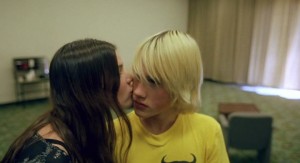
Van Sant also trades heavily in tired stereotypes, from the sexually promiscuous jock, to the nerdy bookish girl, to a trio of bulimic girls used as shameless comic relief. His teen killers watch documentaries about Hitler, play violent shoot-em-up video games, and, of course, have negligent parents. In a very peculiar scene, before the school shooters march off they share a shower and lament that they’ll never be able to kiss a girl… and then they kiss each other. I don’t know exactly what Van Sant is trying to say and I don’t think he knows either.
 This is the longest, most appallingly boring 80 minutes of my life. Elephant’s running time should be brisk, but oh boy does it feel like an eternity. The pacing of the film is practically non-existent. Old women in check-out lanes could move along faster than Elephant. All the drawn out tracking shots give the viewer an eventual idea of the school’s geography, but it also lulls the viewer into a coma. The long bouts of static nothingness set to the soothing classical music might be the downfall for a sleepy audience. Perhaps in the future Elephant will be the cure for insomnia, but right now, in the present, it’s the dullest, most monotonous waste of 80 minutes you could spend in a theater.
Elephant sure takes its time to say a whole lot of nothing. On paper, Elephant could have been an artistic exploration into the reality of high school and the glazed indifference teenagers face in a society of apathy. Instead, Elephant equates cinema verite with real time. It’s not enough we have to watch someone do a film test strip but we have to watch the whole thing in real time. It’s not enough we have to watch one of the school shooters practice piano but we have to watch and listen to the whole thing. It’s not enough to see one inconsequential scene but we have to witness it three different times from alternating points of view. It’s a monumental waste of time for everyone involved, especially the poor audience.
What may be most terrifying about Elephant isn’t that it has no answers for school violence, but that it doesn’t even have the ambition to pose any questions. Van Sant’s followers could have their interest piqued by Elephant, but this film is going to appeal to a very very small number of people (I’m thinking maybe six, tops). Elephant is an artistic overindulgence masquerading as thoughtful meditation.
Nate’s Grade: D
Share this:

Scary Movie 3 (2003)
 Spoofs can be done well (Airplane, The Naked Gun films) or they can be embarrassing and wretched to sit through (Not Another Teen Movie). Where does Scary Movie 3 fit in, especially when the creators of the first two installments of the series are absent this time around?
Scary Movie 3 starts off with a preacher (Charlie Sheen) finding mysterious crop circles in his fields of wheat. Elsewhere, Cindy (Anna Farris, once again the Scary Movie ingénue), a bubbling reporter, is investigating a mysterious tape that kills whoever watches it. The plots for Signs and The Ring are thrown into a blender, and the ensuing mush is the shaky plot for Scary Movie 3 to stage its jokes within.
But instead of swinging for the stars, Scary Movie 3 often settles for countless swings to the head or crotch. I swear, I saw more people getting hit in the crotch in Scary Movie 3 than if I had spent a weekend strapped to a chair, Clockwork Orange-style, and been forced to watch an endless loop of America’s Funniest Home Videos. It’s almost like sixth graders wrote the script, and their creative process revolved around the question, ”Will someone getting hit in a sensitive body area ever not be funny?” And of course, the answer was, ”Never, dude. Let’s go look at your dad’s nudie magazines now.”
Despite the scattershot nature of spoofs, Scary Movie 3 is a noticeable step up from its predecessor. Scary Movie 2 was comedy lost in the woods as if it were in search of a Blair Witch of comedic sensibility , unsure of any direction and falling back on lame gross-out gags and scatological humor. When you have to go to the giant geyser of semen more than once, you’ve got some dire script problems. Credit new director David Zucker (Airplane, Naked Gun) with classing up the place after the absence of the Wayans’ brothers, who wrote and directed the previous Scary Movie films.
 Scary Movie 3 has more of a steady footing for its comedy, but its parodies can seem flat. A Matrix: Reloaded parody with George Carlin as the uppity Architect only serves to make you remember that Will Ferrell did it better for the 2003 MTV Movie Awards. The lengthy subplot supposedly spoofing 8 Mile is dead on arrival. Hes white, get it? No, really, get it? Hey, didn’t Eminem actually rap about this at the end of 8 Mile? So then Scary Movie 3 isn’t even parodying 8 Mile so much as repeating it in inferiority. There are several times that Scary Movie 3 seems like its struggling to lampoon anything popular at the time, no matter if it has anything funny to say about it.
What redeems Scary Movie 3 is what made the original Scary Movie so enjoyable: several scenes of laugh-out-loud, tears-in-you-eyes comedy. Some personal favorites of mine are scenes that go bizarrely over-the-top, like the funeral of Regina Hall, or the more clever jabs at pop culture, like the origin of the evil videotape having something to do with Pootie Tang. Faris is also a very talented comedic actress that proves game for whatever is thrown at her (usually at her head).
So while some of the topical parodies may not work, Scary Movie 3 seems to hit its stride when touching on others. Characters get battered, bruised, flattened, smacked, and thrown all around like the film was a living cartoon. Many of the films jokes are juvenile, but not the puerile juvenile demeanor the Wayans dealt in. Scary Movie 3 is the first film of the franchise to be rated PG-13, and in some lights it liberates the comedy. Instead of trying to out-do sex gags, the filmmakers turn toward the more universal art of slapstick and a slyer pop culture commentary. The comedy may only be there in spurts but it is there.
With any comedy there are hits and misses, and Scary Movie 3 has plenty of misses (a kid being beaten repeatedly does not get funnier as it goes), but when it hits its targets it strikes hard. And when it doesn’t? Well, I do so hope you like people getting hit in the crotch. Scary Movie 3 is worth a rental price and best enjoyed with large quantities of popcorn, friends, and alcoholic beverages. Fans of slapstick will be tickled pink, people who left the franchise after Scary Movie 2 may rejoin the flock.
Nate’s Grade: B-
Share this:

Bubba Ho-Tep (2003)
 Bruce Campbell gives a memorable performance as the aging king of rock ’n roll, Elvis, spending his remaining years wasting away in a Texas nursing home. He and a black man (Ossie Davis), who thinks hes JFK, battle a mummy thats feeding on the souls of the nursing home. Its a fabulous premise, pure and simple. The trouble is, Bubba Ho-Tep works well in great bits and pieces but doesn’t have the hold of a feature film. This feels more acquainted to a short film or a TV sketch. There are parts where I was laughing hysterically (Davis has my favorite line: ”They took my brain! Im thinking with sand up there!”), and then there are other moments toward the end where I was catching myself nodding off. Writer/director Don Coscarelli has a cool visual palette of light and shadow, reminiscent of Guillermo del Toro (Blade 2). He also has a wicked sense of humor. The best moments of Bubba Ho-Tep are the back-story involving how the real Elvis swapped places to live a normal life. Campbell is wonderful, and the movie is alive in spurts, but it cant shake the illusion of feeling stretched.
Nate’s Grade: B-
Share this:

Mystic River (2003)
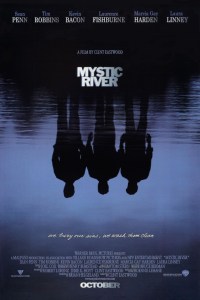 The acting is phenomenal. The story is twisting and layered with incredible amounts of depth. The direction is calm and focused. This is a great Greek tragedy and a great crime story and human drama. Eastwood scores again.
Nate’s Grade: A
Share this:

Intolerable Cruelty (2003)
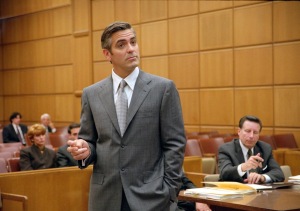
 Miles Massey (George Clooney) is the preeminent divorce attorney in Los Angeles. But after years of bankrupting homes after people have broken them (this allusion may be too tricky), hes grown tired of the same old same old. Enter Marilyn Roxroth (Catherine Zeta-Jones), a conniving gold digger who has been ruined by Massey defending her dimwitted hubby (Edward Herrmann). Now shes out for revenge, which could be in the form of romancing Massey while bringing him down.
Intolerable Cruelty is something of a strange breed. It’s the Coens most striving foray into mainstream success, with the weight of the world on Clooney and Zeta-Jones exchanging sparks and verbal repartee. For the most part, things work: the leads do have a winning chemistry; Zeta-Jones is positively glowing in Roger Deakins’ beautifully milky cinematography (she found out she pregnant late in the shoot, which could explain the glow).
 The stumbling block for Intolerable Cruelty and its central romance is that neither of the leads, though at times charming, isn’t exactly likable or able to root for. An integral part of any romantic comedy is empathy for the leads so much that we want them to get together, possibly with swirling crescendos. But in Intolerable Cruelty, both leads make a living off deceiving and taking advantage of others. So while their War of the Roses-esque pursuit to out-scam the other can provide some entertaining twists (and some forced and out of place), the whole duplicitous one-upsmanship doesn’t blossom credible love between the leads or the audience.
I have a strong feeling that Intolerable Cruelty was a story the Coens hopped on late, did some rewrites and invited old Coen friends to join in the jubilee. This is the first time the Coens have worked with other writers (the people who brought us such duds as (Big Trouble and Life), and certain storylines or subplots that glaringly feel disjointed from the screwball-comedy tone of the film. An asthmatic hit man named Wheezy Joe (who got the biggest laugh with his demise) is funny but in the wrong Coen film. When Clooney and Zeta-Jones both hire the services of Wheezy Joe to off the other, you know the story took a fantastical wrong turn. A creepy decrepit owner of Clooney’s law firm also feels like a leftover from a different film. This movie also has the most ripping up of legal documents I’ve ever seen in a movie.
Clooney is quite funny as a chattering legal eagle with a Cary Grant edge. Hes ready and willing to play against his movie star image, which works wonders for comedy, though the running gag where he must look at his teeth in any reflective surface never takes off. It took me until Intolerable Cruelty to realize how much of a beautiful woman Zeta-Jones is. Her warm smile could light up an auditorium. The supporting characters are all underused but very memorable. The opening with Geoffrey Rush’s TV exec walking in on his canoodling wife is very funny, and he plays the long-haired arrogant type well. Cedric the Entertainer is hilarious as a private eye determined to ”nail yo ass” that I started privately wishing the film would spin to follow his life and not Clooney’s.
Intolerable Cruelty is a nice diversion for the Coens, with some good laughs here and there (my favorite being the courtroom scene where Clooney and Zeta-Jones go head-to-head for the first time), but one would hope that the Coens will get back to doing hat they do best, which is quirky yet beautiful independent films. In the end, it seems that the Coens have created an oddity for themselves — a normal movie. We expect more Joel and Ethan.
Nate’s Grade: B-
Share this:

Kill Bill Vol. 1 (2003)
 Breathtaking and stylistically amazing. That’s all there is to it. Can’t wait for part two.
Nate’s Grade: A
Share this:

School of Rock (2003)
 School is now in session. Jack Black has long been a Hollywood oddity. He’s a whirlwind of manic energy but it can be accurately placed (his breakthrough in High Fidelity), or misused on hollow roles (Saving Silverman). Black is also a credited musician with his band, Tenacious D. Writer and sometime actor Mike White is a friend of Black’s and said he wrote the lead in School of Rock specifically for him. Will Black measure up with his first lead role, or will he be held back?
Jack Black plays Dewey Finn, a thirty-something lead guitarist who takes rambling guitar solos and crowd surfs even when theres no one to catch him. His band mates fire Dewey from the group for his outlandish behavior. Dewey’s roommate (Mike White), and especially his harpy girlfriend (Sarah Silverman, generally wasted here) urge him to find a job and start pulling his weight. A call comes in for Dewey’s roommate to substitute teach at a prep school. Dewey poses as his pal and enters the ranks of academia. When he finds out that his class plays instruments he organizes them into a band as a class project. When someone questions what they’re learning, Dewey shouts that they’re learning rock ‘n roll, which he says, ”Will test your head, and your mind, and your brain too.”
 Black has showed scene-stealing ability in other films, but School of Rock gives Black the role he was born to play. His character isn’t some high-minded jerk that learns the errors of his ways by having his rough exterior melted by the compassion of children. Heck no. Black’s character remains rocks willing soldier from beginning to end, but School of Rock gives him the chance to share his passion and instill it in the youth. Black’s circus of eye bulging, energetic gyrations, and infectious excitement make a vibrant lead that can make us laugh at a moment’s notice. It’s a marvelous performance full of rock bliss.
Non-professional actors play the prep school kids that populate School of Rock. They smartly decided to have the kids played by real musical prodigies, so when they get jamming thats real ten-year-olds and eleven-year-olds putting people to shame with their musical ability.
The film isn’t anything new exactly. Its story is somewhat familiar, but it’s got an attitude all its own. School of Rock uses familiar elements and comforts the viewer, but its madcap energy, touching moments of heart, and ambitious belief that music can change lives will leave the viewer smiling from beginning to end. There wasn’t a second I wasn’t smiling or laughing while watching School of Rock.
School of Rock is a joyous movie that excels with sweetness. Lets just get down to it and say the flick is monstrously funny, heartwarming, inspired, charming, entertaining and certifiably rockin’ enough to blow you and your neighbors socks off. Dont be fooled by the PG-13 label (which I’m still scratching my head over), because School of Rock is the perfect film for families of all ages. Its got a genuine tenderness most comedies lack, and it also has a consistently cheery sense of humor that never resorts to inane gross-out gags like so many current comedies. This is one to take the kids and grandma too.
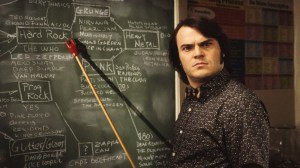 In lesser hands this film could have been a disaster. The kids would come off as cloying, Blacks character would come off as a crude loaf, Joan Cusack’s (a wonderful performance, by the way) principal character would just be an uptight bitch, and the familiar story would seem syrupy, like a Dead Poets Society with guitars instead of suicide. Under the smooth direction of Richard Linklater (Dazed and Confused, Waking Life), one of the stalwarts of the 90s independent film renaissance, School of Rock strikes the right balance between warmth and Blacks uncaged craziness. Linklater has taken his indie sensibilities and assuredly given the film a heart that beats to the rhythm of rock n roll, that also never falters into sticky sentimentality.
School of Rock is an exuberant comedy, sharply written, with confident direction, cute kids, and the dynamic performance of Black. The movie will appeal to families, fans of Black, and people tired of feel-good formula films or those looking for a feel-good film. School of Rock will lift up your spirits and make you want to dance in your seat. I raise my goblet of rock and salute you, makers of School of Rock, for the greatest 108 minutes of fun I’ve had this year.
Nate’s Grade: A
Share this:

The Magdalene Sisters (2003)
 There’s a certain genre of films as well-defined as say, the Western, Film Noir, or even Romantic Comedies. The genre Im speaking of is I-can’t-believe-that-happened cinema. This is a genre made up of little-known true stories where people with power abuse those below them. These include films like Rosewood, Rabbit Proof Fence, Matewan, Mississippi Burning, and just about every movie with a Holocaust setting. These films are intended to antagonize the audience and to get them to ask, How could something like this happen? The Magdalene Sisters is a film that an audience will walk away with very much wondering how something so cruel, amoral, and heartless could carry on in our modern world.
In 1960s Ireland, the Catholic Church was life. The Magdalene Sisters sheds light on the little known work asylums, which were institutions set up to help girls who had transgressed against God. The girls admitted to the asylum, a kind of extreme reform school, are there to work away their sins and reach forgiveness, thus saving their immortal souls. Rose (Dorothy Duffy) had a child out of wedlock. Bernadette (Nora-Jane Noone) was caught by school officials for being too pretty and tempting teen boys. But perhaps the most startling admission is Margaret (Anne-Marie Duff), admitted to the asylum by her own father for the grievous sin of being raped by a cousin. The Magdalene Sisterhood asylum is run by Sister Bridget (Geraldine McEwan), an old nun who subscribes to the cruel to be kind theory in spades. The girls at the asylum toil tirelessly in sweatshop conditions, are physically abused by the nuns, sexually abused by the asylums priest and are left hopeless of escaping. Girls who run away are turned back in by their parents or cooperative police. Some of the women at Magdalene have been there for their entire lives. It seems the only ways out are death or joining the convent. Get thee to a nunnery indeed.
 The Magdalene Sisters is full of sadistic moments that will shock an audience. One of the most disturbing scenes transpires late into the film. The girls of the asylum line up completely nude, shivering and crying. Two nuns, with a nauseating smugness, chortle and play a game seeing who has the largest breasts and the smallest nipples, among other things. When the winner of this sick experiment stands forward and clenches her teeth from crying so hard, one of the nuns asks, ”What are you crying for? It’s just a game.”
The young ladies at the films core deliver magnificent performances tinged with honest emotional devastation. Noone is the standout as Bernadette. She utilizes steely rebellious gazes that speak volumes about her characters resourcefulness. Noone can convey more poignant emotion in the raising of an eyebrow or the biting of her thumb than most starlets can ever hope to express.
McEwan is terrifying as the head nun and head source of torment. Her grandmotherly voice, tinted with an Irish brogue, is enough to send shivers down your spine. She is surely 2003’s greatest movie villain, next to Johnny Depp in Once Upon a Time in Mexico.
Writer/director Peter Mullan keeps the suffering at an almost unbearable level but allows the spark of human resistance to keep us going. His film is one brimming with anger and disbelief; ensuring the audience will experience that same burning anger before the credits roll. Mullan’s passionate story can be deemed one-sided, but then again, what exactly is the other side going to say about the abuse of innocent girls for life-long slave labor? Not much I suspect.
 The Magdalene Sisters is a somber, unflinching look at the abuses of the church as well as the upward battle for equality women faced. This film is tough to sit through. It might be too much for some, especially if they don’t have a strong relationship with the Catholic church to begin with. The decades of abuse The Magdalene Sisters sheds light on is incredible, but it’s also a beginning for healing. Before we can overcome atrocities we must acknowledge them, and this is something I’m sure Mullan is arguing that the Church is failing to do. In fact, the Catholic church has denounced The Magdalene Sisters for its portrayal of church abuses. Something tells me Mullan is not surprised.
Not only is The Magdalene Sisters an eye-opener, it’s also great cinema. The characters, pacing, realistic sharp-eyed direction, and superb acting render it more than just a snuff film. This film is more than watching people mistreated and suffer; this is a film about perseverance and resolve. It’s about the enduring human spirit. I’ll gladly (well, not gladly) watch sequences of misery in order to see human triumph. This isn’t just a sad story, it’s exceptionally well told and acted and it bathes you in the pain of its characters. You feel their heartbreak and tragedy, but you also feel their victory.
The Magdalene Sisters is, without a doubt, the must-see feel-bad movie of this year. Now, there will be plenty out there saying, Why should I pay to see a movie that will make me feel bad? This is my defense: because the movie is so good at having its fears, tortures, and ultimate triumphs resonate that it makes you authentically feel something. And isn’t this the purpose of art, to feel something? The Magdalene Sisters is unflinching, passionately powerful and unforgettable. Just one more item to get your blood boiling: the last of these Sisterhood work asylum closed in 1996.
Nate’s Grade: A


 nathanzoebl
You must be logged in to post a comment.